
Why Hazard Perception Is a Learnable Skill
There's a real difference between looking at the road and actually reading it. Novice drivers tend to react to hazards; experienced drivers anticipate them. Research on driver behavior consistently shows that seasoned motorists direct their gaze further ahead, process a wider field of view, and identify potential trouble sooner — sometimes several seconds before it becomes a genuine emergency.
Those extra seconds matter enormously. At highway speeds, a two-second advantage can mean the difference between a controlled stop and a crash. The good news is that hazard perception isn't a mysterious gift — it's a set of habits that can be learned, practiced, and improved by any driver willing to pay attention deliberately. This article lays out the core practices that make that possible.
For a broader framework on staying safe behind the wheel, see our guide to defensive driving principles.
Core Scanning Habits That Make a Difference
The foundation of hazard perception is active, structured scanning — not passive staring. Here are the practices that matter most:
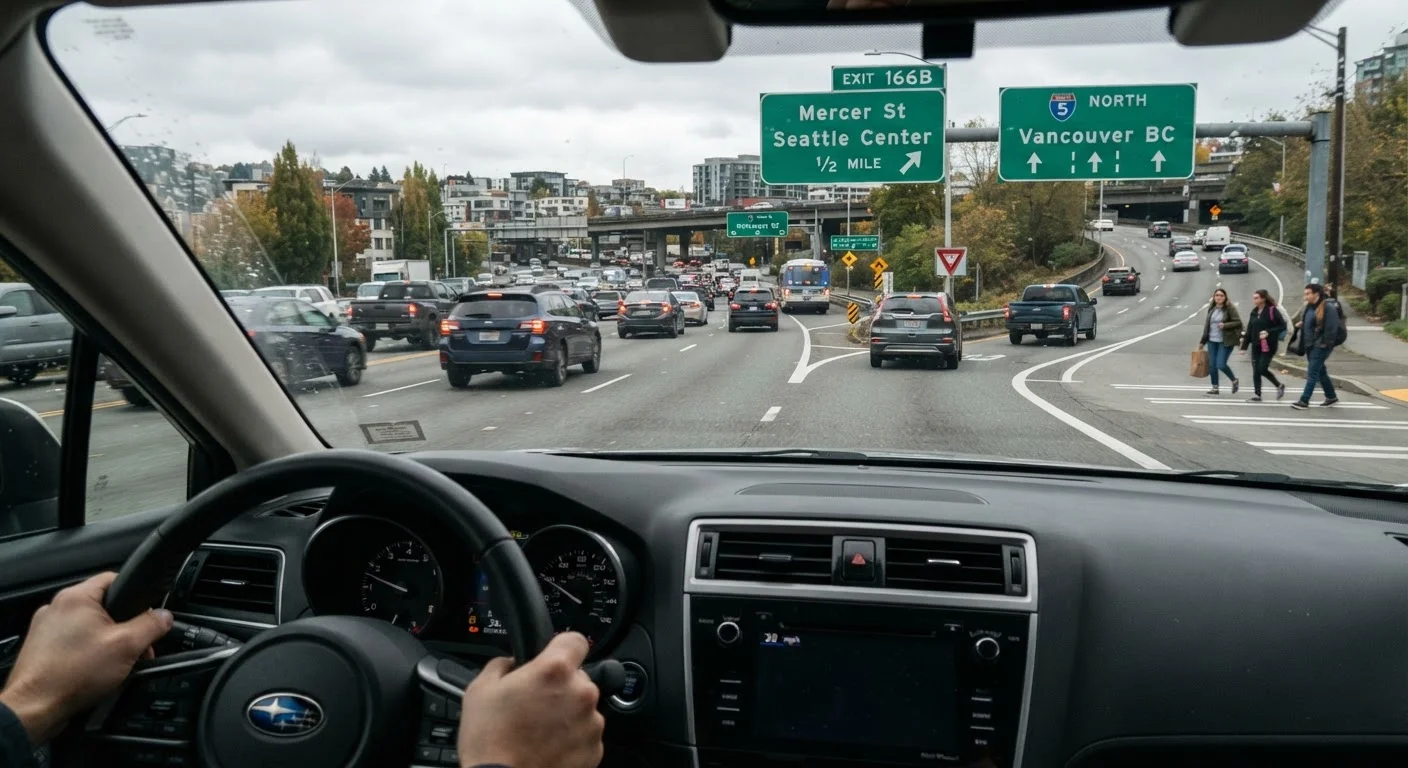
Scan 12–15 seconds ahead of your vehicle, not just the car in front of you
Looking further down the road gives you time to process information and adjust speed or position before a hazard reaches you. Drivers who focus only on the vehicle immediately ahead are essentially reacting, not anticipating.
Check your mirrors every 5–8 seconds as a deliberate cycle
Knowing what's behind and beside you is just as important as what's ahead. Regular mirror checks prevent surprises during sudden braking and inform safe lane changes.
Maintain a following distance of at least 3 seconds in normal conditions
Following distance is your reaction time buffer. Tailgating eliminates the space needed to process and respond to hazards that appear ahead of the car you're trailing.
Move your eyes continuously rather than fixing your gaze on one point
A fixed stare narrows your field of awareness and slows your ability to notice movement in your peripheral vision. Continuous, deliberate eye movement keeps more of the scene active in your awareness.
Identify your exits and escape routes before you need them
When a hazard appears suddenly, drivers who have already noted their options — a shoulder, an empty lane, an open gap — can act decisively. Those who haven't tend to freeze or overcorrect.
These habits apply everywhere, but they become especially important at intersections, which account for a disproportionate share of US traffic crashes. Our article on navigating roundabouts, four-way stops, and uncontrolled intersections breaks down the specific risks at each type.
Environmental Cues Worth Recognizing
Beyond scanning technique, skilled drivers learn to read the environment itself as a source of early warning. Several cues reliably precede hazards:
- Parked vehicles with occupied cabs — a driver or passenger may open a door or pull out without checking mirrors.
- Children near the roadside — a ball, bike, or child near the curb can move into traffic unpredictably.
- Vehicles partially obscured at driveways or side streets — the nose of a car edging out signals an intent to merge that may not wait for a gap.
- Wet leaves, sand patches, or standing water — these signal sudden traction changes. Adverse weather conditions amplify these risks considerably.
- Brake lights several cars ahead — a ripple of red lights down the road tells you traffic is compressing before you feel it yourself.
- Animals near road edges — deer especially tend to move in groups; one crossing often means more are following.
Urban and rural roads each present their own set of cues. City streets and rural highways carry very different risks, and adjusting your focus accordingly is part of reading the road well.
The Conditions That Undermine Your Perception
Even drivers with strong scanning habits can have those habits stripped away by two factors: distraction and fatigue. A glance at a phone lasting just two seconds means you've traveled the length of a football field at 55 mph without actually seeing the road. Fatigue narrows your visual field and slows information processing in ways that can feel imperceptible until it's too late.
Drowsy driving impairs reaction time comparably to alcohol — recognizing your own fatigue warning signs before you get behind the wheel is itself a hazard-perception skill. Similarly, night driving raises crash risk significantly, largely because reduced visibility compresses the time you have to spot and respond to hazards.
Managing these conditions isn't just about willpower — it's about preparation. A quick pre-trip check that includes an honest self-assessment of alertness is a practical step that costs nothing.
~40%
Of US crashes occur at or near intersections
According to the Federal Highway Administration, intersections are among the most dangerous locations on American roads, making focused scanning at these points especially critical.
2 seconds
Typical phone glance that causes loss of road awareness
The National Highway Traffic Safety Administration notes that taking your eyes off the road for even two seconds significantly increases crash risk, particularly at highway speeds.