
Why a Quick Walkthrough Matters Every Time
Most drivers reserve vehicle checks for long road trips, but the reality is that problems with tires, lights, or brakes don't care how far you're going. A flat in progress, a burned-out brake light, or a cracked windshield can be just as dangerous on a five-mile school run as on a cross-country drive.
This checklist is designed to be fast and repeatable — something you can build into your routine regardless of the trip length. It covers what to look at outside the car, what to verify in the cabin, and what fluid levels to monitor over time. For a deeper look at scheduled upkeep, see our comprehensive maintenance roadmap.
If your check engine light is on before you even start, don't skip past it — our guide on what your check engine light is actually telling you explains which situations are urgent and which can wait.
Don't Skip This Before Night or Bad-Weather Driving
Burned-out headlights, taillights, or brake lights are a leading factor in rear-end collisions, particularly in low-visibility conditions. Many drivers don't realize a light has failed because they can't see it from inside the car. Make the exterior lighting check a non-negotiable step — it takes under two minutes and is one of the most visible safety signals your vehicle sends to other drivers.
What to Check and How to Do It
Work through the checklist groups below in order — exterior first, then cabin, then fluids. If you're heading into challenging weather, pair this walkthrough with the guidance in our article on driving in fog, ice, and high winds.
Exterior — Tires
Exterior — Lights and Visibility
In-Cabin — Controls and Safety Equipment
Under the Hood — Fluids
For tools and supplies that support these checks, see the list below.
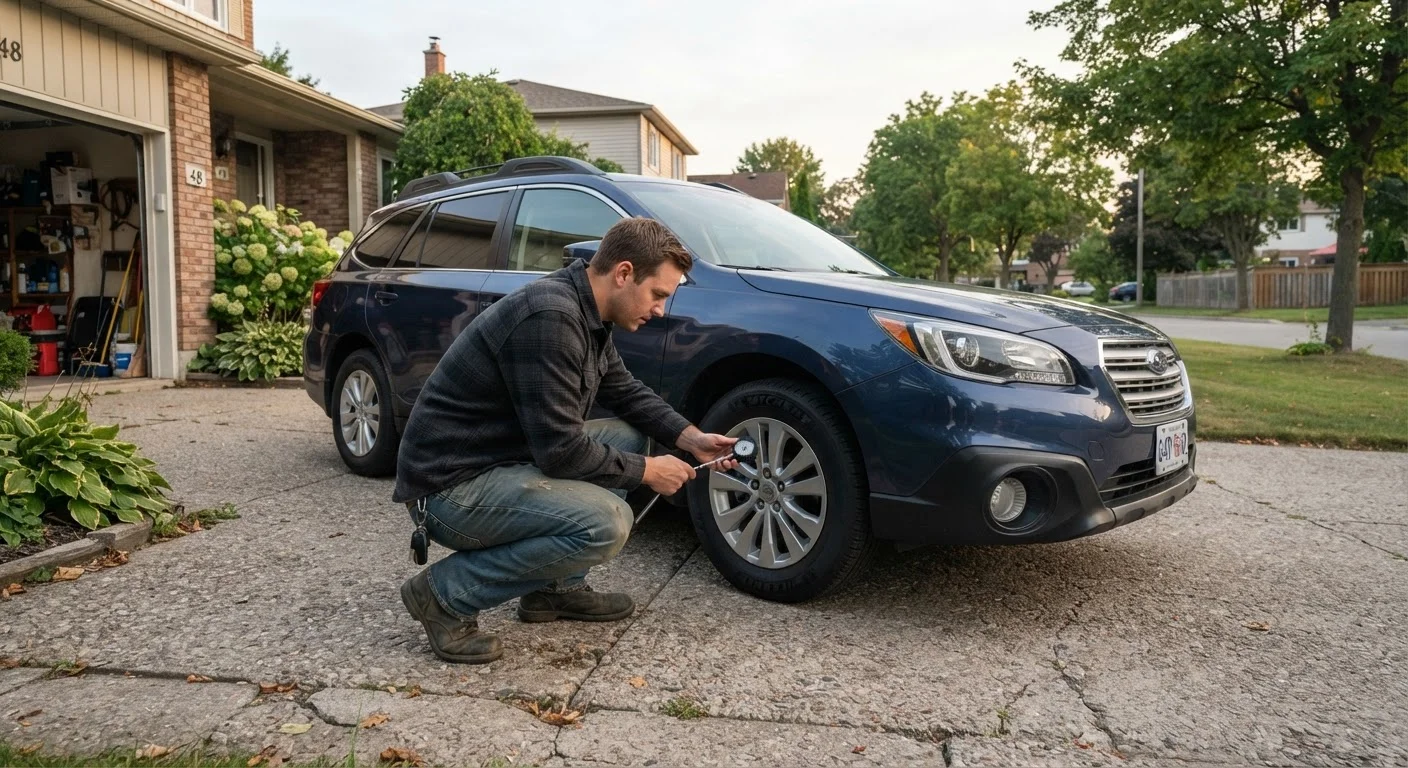
Tire pressure gauge
Accurately measures tire pressure so you can inflate or deflate to the manufacturer's recommended PSI.
Portable air compressor or tire inflator
Allows you to add air to an underinflated tire without driving to a gas station.
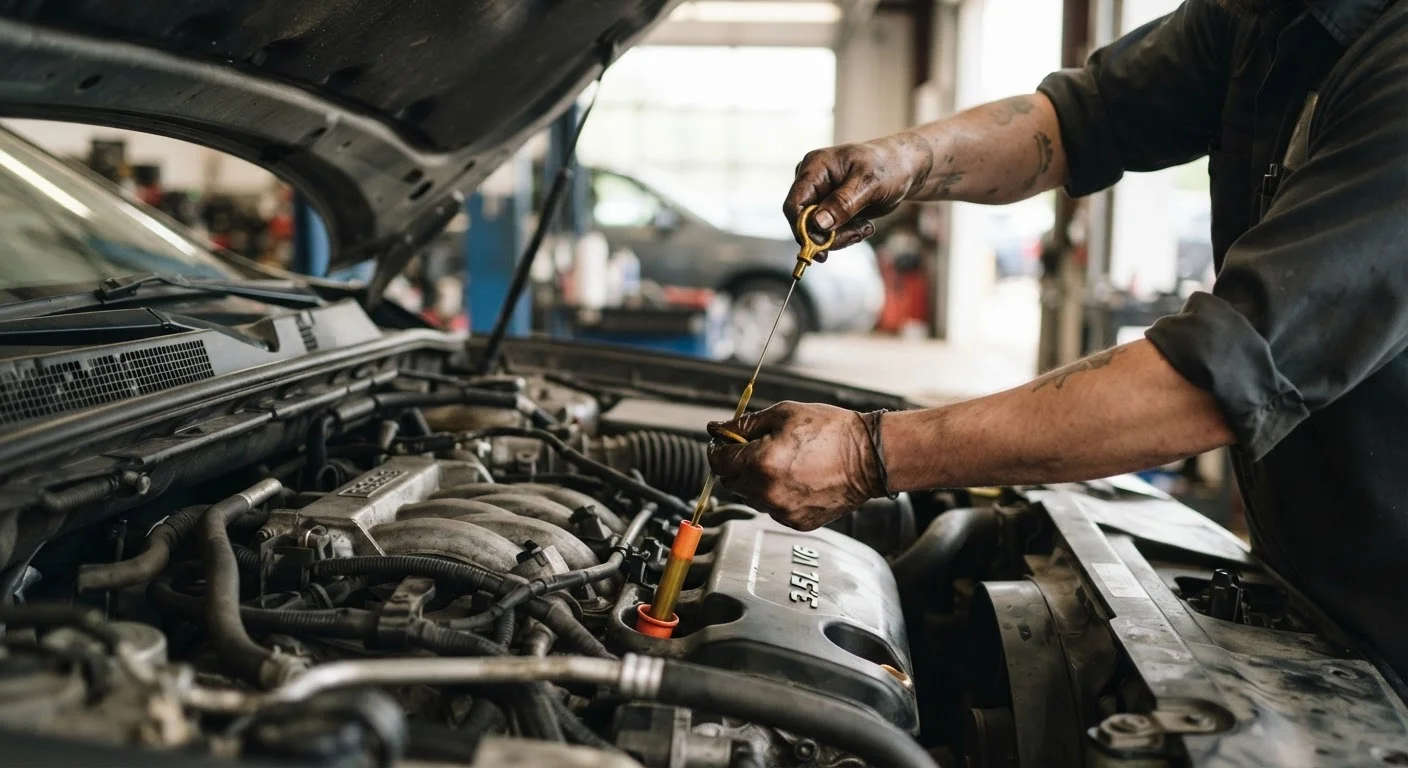
Engine oil dipstick (built into vehicle)
Used to check current oil level against MIN/MAX markers.
Flashlight or phone torch
Helpful for checking under the vehicle for fluid leaks in low-light conditions.
Building the Habit
The hardest part of any safety habit is consistency. A useful approach: tie the walkthrough to something you already do — like grabbing your keys or putting on your seatbelt. The exterior check (tires and lights) takes roughly two minutes. The in-cabin check takes about thirty seconds. Over time, your eyes will flag problems automatically.
If you drive in areas with significant seasonal weather swings, your pre-trip check may need to adapt. Our seasonal car maintenance guide covers what changes when temperatures drop or spike. And before any longer journey, it's worth cross-referencing with a full travel prep checklist — the pre-trip planning checklist for domestic travel covers logistics beyond the vehicle itself.
One more thing worth flagging before you pull out: fatigue. If you didn't sleep well, your reaction time and hazard perception are already compromised before you encounter any road condition. Our piece on driving fatigued outlines the physical signs to take seriously.