
Why Brake Signals Matter
Brakes are your car's most critical safety system. When something goes wrong, they usually tell you — through sounds, sensations, or dashboard lights — well before a failure occurs. The challenge is knowing which signals warrant immediate attention and which ones allow a little more time. Getting that judgment right can be the difference between a straightforward repair and a dangerous situation on the road.
For a broader look at how your car communicates through sound, see our guide to common vehicle noises.
Brake Pad
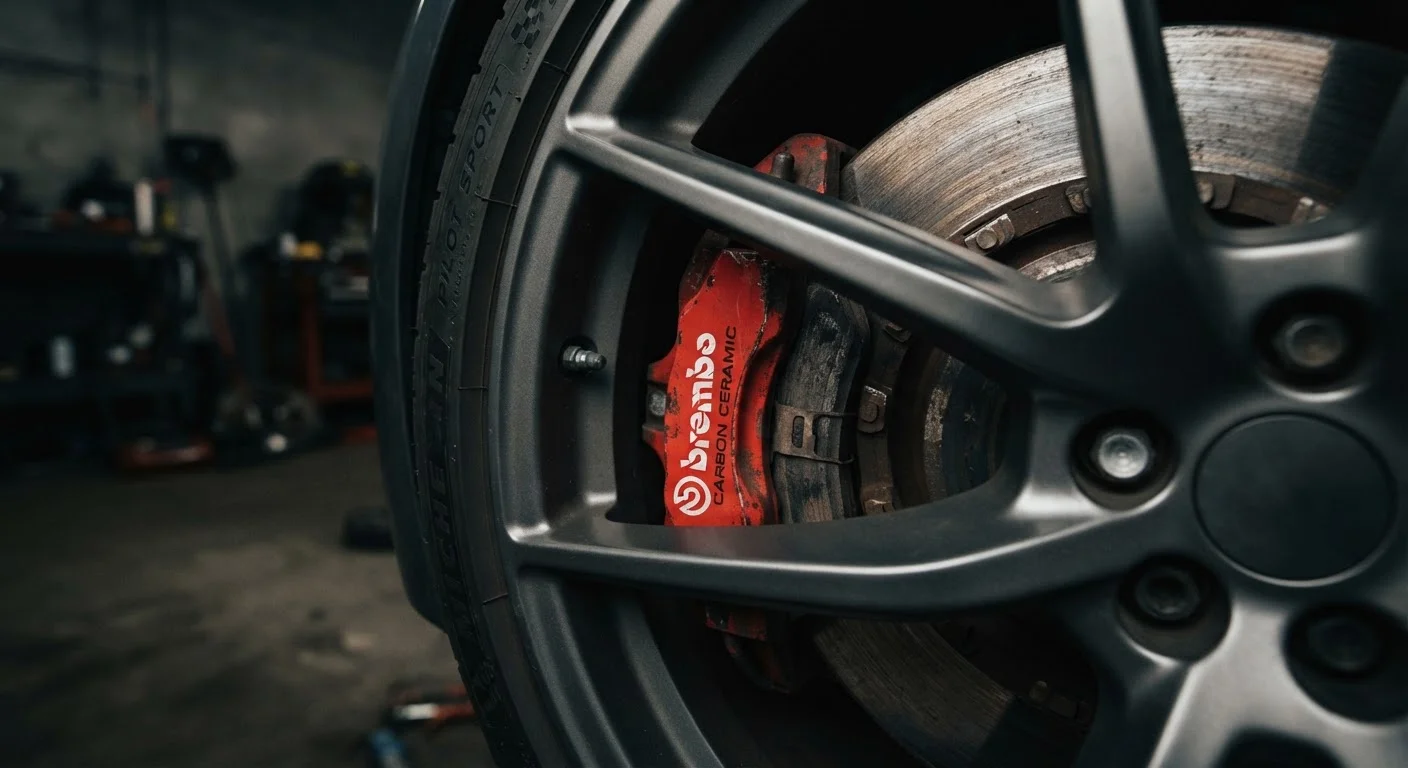
A friction material pressed against the rotor to slow the wheel. Pads wear down over time and must be replaced before the material is fully depleted.
Rotor (Brake Disc)
The metal disc attached to the wheel hub that the brake pads clamp against. Rotors can warp from heat or become scored if pads wear through completely.
Caliper
The hydraulic clamp that squeezes brake pads against the rotor when you press the pedal. A seized or stuck caliper can cause uneven braking and pulling.
Master Cylinder
The hydraulic pump that converts pedal pressure into braking force throughout the system. A failing master cylinder often produces a soft or sinking pedal.
ABS (Anti-lock Braking System)
An electronic safety system that prevents wheels from locking under hard braking, helping the driver maintain steering control. An ABS warning light indicates a fault in this system.
Wear Indicator
A small metal tab built into brake pads that contacts the rotor and produces a squealing sound when pads are near the end of their usable life.
Common Warning Signs — Decoded
Here's what each brake symptom typically means and how urgently you should act on it.
Squealing or High-Pitched Squeaking
This is often the first signal that brake pads are wearing thin. Most modern pads include a small metal wear indicator — a tab that contacts the rotor when the pad material runs low, producing that distinctive squeal. If the sound appears mainly when braking and disappears once you release the pedal, worn pads are the likely cause. Don't put this off; continuing to drive on low pads leads to rotor damage and higher repair costs.
Grinding or Metal-on-Metal Sound
Grinding almost always means the brake pad material is gone and metal is contacting metal — either the backing plate against the rotor, or a seized caliper. This is an urgent situation. Rotors can be scored quickly, turning a pad-replacement job into a much larger expense. Have the vehicle inspected as soon as possible — ideally the same day.
Pulling to One Side While Braking
If the car drifts left or right when you apply the brakes, the cause is usually uneven brake force — a stuck caliper, uneven pad wear, or a collapsed brake hose on one side. Pulling can also point to tire pressure differences or alignment issues, so a mechanic will need to distinguish the source. Either way, this symptom deserves a prompt check. You may also want to review what uneven tire wear can reveal alongside this issue.
Vibration or Pulsing in the Pedal
A pedal that pulses or a steering wheel that shudders during braking typically points to warped rotors — brake discs that have developed slight thickness variations from heat stress or improper lug nut torque. The vibration you feel is the caliper rocking as it contacts uneven surfaces. Warped rotors may be resurfaced or replaced depending on how much material remains.
Soft, Spongy, or Low Brake Pedal
A pedal that sinks closer to the floor than usual, or feels mushy under pressure, is a serious concern. It can indicate air in the brake lines, a brake fluid leak, or a failing master cylinder. Check your brake fluid level first — our fluid-checking guide walks you through that process. If the level is low or the pedal behavior doesn't improve, don't drive the vehicle further without a professional inspection.
Brake Warning Light
A red brake warning light can signal low brake fluid, an engaged parking brake, or a system fault detected by sensors. An amber ABS light indicates a potential issue with the anti-lock braking system specifically. Neither light should be dismissed — check the parking brake first, then refer to your owner's manual. For more on dashboard warnings, see what warning lights are actually telling you.
When to Act — and How Urgently
| Urgency: Grinding sound | Inspect same day — metal-to-metal contact is occurring |
| Urgency: Spongy pedal | Do not drive — potential fluid leak or system failure |
| Urgency: Squealing only | Schedule within days, not weeks |
| Urgency: Pedal vibration | Inspect soon — likely warped rotors |
| Urgency: Brake warning light | Check parking brake first; inspect promptly if light persists |
| Typical pad replacement interval | Every 25,000–70,000 miles depending on driving habits and pad type (Varies by vehicle and manufacturer — consult owner's manual) |
As a general rule: any symptom that affects pedal feel, causes pulling, or involves grinding should be treated as urgent. Squealing alone on well-worn pads can wait a few days, but not weeks. Keeping up with your vehicle's recommended maintenance schedule — outlined in your owner's manual — is one of the best ways to catch brake wear before it becomes a problem. See why your maintenance schedule is worth following for more on that approach.
If you're ever in doubt about what your car is telling you, a visual inspection by a qualified mechanic is the safest next step. Brakes aren't a system where guessing pays off.
This article is for general informational purposes only. Brake system diagnosis and repair should be performed by a qualified automotive technician. Do not attempt brake repairs without proper training, tools, and safety precautions.