
Why the Owner's Manual Maintenance Schedule Actually Matters
The maintenance schedule in your owner's manual isn't generic advice — it was built around your specific engine design, fluid capacities, and component tolerances by the same engineers who designed the vehicle. It specifies not just what to service, but when, based on mileage and time intervals calibrated for that drivetrain.
Despite that, the glove box is where most owner's manuals spend their entire lives. Many drivers rely instead on quick-lube sticker recommendations or shop service advisors — both of which may not align with what the manufacturer actually requires. This can lead to either over-servicing (spending money unnecessarily) or under-servicing (missing critical intervals).
Following the schedule matters for three practical reasons. First, it keeps your vehicle's warranty intact — automakers can and do scrutinize service history when evaluating claims. Second, it prevents the kind of compounding neglect where skipping one interval makes the next problem worse. Third, it gives you documentation that meaningfully supports resale value. If you're new to thinking about this holistically, the complete car maintenance guide for new drivers is a solid broader foundation.
Ignoring Intervals Can Void Your Warranty
Manufacturer warranties typically require that maintenance be performed on schedule and documented. Skipping services — even minor ones — can give an automaker grounds to deny a warranty claim. Keep receipts and service records every time work is done on your vehicle.
How to Read and Use the Schedule: Step by Step
What you will need
Owner's Manual
Contains the manufacturer's complete maintenance schedule, fluid specifications, and service intervals for your specific vehicle.
Pen and Notepad (or Phone Notes App)
Used to record upcoming service milestones and track what has already been completed.
Vehicle Maintenance Log or Folder
Stores service receipts and records so you can document completed work over time.
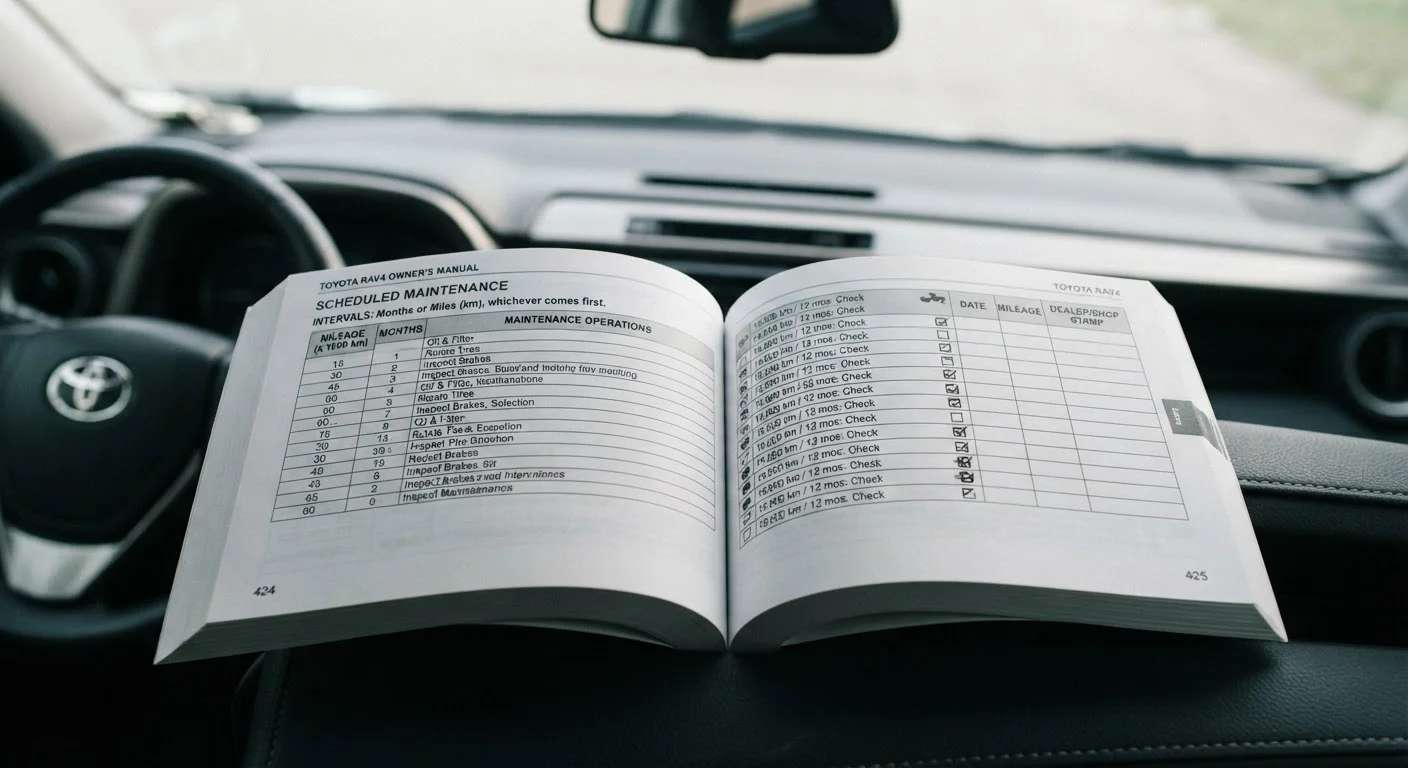
Locate the Maintenance Schedule Section
Owner's manuals are typically organized with a table of contents near the front. Look for a chapter titled "Maintenance," "Scheduled Maintenance," or "Service Intervals." In most manuals, this section runs 10–20 pages and is sometimes printed on differently colored paper to make it easier to find. If your manual is a PDF, use the search function and type "maintenance schedule."
Identify Which Driving Condition Schedule Applies to You
Most manuals include two tracks: Normal and Severe (sometimes called "Special Operating Conditions"). Severe conditions typically include frequent short trips under 5 miles, stop-and-go city driving, towing or hauling heavy loads, driving in extreme heat or cold, or operating on dusty roads. If any of those describe your regular driving, the severe schedule — which calls for more frequent service — is the one to follow. Many everyday urban and suburban drivers actually fall into the severe category without realizing it.
Note Your Current Mileage and Last Service Date
Check your odometer and write down the number. Then look at any receipts or stickers from your last service visit. Together, these tell you where you stand relative to the schedule. If you don't have records of past services, a licensed mechanic can inspect fluid condition and component wear to give you a reasonable starting point.
Map Out Upcoming Service Milestones
Using the schedule, identify every service item due within the next 5,000–10,000 miles. Common items include engine oil and filter, tire rotation, air filter, cabin air filter, brake fluid, transmission fluid, and spark plugs. Write down each item and the mileage at which it's due. This gives you a clear, concrete maintenance plan rather than a vague sense that "something is probably due." For a broader look at how these tasks fit together across the year, see the year-round car care roadmap.
Set Reminders and Start a Service Log
Enter upcoming service milestones as reminders on your phone calendar, tied to estimated dates based on how many miles you typically drive per month. Going forward, keep every service receipt — whether you do the work yourself or take the car to a shop — in a dedicated folder or envelope. This log protects your warranty, supports resale value, and makes it easier to spot patterns. The benefits of keeping a vehicle maintenance log are significant and the habit takes very little effort to build.
Can't Find Your Manual? Download It Free
Most automakers post owner's manuals as free PDFs on their official websites. Search for your make, model, and model year plus 'owner's manual PDF' to locate it quickly. Some manufacturers also offer dedicated owner apps where the manual lives alongside service reminders.
Once you've worked through the schedule and set up reminders, the system largely runs itself. Weather changes can also affect what your car needs at any given time — the seasonal car maintenance checklist pairs well with the manual's intervals to give you a complete picture. For tire-specific service timing — rotation, balancing, and alignment — your manual will list intervals, but understanding what each tire service actually does helps you prioritize intelligently.