
What Uneven Wear Is Actually Telling You
When one part of your tire tread wears down faster than the rest, it's a signal that something in your car's system is out of balance — literally or figuratively. The tire itself is usually not the problem. It's the messenger.
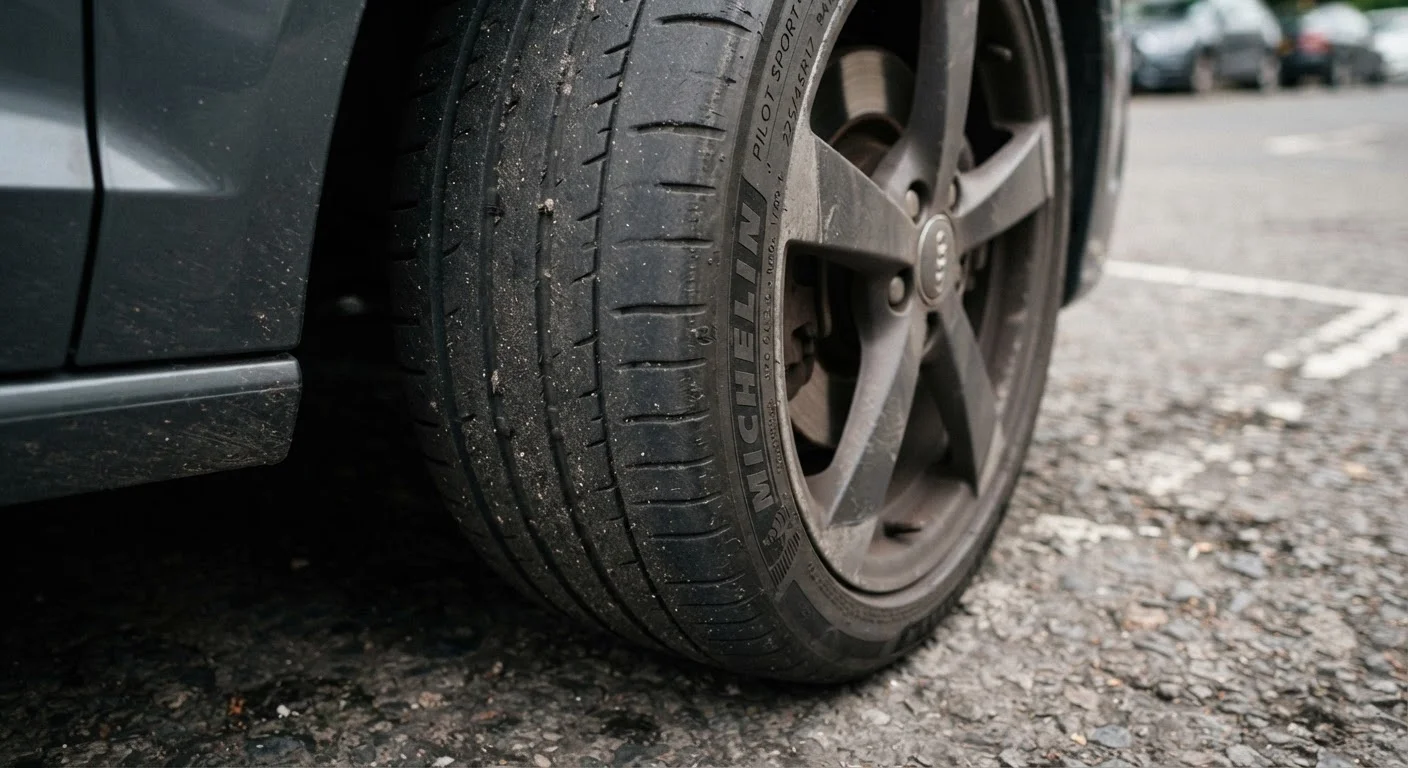
There are a handful of distinct wear patterns, and each one points in a different direction. Edge wear (both edges worn, center fine) typically means the tire has been chronically underinflated. Center wear (center worn, edges fine) points to overinflation. One-sided wear — where the inside or outside edge is significantly more worn — is a classic alignment symptom. Cupping or scalloping, where the tread dips in a wavy pattern around the tire, usually indicates a shock absorber or strut that's no longer doing its job properly.
Understanding the pattern is the first step. The second is not putting off the fix. Uneven wear accelerates tire degradation and, more importantly, can reduce your stopping distance and make handling unpredictable. For a deeper look at how pressure alone affects your car's behavior, see what happens to your car's handling when tire pressure is off.
Common Mistakes That Lead to Uneven Wear
Most uneven wear problems don't appear overnight. They develop because of habits and oversights that are easy to fix once you know what to look for.
Not checking tire pressure regularly and relying on the TPMS warning light as the only signal.
Why it happens: The tire pressure monitoring system (TPMS) light only triggers when pressure drops significantly — often 25% or more below the recommended level. By that point, edge wear may already be underway.
Skipping tire rotations, allowing the front tires to wear much faster than the rear.
Why it happens: Front tires handle steering and, on front-wheel-drive vehicles, power delivery — so they wear faster. Many drivers wait until a tire looks obviously low before rotating, which is too late to even out the wear.
Ignoring alignment after hitting a pothole, curb, or significant road hazard.
Why it happens: Alignment problems aren't always immediately obvious in how a car drives. A slight pull or drift can be easy to dismiss, especially if you're used to the vehicle.
Continuing to drive on worn shocks or struts, leading to cupping and scalloped wear patterns.
Why it happens: Shocks and struts wear gradually, so drivers often don't notice the change in ride quality until it's severe. The resulting tire bounce causes uneven contact with the road and irregular wear.
One often-overlooked factor: worn or loose suspension components can make alignment adjustments temporary at best. If a ball joint or tie rod end has play in it, no alignment will hold correctly. A technician should inspect suspension components before or alongside an alignment service. Learn more about how these services relate in our guide to tire rotation, balancing, and alignment.
How to Stay Ahead of the Problem
The most effective thing you can do is look at your tires regularly. Once a month, walk around your car and crouch down to look at the tread from the front and side. You're checking for any visible unevenness across the width of the tire, or any one tire that looks noticeably lower than the others.
25%+
Pressure drop required to trigger TPMS warning
According to the National Highway Traffic Safety Administration, TPMS alerts only activate after a significant pressure loss — meaning moderate underinflation goes undetected without manual checks.
~$100–$150
Typical cost of a four-wheel alignment
Industry service data suggests a professional alignment costs a fraction of a prematurely replaced set of tires, making it one of the higher-value routine maintenance investments.
Also pay attention to how the car feels. Vibration through the steering wheel, pulling to one side, or a shimmy at highway speeds are all signs that something needs attention — often the same issues that cause uneven wear. These symptoms can overlap with brake problems, so it's worth reading up on brake warning signs that shouldn't be ignored as well.
When in doubt, bring the car to a qualified mechanic or tire shop. A technician can measure tread depth across multiple points on each tire and identify the wear pattern quickly. Catching this early almost always costs less than replacing tires prematurely — or dealing with a handling emergency.