
What Defensive Driving Actually Means
Defensive driving is frequently misunderstood as driving slowly or being overly cautious. It's neither. The actual definition — widely used in driver education — is operating your vehicle in a way that reduces risk by anticipating hazards, accounting for the errors of others, and preserving your options to respond.
The word "defensive" is deliberate. You're not waiting to be surprised; you're actively managing the environment around you. That means watching what other drivers are doing, recognizing road conditions that change your stopping ability, and keeping enough room around your vehicle to maneuver if something goes wrong.
It's also a mindset shift. Many drivers assume that following the law — staying at the speed limit, signaling turns, stopping at lights — is enough. It isn't. Other drivers don't always follow the law, and road conditions frequently change faster than rules account for. Defensive driving fills that gap. You can also challenge some of the assumptions you may have built up over years of driving by reading about common driving myths.
The Core Principles Explained
While different programs frame defensive driving in different ways, most share the same core principles:
- Expect the unexpected. Assume any driver around you could make a mistake — run a red light, change lanes without signaling, brake suddenly. This isn't pessimism; it's practical preparation.
- Stay visible and predictable. Use your signals early, avoid blind spots of large vehicles, and make your intentions clear to others. Unpredictable driving forces other people into reactive decisions.
- Control your speed appropriately. Posted limits reflect ideal conditions. Rain, fog, heavy traffic, and road curves all call for speed adjustments. Legal doesn't always mean safe.
- Eliminate distractions. Distracted driving is a leading factor in crashes across all age groups in the US. A phone, a conversation, or even a long glance at a navigation screen can remove you from the moment.
- Never drive impaired. Alcohol, certain medications, fatigue, and emotional distress all degrade the judgment and reaction time that defensive driving depends on.
Build One Habit at a Time
If defensive driving feels like a lot to absorb at once, start with a single habit: following distance. Consciously applying the three-second rule on every trip builds the foundation that most other defensive skills depend on. Once it feels automatic, layer in active mirror checks as your next focus.
Space and Time: Your Two Best Safety Tools
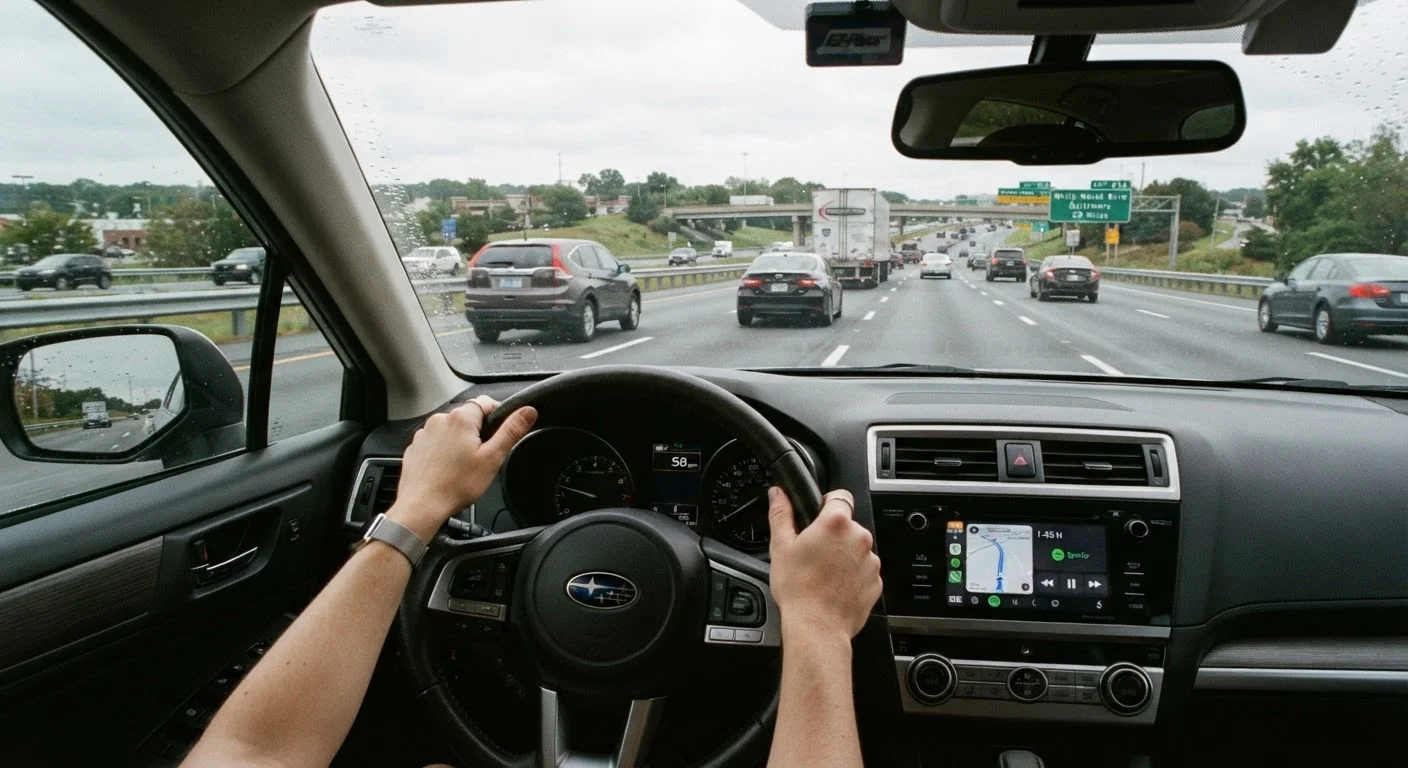
Of all the factors in defensive driving, space and time are the most concrete. Every second of following distance you add between your car and the one ahead gives you more options if something goes wrong. The commonly taught three-second rule — picking a fixed landmark and ensuring three full seconds pass before you reach it — is a baseline for dry roads at highway speeds, not a universal standard.
Wet roads, poor visibility, older vehicles with longer stopping distances, and high-speed travel all require more space. Understanding why is straightforward: stopping distance is a combination of reaction time and braking distance, and both increase with speed. Our related article on reaction time vs. braking distance breaks down exactly how those two components work together.
For following distance specifically, the nuances matter more than most drivers realize — read more in the full breakdown of why the three-second rule exists and when it isn't enough.
Situational Awareness: Seeing the Full Picture
Defensive driving isn't just about what's directly in front of you. Skilled drivers process a much wider field of information: what's happening three or four cars ahead, what the vehicle in the next lane appears to be doing, what's coming up at the next intersection, and whether road conditions are changing.
This is called situational awareness — maintaining a mental picture of your environment that's broad enough to catch developing problems early. Key habits that build it include:
- Scanning the road 10 to 15 seconds ahead rather than fixating on the car immediately in front of you.
- Checking your mirrors every five to eight seconds to track what's happening behind and beside you.
- Watching the tires and movement of vehicles ahead for early signs of braking or lane shifts.
- Identifying exit routes — knowing where you could steer if the car ahead stopped suddenly.
Environmental cues matter too. Wet pavement changes everything about how your car stops and handles. Even at speeds that feel routine, hydroplaning is a real risk on wet roads. Why your car drifts in rain even at legal speeds explains the physics in plain terms. More broadly, developing these scanning habits is covered in depth in our guide to reading the road and spotting hazards early.
Common Situations Where Defensive Habits Pay Off
Defensive principles apply everywhere, but a few specific situations account for a disproportionate share of US crashes:
- Intersections
- A large percentage of traffic crashes happen at intersections. Even when you have the right of way, a brief scan left and right before entering is a habit worth building. Different intersection types — roundabouts, four-way stops, uncontrolled crossings — each carry distinct risks. Navigating each safely walks through the logic for all three.
- Highway merging and lane changes
- High-speed, multi-lane environments demand accurate mirror checks, adequate signals, and awareness of blind spots. Merging too slowly or too abruptly creates risk for multiple drivers at once.
- Following in heavy traffic
- Stop-and-go conditions lead to rear-end collisions when drivers follow too closely and react late. Maintaining extra space gives you a buffer even when the car behind you doesn't.
Whatever the situation, defensive driving returns to the same idea: give yourself time, space, and information. None of these habits require special skills — only consistent attention. And consistent attention, practiced over time, becomes the kind of instinct that keeps drivers out of crashes for years at a stretch.