
Why Driving Myths Are Hard to Shake
Most American drivers learned the basics in a classroom or parking lot, then refined their habits through years of repetition. That combination is fertile ground for myths. A belief that feels right — backed by anecdote or half-remembered advice — can become deeply ingrained long before anyone thinks to question it.
The consequences go beyond minor inefficiency. Several of the most persistent driving myths directly influence behavior behind the wheel in ways that raise crash risk. Understanding what the evidence actually shows is a practical safety tool, not just a trivia exercise. For a broader look at how false beliefs cost drivers, see our piece on common car-buying myths.
Myth
The left lane is the fast lane — you can drive as fast as you want there.
Fact
The left lane is a passing lane in most states, and driving significantly above posted speed limits is illegal regardless of lane.
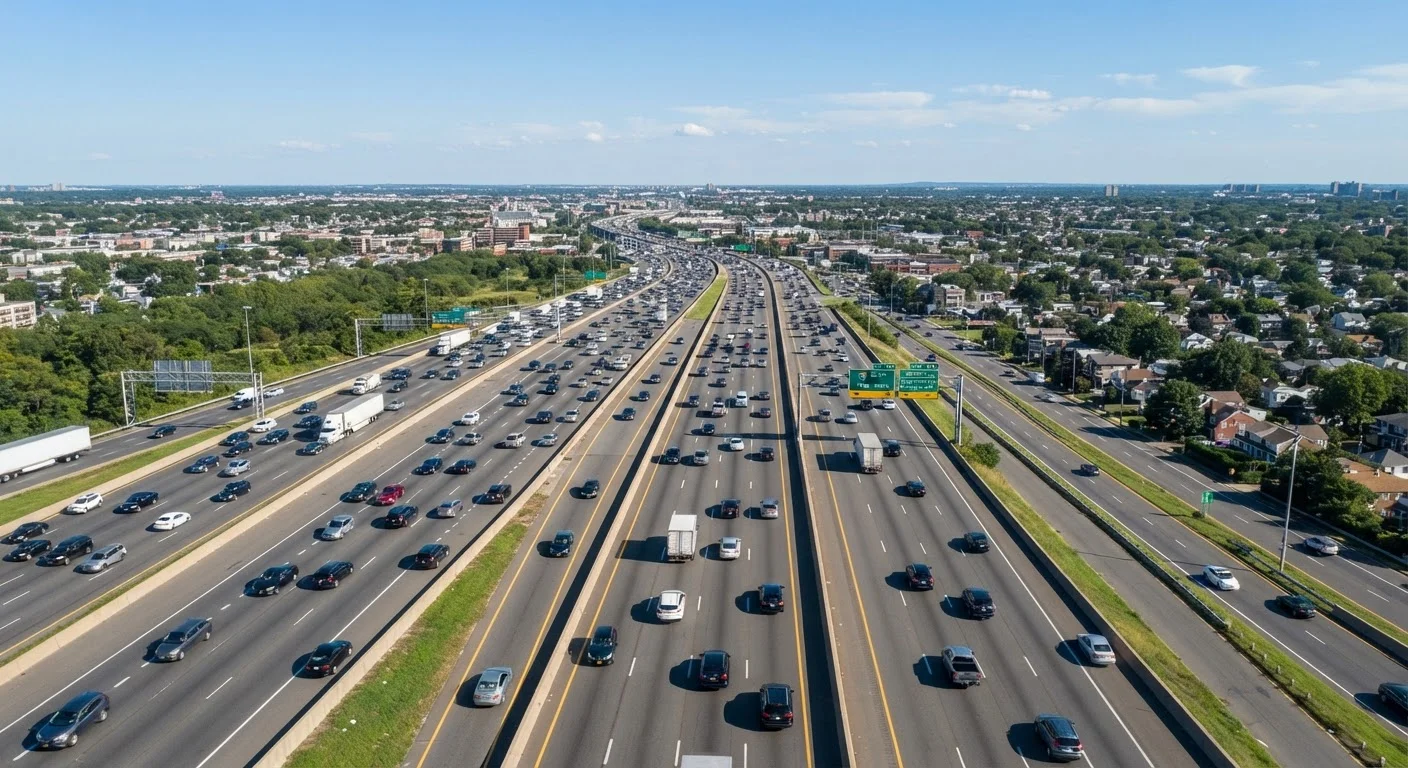
The "fast lane" label is informal and legally meaningless. Most U.S. states designate the left lane for passing or require slower vehicles to keep right. Treating it as a zone where speed limits don't apply is both illegal and a common factor in road-rage incidents and rear-end collisions. Posted limits apply in every lane.
Myth
Hands-free phone calls are safe to use while driving.
Fact
Hands-free calls still cause significant cognitive distraction, impairing reaction time and situational awareness.
The National Safety Council and traffic safety researchers have long documented that the danger of phone calls while driving stems primarily from mental distraction, not just physical hand use. Drivers on hands-free calls miss visual cues, react more slowly to hazards, and experience what researchers call "inattention blindness" — looking at the road but not processing what's there. Hands-free is not risk-free.
Myth
Driving at the speed of surrounding traffic is always safe.
Fact
Traffic flow speed does not override posted limits or account for road conditions, visibility, or driver fatigue.
The idea that matching traffic speed provides legal or physical protection is a rationalization, not a safety principle. Posted speed limits are set based on road design, typical conditions, and stopping distances — not on what a crowd of drivers happens to be doing on a given afternoon. In rain, fog, or at night, even the posted limit may be too fast. Speed is a factor in roughly one-third of all U.S. traffic fatalities annually, according to the National Highway Traffic Safety Administration (NHTSA).
Myth
Bigger vehicles are always safer for their occupants.
Fact
Larger vehicles carry meaningful trade-offs, including longer stopping distances and higher rollover risk.
Mass does provide some protection in certain collision types, but it comes with real downsides. SUVs and trucks have a higher center of gravity, making them more prone to rollovers. They also require longer distances to stop at highway speeds. Size also affects a driver's ability to maneuver quickly. Vehicle safety depends far more on driver behavior, proper maintenance, and the specific crash type than on raw size alone.
Myth
Using your turn signal is optional if no other cars are visible.
Fact
Turn signals are legally required in most states regardless of whether you can see other vehicles nearby.
Visibility of other drivers is not the legal standard — signaling intention before turning or changing lanes is. Pedestrians, cyclists, and vehicles that appear quickly from driveways or side streets all benefit from consistent signaling. Habitual signal use is a core element of predictable driving, which is one of the most effective crash-prevention behaviors a driver can practice.
Myth
Red-light running only causes minor fender-benders.
Fact
Intersection crashes from red-light running are among the most deadly crash types, often involving high lateral impact speeds.
The NHTSA reports that red-light running kills hundreds of people and injures tens of thousands each year in the United States. T-bone collisions — where one vehicle strikes the side of another — expose occupants to the least-protected parts of a vehicle's structure. The combination of high speed and perpendicular impact makes intersection crashes disproportionately fatal compared with rear-end collisions.
What the Evidence Shows About Distraction and Speed
Two of the myths below — hands-free calls and the safety of driving at the speed of traffic — deserve extra attention because they are regularly cited to justify behavior that crash data contradicts.
Speed Limits Apply in All Conditions
Posted speed limits reflect ideal road conditions. In rain, fog, construction zones, or heavy traffic, safe speed may be well below the posted limit. NHTSA data links excessive speed to a substantial share of U.S. highway fatalities annually. Adjusting speed to actual conditions — not just the posted number or surrounding traffic flow — is both a legal and practical safety requirement.
Research consistently shows that cognitive distraction, not just physical hand use, is what degrades driving performance during phone calls. Meanwhile, speed-related crashes account for a significant share of U.S. highway fatalities every year, regardless of whether a driver was keeping pace with surrounding traffic.
Understanding the true risk profile of U.S. roads — including how those risks shift between environments — can help drivers calibrate better. Our article on city streets vs. rural highway risks breaks down how danger changes by setting. For the specific challenges of low-visibility driving, night driving statistics is worth a read.
Good habits compound. Consistent turn signal use, following proper merge technique — see highway merging done right — and maintaining safe following distances each individually reduce risk. Together, they form the foundation of defensive driving.
Wet-road behavior is another area where intuition fails drivers. Many assume legal speeds are safe in rain, but hydroplaning can begin at surprisingly low speeds. Our companion piece on why cars drift in rain explains the physics behind it.