
Why 'Stopping Distance' Is Actually Two Different Things
Most drivers think of stopping as a single action — you see danger, you stop. But stopping is actually a two-phase process, and each phase is controlled by completely different factors.
Reaction distance is how far your car travels from the moment you perceive a hazard to the moment your foot applies the brake. Braking distance is how far the car continues to move after the brakes are engaged. Add them together and you get total stopping distance — the number that actually determines whether you hit something or not.
Confusing the two isn't just a trivia issue. Drivers who underestimate their reaction time tend to follow too closely. Drivers who ignore braking distance carry too much speed into bad conditions. Both mistakes have real consequences on American roads every day.
| Criterion | Reaction Time | Braking Distance |
|---|---|---|
| What controls it | Human alertness and distraction | Speed, tires, road surface |
| Average at 60 mph (dry) | ~132 feet (1.5 sec delay) | ~180 feet after braking starts |
| Effect of doubling speed | Distance doubles | Distance quadruples |
| Affected by wet roads | Minimally | Significantly — can double or more |
| How to reduce it | Stay alert, eliminate distractions | Slow down, maintain tires, increase following gap |
| Driver control | High — behavioral choices | Moderate — vehicle and conditions matter |
Reaction Time: The Human Factor
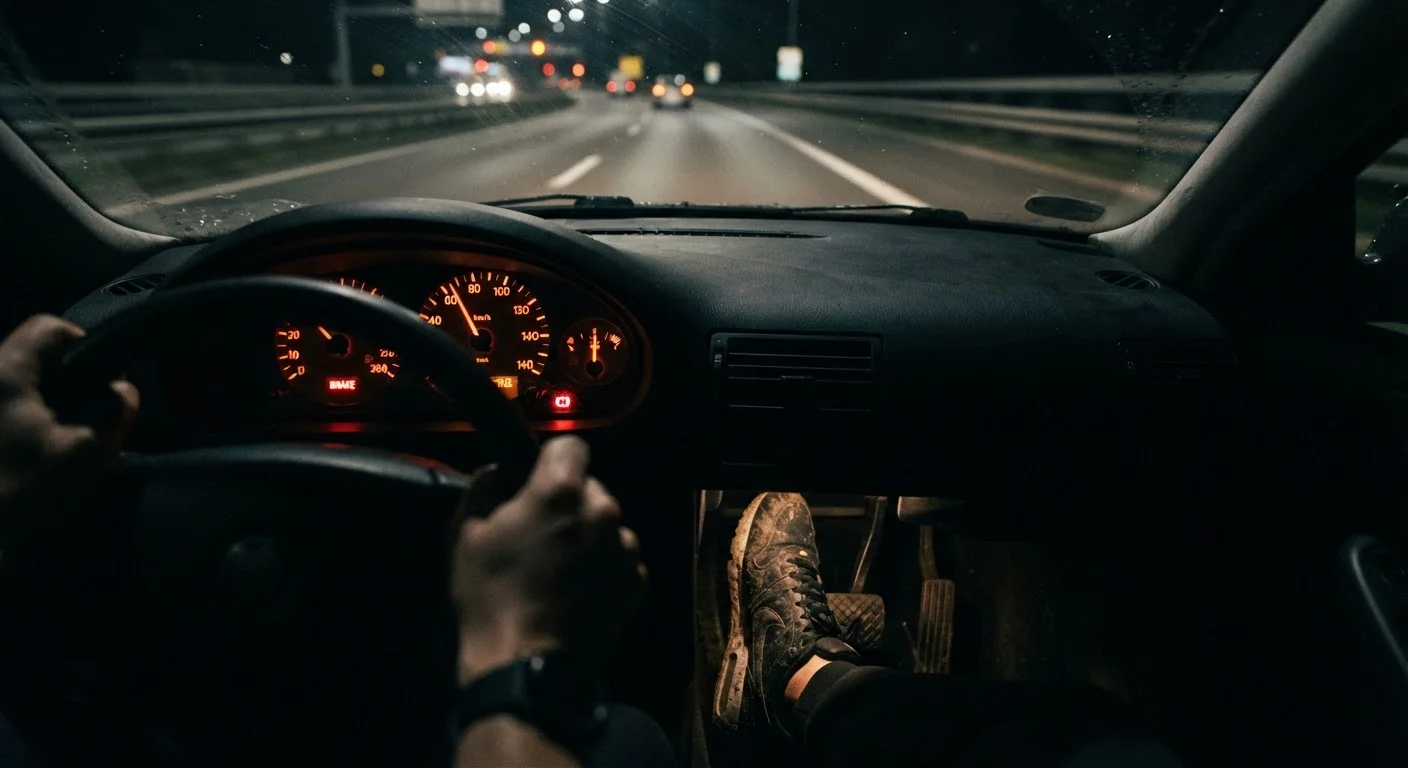
Under ideal conditions — alert, undistracted, expecting a hazard — the average driver takes about 1.5 seconds to react. At 60 mph, that's roughly 132 feet of travel before the brake pedal is touched. Some estimates from traffic safety researchers put the baseline closer to 1.0 to 2.5 seconds depending on the driver and situation.
That range matters enormously. A driver who is fatigued, distracted by a phone, or impaired by alcohol or medication can see reaction times stretch well beyond 2 seconds. At highway speeds, each additional second of delay adds another 88 feet of uncontrolled travel.
Reaction time is entirely under your control before you ever turn the key. Being rested, keeping your eyes scanning ahead, and eliminating in-cab distractions are the most effective ways to keep it as short as possible. Our article on how to spot hazards earlier goes deeper on the scanning habits that give you more time to react in the first place.
Braking Distance: The Physics Factor
Once your foot hits the brake, physics takes over — and physics doesn't care about your intentions. Braking distance is determined by your speed, your tires' grip on the road surface, and your vehicle's braking system condition.
The relationship between speed and braking distance is not linear — it's exponential. Double your speed and your braking distance roughly quadruples. At 30 mph on dry pavement, a modern car might stop in about 45 feet after brakes engage. At 60 mph, that same car needs closer to 180 feet. On wet pavement, those numbers climb significantly. On ice, stopping distances can increase by five times or more.
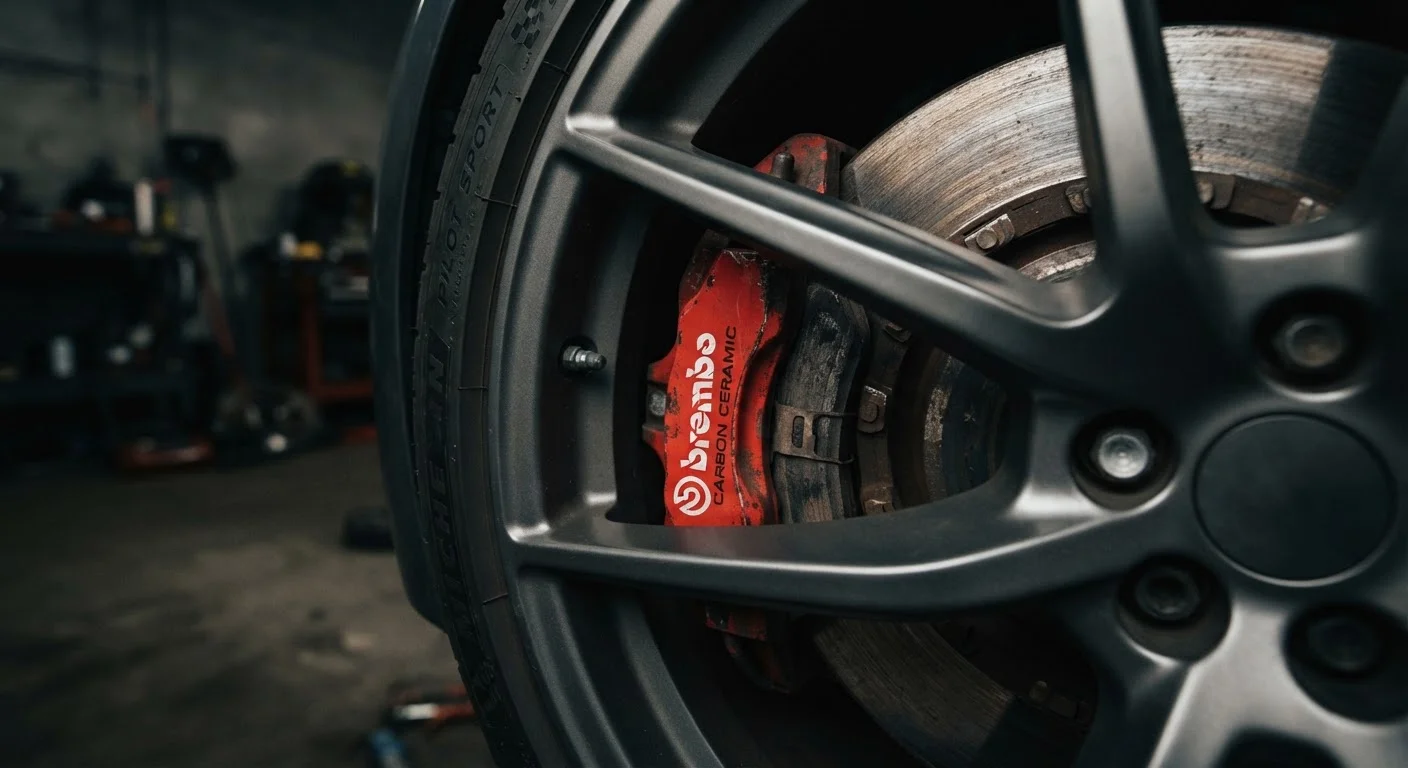
Tire condition plays a major role here too. Worn tread reduces the friction available to slow the vehicle, and underinflated tires can affect both grip and brake response. Anti-lock braking systems (ABS) — standard on virtually all modern vehicles — help maintain steering control during hard braking but do not necessarily shorten stopping distance on every surface.
Whether you drive city streets or open highways, the physics shift depending on environment. Urban and rural roads each carry distinct braking challenges — from wet urban pavement to loose gravel on country roads.
~132 ft
Distance traveled during reaction at 60 mph
Based on a 1.5-second average reaction time, a widely cited baseline in traffic safety education.
4×
Braking distance increase when speed doubles
Because kinetic energy grows with the square of velocity, doubling speed roughly quadruples the distance needed to stop.
5×+
Braking distance multiplier on ice vs. dry pavement
Ice dramatically reduces tire-road friction; stopping distances on ice can be five times greater than on dry asphalt.
What This Means for How You Drive
Understanding both components reshapes how you think about following distance. The commonly recommended 3-second gap between you and the car ahead is designed to account for reaction time — it gives you time to perceive and respond. But in adverse weather, most safety guidelines suggest increasing that gap to 5–6 seconds or more, precisely because braking distance grows so quickly in poor conditions.
Speed choice also looks different through this lens. Reducing highway speed from 70 mph to 60 mph doesn't just save a little braking distance — it meaningfully reduces both the reaction-phase distance and the braking-phase distance, while also shrinking the severity of any collision that does occur.
The practical takeaway: treat your following distance as a buffer for your reaction time, and treat your speed as a dial that controls your braking distance. Manage both, and you're managing total stopping distance — the number that actually determines outcomes in an emergency.