
Where the Three-Second Rule Comes From
Driver education programs across the US have taught the three-second rule for decades, and the logic behind it is straightforward. At any speed, it takes the average driver roughly 1.5 seconds to perceive a sudden hazard, decide to brake, and physically move their foot to the pedal. That's the reaction phase — and during it, your car is still moving at full speed. The remaining time in the three-second window is meant to cover actual braking.
The three-second rule works in time rather than distance because the space you need grows with speed. At 30 mph, three seconds translates to roughly 130 feet. At 65 mph, it's closer to 285 feet. A distance-based rule ("stay two car lengths back") becomes dangerously inadequate as speed increases — which is why time is the more reliable measure.
To use the rule, find a stationary roadside marker. The moment the car ahead passes it, count: "one-one-thousand, two-one-thousand, three-one-thousand." If your front bumper reaches that marker before you finish counting, close the gap. For more on how reaction time factors into stopping math, see our breakdown of reacting vs. braking in an emergency.
When Three Seconds Isn't Enough
The three-second baseline assumes dry pavement, a functioning vehicle in good repair, and an alert driver. Change any of those variables and the math shifts — sometimes dramatically.
~29%
Share of US crashes that are rear-end collisions
According to NHTSA data, rear-end crashes represent a significant portion of all reported traffic crashes each year in the United States.
10x
Longer stopping distance on ice vs. dry pavement
Transportation safety research consistently shows that icy roads can extend braking distance by a factor of ten compared to dry conditions at the same speed.
1.5 sec
Average driver reaction time before braking begins
Driver behavior studies cited by the Federal Highway Administration estimate the average perception-reaction time for an alert driver is approximately 1.5 seconds.
- Wet roads: Water reduces tire grip significantly. Most driver safety guidance recommends a six-second gap in rain. At highway speeds on wet pavement, your braking distance can more than double compared to dry conditions.
- Snow and ice: Stopping distances on ice can be ten times longer than on dry pavement at the same speed. A three-second gap that feels comfortable in summer may leave you with no margin at all in winter.
- Large vehicles: If you're driving behind an SUV, pickup, or commercial truck, your sightlines are shortened. You may not see a road obstruction until the vehicle ahead of you is already braking. Add distance accordingly.
- Fatigue or distraction: Reaction time worsens measurably when a driver is tired or distracted. A driver who hasn't slept well or who glanced at a phone may need an extra second or more just to perceive a hazard. Speed and reaction distance are directly linked — the faster you go, the more any delay costs you.
- Older brakes or worn tires: Equipment condition matters. Worn brake pads or tires with low tread depth extend stopping distance even when the driver reacts promptly.
The Real-World Cost of Following Too Closely
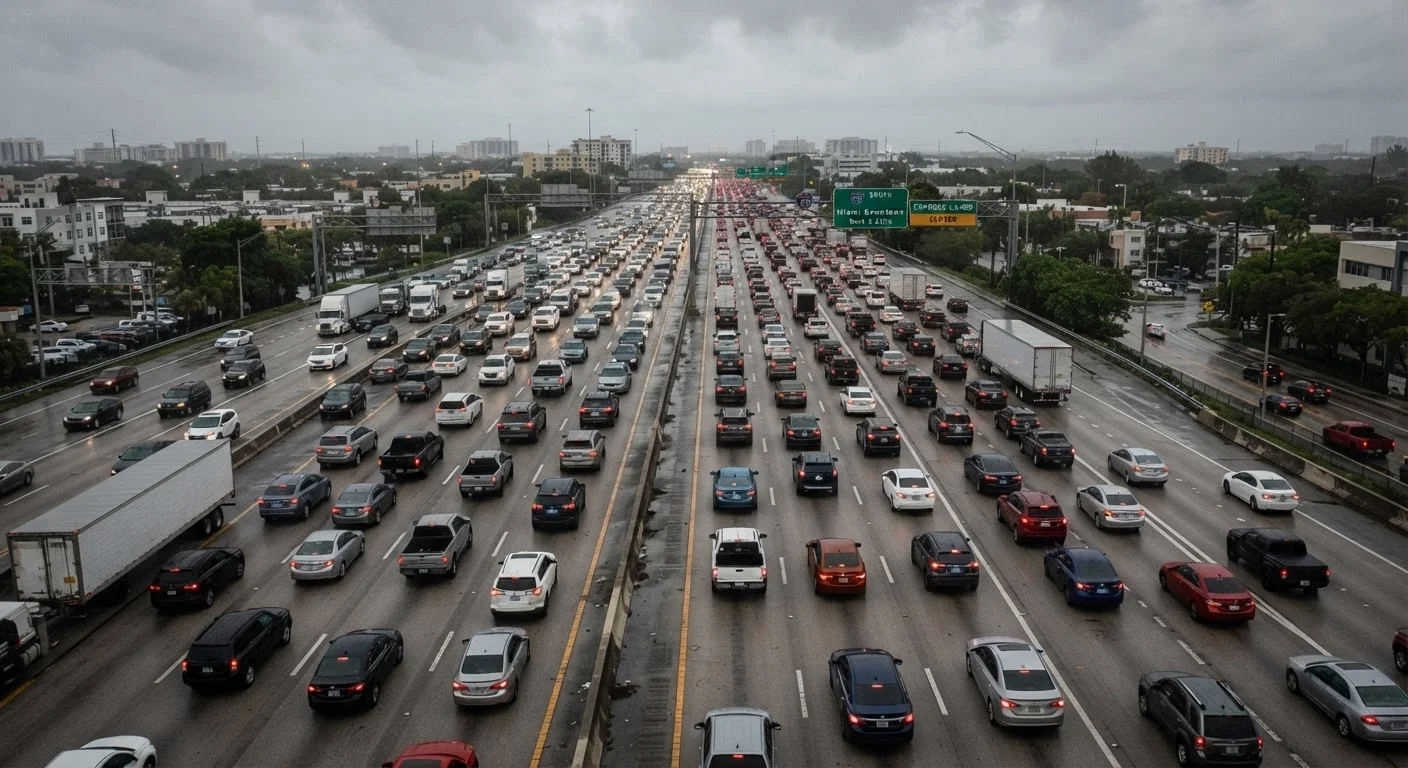
Rear-end crashes are consistently among the most common crash types reported by the National Highway Traffic Safety Administration (NHTSA). Many are linked to following too closely or inattention. The physical consequences are real: whiplash injuries, vehicle damage, and — at higher speeds — fatalities.
What makes tailgating particularly deceptive is that it often feels low-risk in the moment. Traffic is moving, the road is dry, nothing bad has happened yet. But the margin for error in a close-following situation is extremely thin. A child running into the street, a tire blowout on the car ahead, or even a driver tapping their brakes in surprise can turn that thin margin into a collision.
Defensive driving frames following distance not just as a reaction buffer but as information — the space in front of you lets you see farther ahead, giving you more warning of developing hazards before the car immediately ahead of you does.
Building Better Following Distance as a Habit
The challenge with following distance is that it requires active maintenance. Traffic naturally compresses gaps — cars merge in, speeds fluctuate, and the gap you set a minute ago may be half the size by now.
Recalibrate Your Gap Regularly
Following distance compresses naturally as you drive — other vehicles merge in, traffic slows and speeds up. Make it a habit to recheck your three-second gap each time you enter a new road type or speed zone. A quick count takes less than five seconds and is one of the simplest adjustments you can make for safety.
A practical approach: check your following gap every time you pass a highway on-ramp or enter a new speed zone. Use that moment as a prompt to recount your three-second interval and adjust if needed. It takes about four seconds of conscious attention and can make a significant difference in your stopping cushion.
Following distance is also relevant at lower speeds. In urban and suburban driving, short following gaps are common and often feel normal — but intersections, pedestrian crossings, and stop-and-go traffic all create sudden-stop scenarios. Keeping a one-to-two car length gap at 25–35 mph gives you more reaction room than most city drivers routinely maintain.
If you find yourself frequently frustrated by other vehicles filling the gap you create, that frustration is understandable — but the answer is not to reduce your gap. The answer is to accept that the space ahead of you will sometimes be claimed, and re-establish your gap calmly. Your following distance protects you regardless of what drivers around you do.