
Three Radios, Three Very Different Jobs
Open your phone's settings and you'll find toggles for Bluetooth, Wi-Fi, and sometimes NFC sitting right next to each other. They all transmit data without wires, so it's easy to assume they're interchangeable. They're not. Each technology operates on different radio frequencies, at different ranges, and was designed for a fundamentally different task.
Understanding the distinction helps you troubleshoot connection problems, conserve battery life, and make smarter decisions about how your devices talk to each other. For a broader look at how internet connectivity works in the home, see Home Internet 101.
| Bluetooth typical range | ~30 feet (10 meters) (Bluetooth SIG specification, Class 2 devices) |
| Wi-Fi typical indoor range | 100–300 feet (30–90 meters) (Varies by router, band, and building materials) |
| NFC operating distance | Up to 1.6 inches (4 cm) (ISO/IEC 14443 and NFC Forum standards) |
| Primary Bluetooth use cases | Audio, peripherals, sensors |
| Primary Wi-Fi use cases | Internet access, streaming, large file transfers |
| Primary NFC use cases | Contactless payments, quick pairing, tag reading |
Bluetooth: Short-Range, Low-Power Device Pairing
Bluetooth is a short-range radio standard designed to connect personal devices directly to one another — no router, no internet connection required. Its effective range is typically 30 feet (about 10 meters) for standard implementations, though newer versions like Bluetooth 5.x can reach farther under ideal conditions.
The technology was built with power efficiency in mind. That's why wireless earbuds, fitness trackers, and car audio systems use it: they need a stable, low-drain link to a phone or laptop without burning through a battery in hours. A variant called Bluetooth Low Energy (BLE) takes this further, allowing small sensors — like a blood pressure cuff or a door lock — to transmit occasional data bursts while running for months on a coin battery.
Bluetooth creates what's called a personal area network (PAN): a small bubble of connectivity centered on you. It isn't designed to carry heavy data loads like streaming 4K video, but it handles audio, file transfers, and sensor data with ease.
Wi-Fi: Local Network Access and Internet Connectivity
Wi-Fi connects your devices to a local network — and through a router, to the internet. It operates at far greater ranges than Bluetooth (typically 100–300 feet indoors, depending on obstacles) and moves significantly more data, making it the right tool for streaming, video calls, and downloading large files.
Wi-Fi runs on specific radio frequency bands. Most home networks broadcast on 2.4 GHz, 5 GHz, or both. A newer Wi-Fi 6E standard adds a 6 GHz band. Each frequency involves trade-offs between range and speed — a topic worth understanding if you're placing devices throughout a multi-room home. Learn how the bands differ and which suits each use case.
Wi-Fi is also where physical layout matters most. Walls, appliances, and neighboring networks all shape coverage. Understanding how signals travel through your home can help you identify dead zones before they frustrate you. For comparisons between wireless and wired connections, Wi-Fi vs. Ethernet covers when plugging in still matters.
NFC: Tap-to-Transfer at an Inch or Less
Near Field Communication (NFC) is the shortest-range wireless technology of the three — it works only when two devices are within about 1.6 inches (4 centimeters) of each other. That proximity requirement is a deliberate security feature, not a limitation.
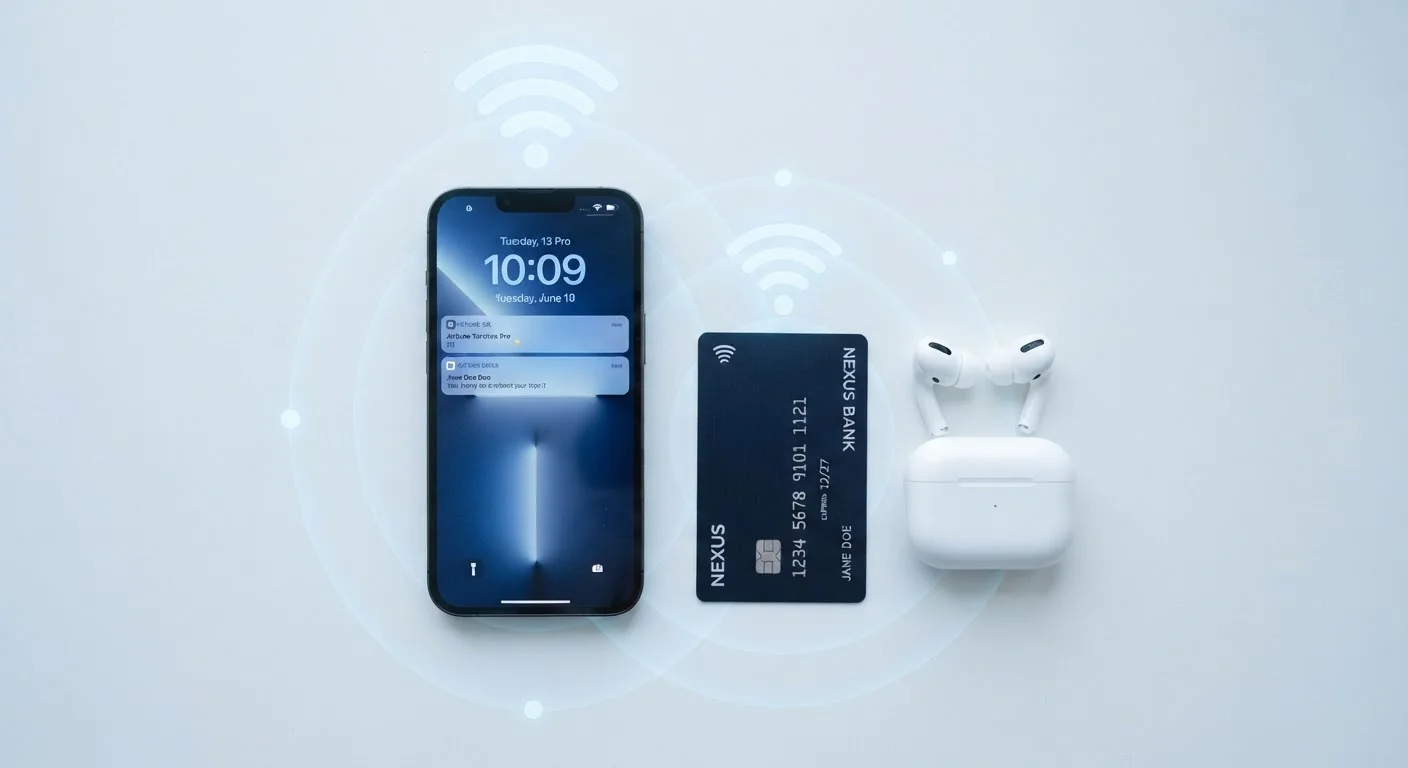
NFC is what powers contactless payments when you tap your phone or smartwatch at a checkout terminal. It also enables quick Bluetooth pairing on some headphones (tap the headphones to your phone and they connect automatically), reading information from NFC-enabled tags embedded in product packaging, and transit card emulation. The data transferred is small and the exchange is nearly instantaneous.
Because NFC requires physical closeness, it's extremely difficult to intercept without the user's knowledge — making it well-suited for payment and authentication tasks where security matters.
Bluetooth Low Energy (BLE)
A variant of Bluetooth designed to transmit small amounts of data using very little power. It allows devices like heart rate monitors and smart sensors to run on small batteries for extended periods.
Personal Area Network (PAN)
A small network centered on an individual, typically spanning only a few meters. Bluetooth connections between a phone and its paired accessories form a PAN.
Near Field Communication (NFC)
A short-range wireless standard that enables data exchange between devices held within about 4 centimeters of each other. Commonly used for contactless payments and device pairing.
Frequency Band
A range of radio frequencies allocated for a specific type of wireless communication. Wi-Fi uses 2.4 GHz, 5 GHz, and 6 GHz bands, each with different range and speed characteristics.
Radio Frequency (RF)
Electromagnetic waves used to transmit data wirelessly. Bluetooth, Wi-Fi, and NFC each use different portions of the RF spectrum to avoid interfering with one another.
Choosing the Right Technology for the Task
The three technologies aren't in competition — they're complementary. A practical way to think about it:
- Bluetooth when you need a persistent, low-power link between two personal devices without a network (earbuds, keyboard, fitness tracker).
- Wi-Fi when you need high throughput or internet access (streaming, video calls, large downloads). For situations where home broadband isn't available, mobile hotspot trade-offs are worth understanding.
- NFC when you need a fast, secure, one-time exchange at very close range (payments, pairing, tag reading).
Most modern smartphones contain all three radios simultaneously. Knowing which one your device is using — and why — puts you in a better position to troubleshoot when something doesn't connect, and to appreciate just how much invisible infrastructure is packed into the device in your pocket. For a full map of home connectivity options, visit the Internet & Connectivity hub.