
Soil Quality and Control
The most important variable in any garden is what plants are growing in — and this is where raised beds and in-ground planting diverge most dramatically.
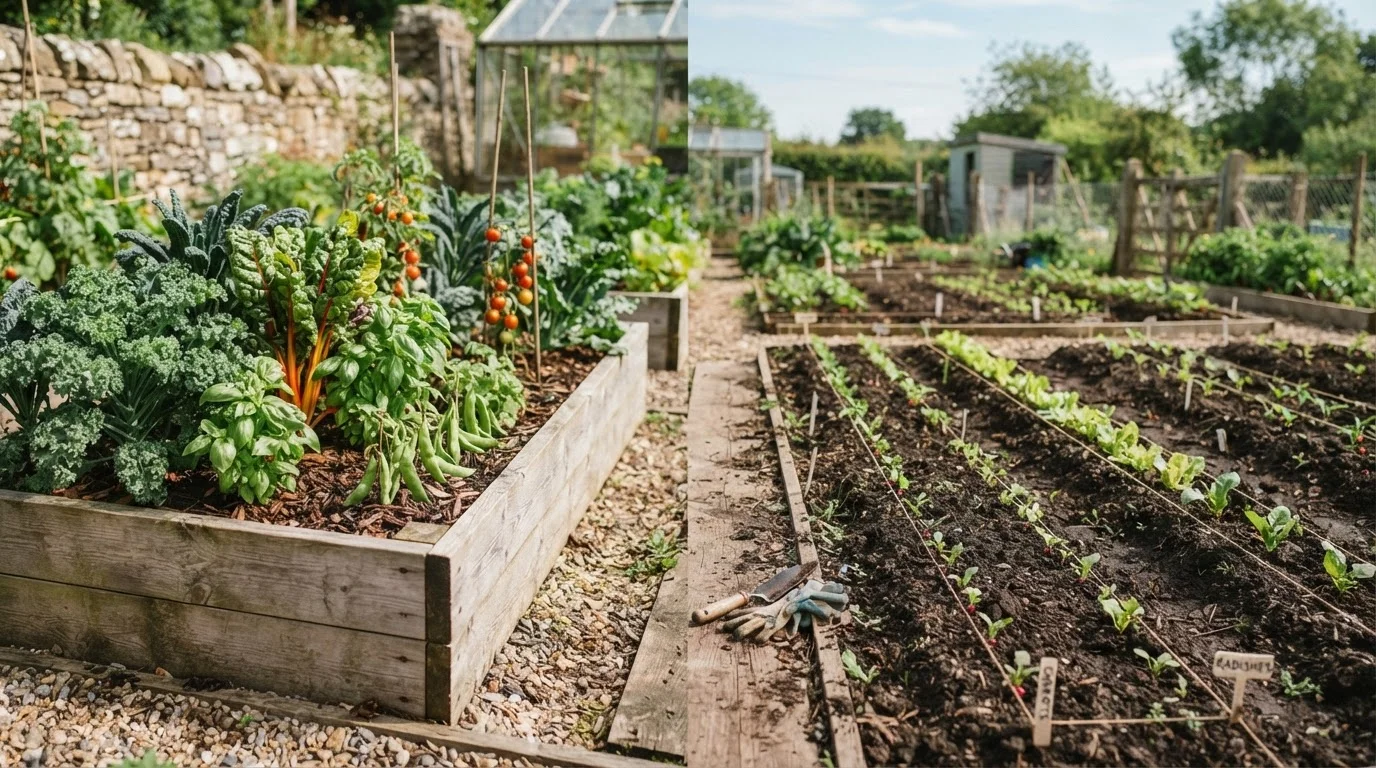
With raised beds, you build the growing environment from scratch. A common starting mix combines topsoil, compost, and a coarse material like perlite or aged bark fines for drainage. This gives you near-complete control over pH, texture, and nutrient profile before a single seed goes in. For more on what those soil properties actually mean for plant health, see understanding soil pH, drainage, and texture.
In-ground planting means working with what's already there. In many parts of the US, native soil ranges from sandy and nutrient-poor to dense clay that drains poorly after rain. Improving it takes time — repeated applications of compost and organic matter over seasons rather than a one-time fill. That said, if your yard already has rich, loamy soil, in-ground planting is often the more sensible choice. You're not paying to replicate what nature already provided.
| Criterion | Raised Garden Beds | In-Ground Planting |
|---|---|---|
| Upfront cost | Moderate to high (frame + fill soil) | Low (tools and amendments only) |
| Soil control | Complete — custom fill from day one | Gradual — improve over seasons |
| Drainage | Excellent; dries out faster | Varies by native soil type |
| Weed pressure | Low initially; manageable long-term | Higher; requires regular suppression |
| Spring warm-up speed | Faster — earlier planting dates | Slower in most climates |
| Root depth for large crops | Limited by bed depth | Unrestricted |
| Accessibility | High — adjustable height possible | Low — requires bending to ground level |
| Scalability for large areas | Expensive to scale | Economical at any scale |
Drainage, Watering, and Weed Pressure
Raised beds drain more freely by design — excess water moves down and out through the open base. This is a significant advantage in regions with heavy rainfall or where clay soil holds water long enough to cause root rot. The tradeoff is that raised beds also dry out faster, which can increase watering frequency during dry stretches.
In-ground gardens retain moisture longer, which can reduce irrigation needs for established plants. Pairing either method with a drip system helps optimize water delivery — the drip irrigation vs. sprinkler systems comparison walks through how to match irrigation type to your garden layout.
Weed management also differs meaningfully. Raised beds, especially those started with fresh fill, begin nearly weed-free. Over time, airborne seeds will colonize the surface, but the contained area makes hand-weeding straightforward. In-ground gardens require more consistent weed suppression — a good mulching strategy helps considerably. Garden mulching done right covers the depth and material choices that actually make a difference.
Cost and Setup Effort
Upfront cost is one of the clearest practical differences between these two approaches.
In-ground planting typically requires only basic tools and soil amendments — the ground itself is free. For gardeners with adequate native soil, this is simply the most economical path. Large growing areas, in particular, are far more affordable to establish in-ground than in raised beds.
Raised beds carry material costs for the frame itself (wood, metal, or composite), plus the fill soil. A 4×8-foot bed commonly requires 8–12 cubic feet of growing mix, and that volume adds up quickly across multiple beds. However, that investment is usually front-loaded — once built and filled, the bed needs only modest annual topping-off with compost to stay productive.
6–8 weeks
Earlier planting window in raised beds
University extension programs in northern states have observed raised bed soil reaching workable temperatures several weeks ahead of in-ground soil in early spring.
~$200–$400
Typical cost for one 4×8 raised bed
Material and fill costs vary widely by region and material choice; wood frames tend to cost less upfront, while metal or composite options often carry a higher price but longer lifespan.
30–50%
Potential reduction in weed time
Gardeners commonly report spending significantly less time on weed management in raised beds compared to equivalent in-ground plots, particularly in the first two to three seasons.
For homeowners considering a broader yard overhaul alongside their garden, it's worth reading about common lawn renovation mistakes before committing to a full-yard project plan.
Plant Compatibility and Growing Season
Neither method suits every plant equally well. Root vegetables like carrots and parsnips perform beautifully in raised beds where the loose, stone-free soil lets them develop cleanly. Compact crops — lettuce, herbs, bush beans, and most kitchen garden staples — thrive in the controlled environment a raised bed provides.
Large sprawling plants — think winter squash, sweet corn, or indeterminate tomato varieties that send roots deep — often do better in-ground, where there's no hard boundary on how far roots can travel. Trying to contain these varieties in a standard 12-inch-deep raised bed can limit yield.
Raised beds also warm up noticeably faster in spring. Soil temperature in an elevated bed can run several degrees warmer than ground soil during the early season — a meaningful advantage for warm-season crops like peppers and melons in northern states. Gardeners working with shade or unusual light conditions may also find the shade gardening strategies guide useful when positioning either type of bed.
For planning a mix of crops that perform year after year, the perennials vs. annuals guide can help you build a more balanced planting plan regardless of which growing method you choose.