
Why Lawn Renovations So Often Underdeliver
A patchy, thinning, or weed-choked lawn feels like an obvious candidate for renovation — but the gap between effort and outcome surprises a lot of homeowners. Bags of seed get spread, a hose gets run, and weeks later the results are sparse or uneven. The problem is rarely the seed itself.
Lawn renovation fails most often in the preparation phase, before a single seed hits the ground. Compacted soil, wrong timing, and inadequate moisture management are predictable obstacles — and avoidable ones. Understanding what typically goes wrong is the fastest way to set your project up differently. For broader context on keeping your outdoor space in shape across the year, the seasonal yard maintenance guide provides useful framing on when renovation work fits into the annual care cycle.
Soil Prep Is Non-Negotiable
No amount of quality seed or careful watering will rescue a lawn planted into compacted, nutrient-deficient, or pH-imbalanced soil. Before you spend money on seed, invest in a soil test — available through most county cooperative extension offices — and address what the results show. Skipping this step is the single most common reason lawn renovations disappoint.
The Most Common Mistakes — and How to Correct Course
The errors below cover the full arc of a lawn renovation project, from initial planning through the critical early weeks after seeding. Each one is common, each one is fixable, and recognizing them in advance is the practical advantage most failed projects lacked.
Planting at the wrong time of year for your grass type.
Why it happens: Many homeowners seed whenever weather feels mild or they finally have a free weekend, without considering whether conditions actually support germination.
Neglecting to test and amend the soil before seeding.
Why it happens: Soil testing feels like an extra step, and many homeowners assume their existing soil is adequate since something was growing in it before.
Poor seed-to-soil contact due to skipping surface prep.
Why it happens: Homeowners often spread seed over existing thatch or loosely raked soil, assuming the seed will find its way down.
Watering too infrequently or inconsistently during germination.
Why it happens: People apply the deep, infrequent watering advice meant for established lawns to newly seeded areas, which have completely different moisture needs.
Mowing new grass before it has rooted firmly.
Why it happens: Eager homeowners see green growth and assume the lawn is ready, not realizing that young seedlings have shallow, fragile roots.
Using the wrong seed mix for the site's light and soil conditions.
Why it happens: Seed is often chosen based on price, packaging appeal, or what the neighbor used — not what actually suits the yard's conditions.
Beyond the lawn itself, the way you handle water delivery matters as much as frequency. If you're evaluating irrigation options for a larger yard, our comparison of drip irrigation and sprinkler systems can help you choose the right setup for consistent coverage during the germination window.
It's also worth revisiting some common assumptions before you begin. The landscaping myths that waste money and kill plants piece addresses several misbeliefs that show up regularly in lawn care, including overwatering habits that hurt more than they help.
Building Conditions That Give New Grass a Real Chance
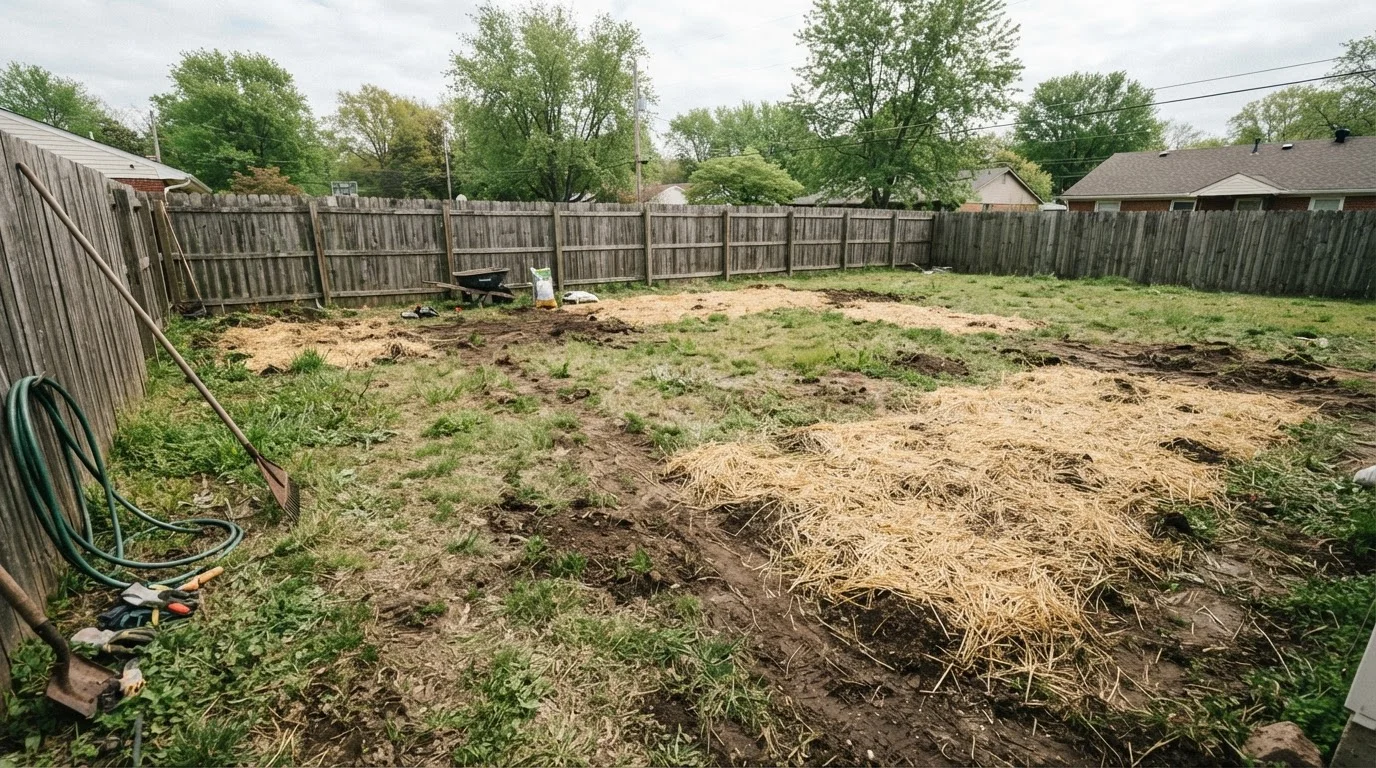
Successful lawn renovation is as much about creating the right environment as it is about execution. The weeks before seeding — testing soil, correcting compaction, clearing debris, and choosing the right seed for actual site conditions — determine far more of the outcome than what happens after the seed goes down.
Think of new grass as needing a reliable, uninterrupted support system: consistent moisture, firm soil contact, and protection from both foot traffic and premature mowing. Most renovations that struggle can be traced back to at least one of those three elements being inconsistent. For a complete seasonal and skill-level framework that puts lawn renovation into context alongside all your other yard work, the yard and garden care resource is worth bookmarking as a reference throughout the growing season.