
How Each System Delivers Water
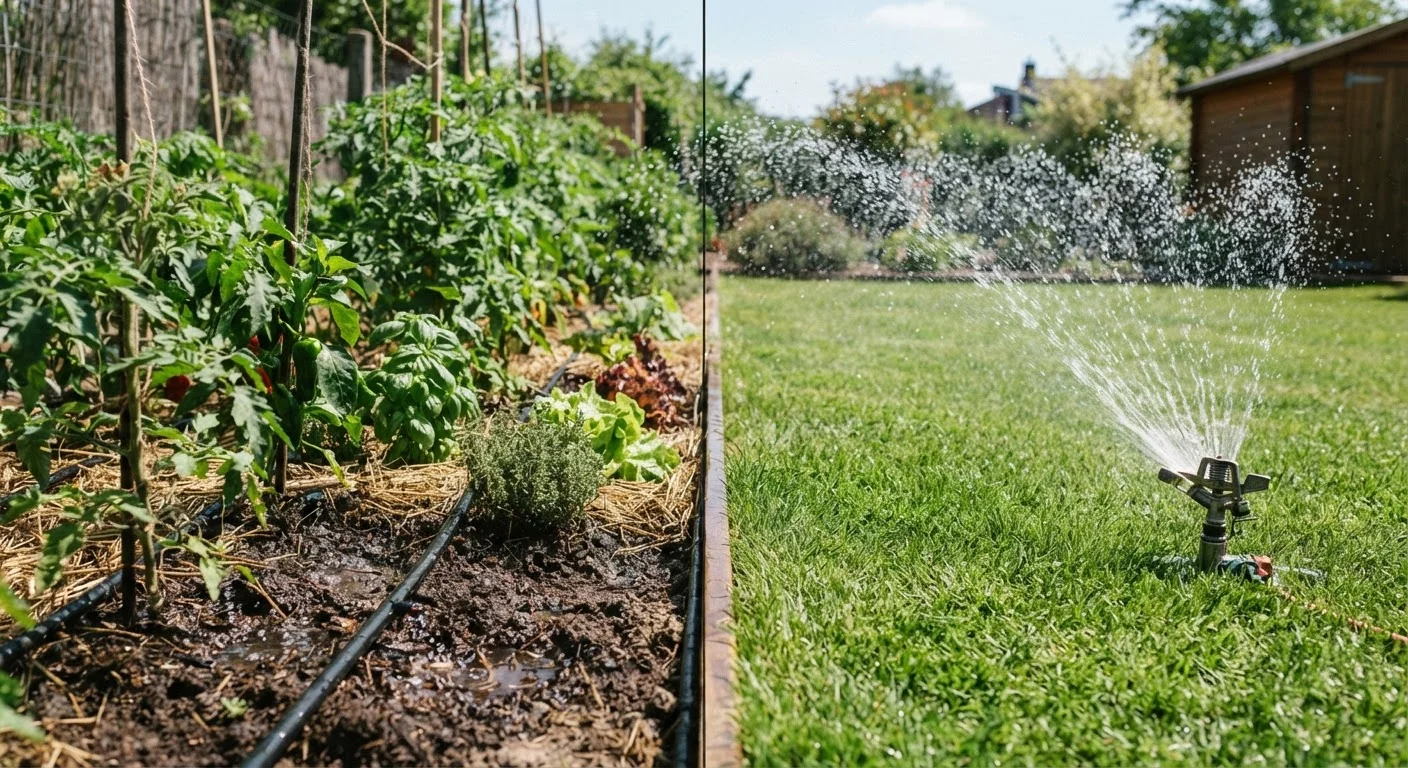
The core difference between drip irrigation and sprinkler systems comes down to where water lands. Drip irrigation runs flexible tubing along or just below the soil surface, releasing water through small emitters — measured in gallons per hour — directly at or near each plant's root zone. Little water touches foliage or bare soil between plants. Sprinkler systems, by contrast, distribute water through the air via rotating heads, pop-up nozzles, or oscillating arms that broadcast water over a wide zone, much like rainfall.
This distinction drives almost every trade-off you'll encounter: efficiency, disease risk, coverage area, and how you design the system around your yard's layout.
| Criterion | Drip Irrigation | Sprinkler Systems |
|---|---|---|
| Water delivery method | Slow release at root zone | Aerial broadcast over area |
| Water efficiency | High — minimal evaporation | Moderate — wind and heat losses |
| Coverage area | Targeted, zone-specific | Wide, even lawn coverage |
| Best plant types | Vegetables, shrubs, trees | Turf grass, groundcovers |
| Foliage disease risk | Low — foliage stays dry | Higher — foliage stays wet |
| DIY installation | Moderate — no tools needed | Complex in-ground; easy above-ground |
| Winterization required | Drain lines; disconnect hoses | Blow-out required in freeze zones |
| Upfront cost (general) | Lower for small areas | Higher for in-ground systems |
Water Efficiency and Conservation
Drip irrigation is consistently more water-efficient than sprinkler systems. Because water travels through tubing directly to roots, losses from wind drift and surface evaporation are minimal. Sprinklers, especially those running during warm or windy parts of the day, can lose a meaningful portion of their output before it reaches plant roots. Soil compaction from overhead watering can also reduce absorption over time.
That said, efficiency depends heavily on how either system is used. An automated sprinkler system with a rain sensor and a smart controller can be tuned to avoid waste, while a poorly maintained drip system with clogged emitters or misplaced lines can underperform. For guidance on matching any watering method to your specific turf conditions, see our lawn watering schedule guide.
One note: drip systems do not aerate or cool leaf surfaces, which some heat-stressed plants can benefit from. Sprinklers also help settle dust and can be useful in very dry climates for that reason.
Coverage, Plant Compatibility, and Layout
Sprinkler systems excel at covering large, open expanses of turf quickly and uniformly. Overlapping spray patterns ensure few dry spots across a lawn. However, that broad spray is less precise — water lands on pathways, mulch, and bare areas just as readily as on plant roots. Overhead watering also keeps foliage wet longer, which can encourage fungal disease in susceptible plants like tomatoes, squash, or roses.
Drip irrigation shines in defined planting zones: vegetable rows, raised beds, shrub borders, and container gardens. Emitters can be placed individually near each plant, making the system adaptable as your garden changes. If you're deciding between raised beds and in-ground planting, drip irrigation pairs particularly well with raised beds — see our comparison of raised beds vs. in-ground planting for more context.
For mixed yards, many homeowners zone their irrigation: sprinklers for the lawn, drip lines for beds and borders. Both systems can connect to a single controller with separate valve zones.
Setup Complexity and Ongoing Maintenance
Sprinkler systems — particularly in-ground pop-up systems — typically require professional installation for best results, involving trenching, valve manifolds, and backflow preventers. Above-ground oscillating or hose-end sprinklers are the simplest option but need manual repositioning. Most in-ground sprinkler systems need annual winterization (blowing out lines with compressed air) in freezing climates.
Drip systems are more DIY-friendly at the component level: tubing, emitters, and fittings connect without specialized tools, and surface-laid lines can be adjusted as plantings change. The trade-off is planning time — mapping emitter placement, calculating flow rates, and ensuring even pressure across longer runs takes care upfront. Filters and pressure regulators are required to prevent clogged emitters and are an ongoing maintenance item.
Both systems benefit from periodic inspection for leaks, clogged heads or emitters, and damaged lines. The complete yard and garden care resource covers seasonal maintenance tasks that complement any irrigation setup.
Check Local Water Restrictions First
Many municipalities across the U.S. have water use restrictions that specify permitted watering days, times, or methods — and these rules can influence which system makes practical sense for your yard. Some local water utilities also offer rebates for switching to drip irrigation or installing smart sprinkler controllers. Contact your local water authority or visit their website before committing to a system design.