
Why Soil Properties Matter Before the First Seed Goes In
Most gardening problems that show up above ground — yellowing leaves, stunted growth, root rot — actually start below it. Soil isn't a passive filler; it's a living system that either supports or limits everything you plant. Before investing in seeds, transplants, or amendments, understanding three core properties gives you a clear picture of what you're actually working with.
pH, drainage, and texture are interconnected. A clay soil drains poorly and tends to become compacted. A compacted soil often shifts toward more acidic conditions. An acidic soil locks out key nutrients regardless of what fertilizer you apply. Each factor influences the others, which is why testing before planting — rather than troubleshooting afterward — is the most efficient approach.
This article is part of a broader set of resources on yard care. See the complete yard and garden care guide for a full overview of what goes into maintaining a healthy outdoor space.
Soil pH: The Chemical Gatekeeper
pH measures how acidic or alkaline your soil is, on a scale from 0 to 14. A value of 7.0 is neutral; below that is acidic, above is alkaline. What makes pH so consequential is that it controls the solubility of nutrients in soil water — meaning it determines what plant roots can actually absorb, regardless of what's physically present in the ground.
At pH extremes, even well-fertilized soil can leave plants deficient. Iron and manganese become unavailable in alkaline soils. Calcium and magnesium become scarce in strongly acidic soils. Most garden plants — vegetables, perennials, lawn grasses — do best in the 6.0–7.0 range because this is where the broadest spectrum of nutrients remains accessible.
6.0–7.0
Optimal pH range for most garden vegetables
This range is recommended by most US cooperative extension programs as the target for maximum nutrient availability in vegetable gardens.
~25%
Ideal organic matter content in productive garden soil
Soil scientists generally suggest that healthy garden loam contains around 20–25% organic matter by volume to support drainage, nutrients, and biology.
1–2 hours
Water drainage time indicating healthy soil percolation
The percolation test benchmark used by many extension services: a 12-inch hole should drain fully within one to two hours for soil to be considered well-drained.
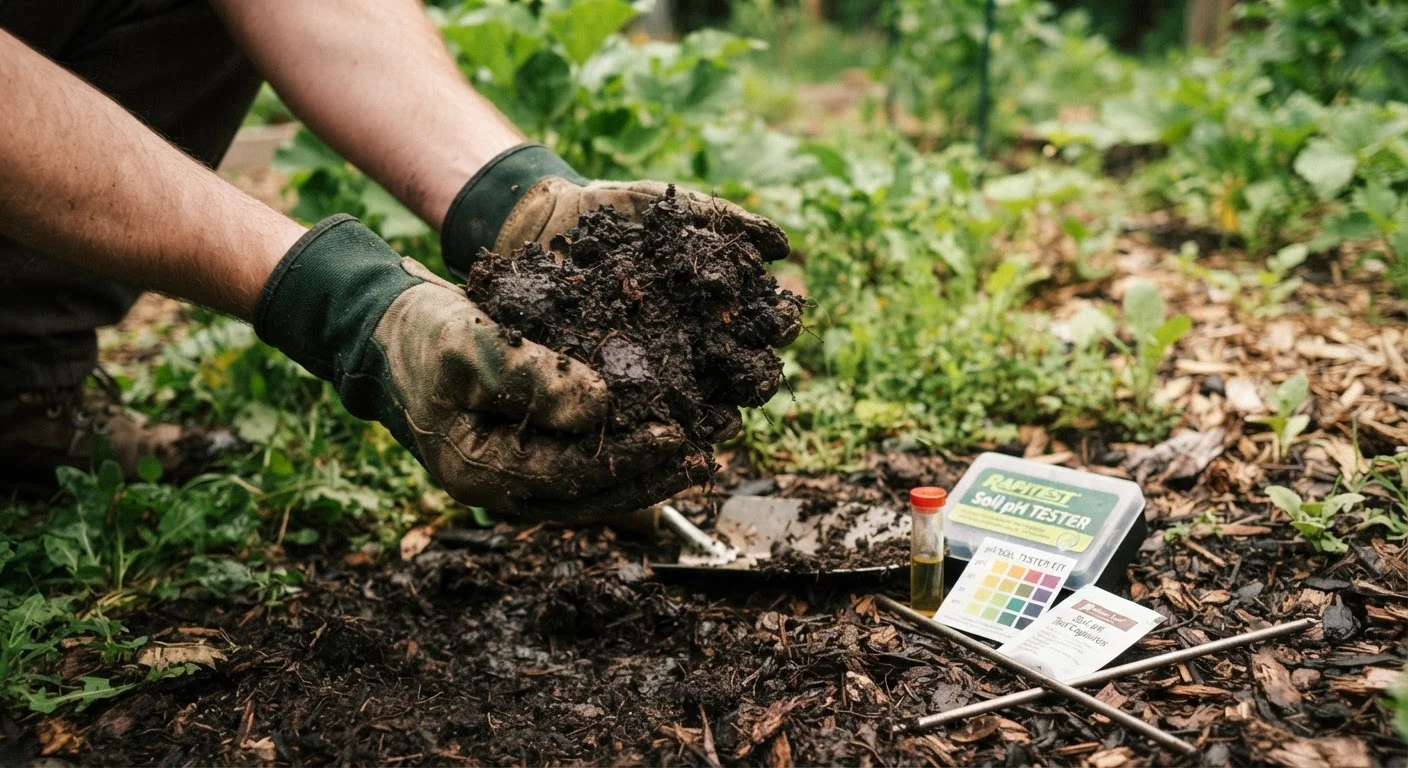
To raise pH in acidic soil, gardeners typically incorporate ground limestone. To lower pH in alkaline soil, elemental sulfur is commonly used, though adjustments happen slowly — often over an entire growing season. Always retest after amending, and follow guidance from a cooperative extension soil report rather than guessing at quantities.
If you're planning to grow vegetables, knowing your pH first helps you make smarter choices about what to plant and what to adjust. The guide to starting a vegetable garden covers this alongside site selection and layout planning.
Drainage: The Flow Your Plants Depend On
Soil drainage describes how quickly water moves through the soil profile after rain or irrigation. Both extremes cause problems: waterlogged soil starves roots of oxygen and promotes fungal disease, while overly fast-draining soil can't hold moisture long enough for plants to take it up between waterings.
The simplest diagnostic is the percolation test. Dig a hole about 12 inches deep and wide, fill it with water, and let it drain fully. Refill it and time the second drain. Well-drained soil clears within one to two hours. Soil that holds water for six or more hours has a drainage problem worth addressing before you plant.
The most sustainable fix for poor drainage is organic matter. Compost added consistently year over year creates aggregates — clumps of soil particles — that open up clay soils and give sandy soils more water-holding capacity simultaneously. For more on building soil through compost, see the home composting guide. For persistent drainage problems, raised beds offer a practical workaround by letting you build a contained growing environment with imported soil.
Soil Texture: Sand, Silt, and Clay — and How to Read Yours
Texture refers to the ratio of three particle sizes in your soil: sand (largest, gritty), silt (medium, powdery when dry), and clay (smallest, sticky when wet). The relative proportion of these three determines much of how your soil behaves — how it drains, how it compacts, how tightly it holds nutrients, and how easy it is to work.
The jar test is a reliable DIY method. Fill a quart jar one-third with dry soil, add water to nearly full, shake vigorously, and let it settle undisturbed for 24–48 hours. Sand settles first (within minutes), silt next (within an hour), and clay remains suspended longest, forming the topmost layer. The relative depths of each layer approximate your soil's texture profile.
Loam — a roughly balanced mix of sand, silt, and clay with good organic content — is considered ideal because it combines drainage, nutrient retention, and workability. If your jar test shows heavy clay dominance, amending with compost each season will gradually improve structure. Adding mulch on top also helps moderate temperature and moisture while organic material slowly works into the surface layer.
For those weighing fertilizer options once they understand their soil's base chemistry, the comparison of chemical fertilizers and organic amendments is a useful next step.
Test Before You Amend — Not After
Adding lime, sulfur, or large volumes of compost without a baseline soil test is a common and costly mistake. Over-liming an already-neutral soil can push pH too high and create new nutrient lockout problems. A $15–$25 test kit or a cooperative extension lab report gives you the specific information you need to amend purposefully rather than guessing.