
Understanding What Each Approach Actually Does
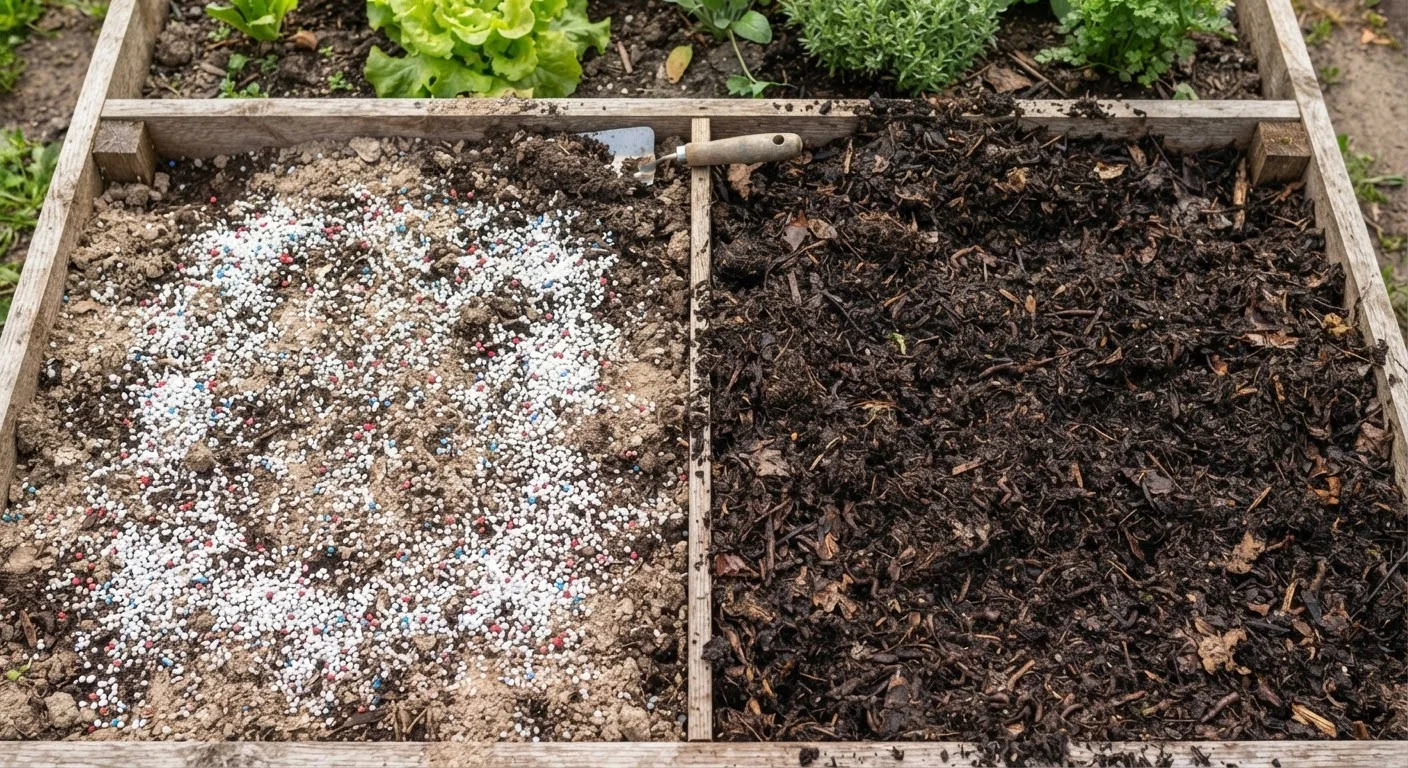
Before comparing the two, it helps to clarify what each category actually delivers. Chemical (synthetic) fertilizers are manufactured products — typically derived from mineral salts or industrial processes — that supply specific nutrients such as nitrogen (N), phosphorus (P), and potassium (K) in concentrated, water-soluble forms. Plants absorb them relatively quickly, and the nutrient ratios are printed precisely on the label.
Organic amendments is a broader term covering materials of biological origin — compost, aged manure, bone meal, blood meal, kelp meal, worm castings, and more. These materials release nutrients more slowly as soil microbes break them down, and they simultaneously improve soil texture, moisture retention, and microbial diversity.
Understanding your soil before adding either is essential. See our guide to soil pH, drainage, and texture to learn what a simple soil test can reveal about what your garden actually needs.
Side-by-Side Comparison: Key Criteria
Gardeners typically weigh five practical factors: nutrient availability, soil health impact, cost, environmental considerations, and ease of use. Here's how the two approaches compare across each dimension.
| Chemical Fertilizers | Organic Amendments | |
|---|---|---|
| Nutrient availability speed | Rapid (days) | Slow (weeks to months) |
| Soil structure improvement | None | Significant over time |
| Upfront cost per application | Generally lower | Generally higher |
| Environmental runoff risk | Higher if over-applied | Lower, but not zero |
| Microbial activity benefit | Minimal to none | Feeds soil biology directly |
| Ease of precise dosing | High — labeled N-P-K ratios | Lower — variable nutrient content |
| Long-term soil fertility | Diminishing without organics | Builds cumulatively |
One point worth emphasizing: synthetic fertilizers feed the plant, while organic amendments primarily feed the soil. That distinction has compounding effects over time.
Environmental and Long-Term Soil Health Considerations
Synthetic fertilizers, particularly nitrogen-heavy formulas, carry meaningful environmental risk when misapplied. Excess nitrogen can leach through sandy soils into groundwater or run off into waterways, contributing to algae blooms and reduced aquatic oxygen — a process called eutrophication. Applying fertilizer immediately before heavy rainfall significantly raises this risk.
Organic amendments, by contrast, release nutrients gradually. That slower release generally reduces leaching, though very high applications of manure can still contribute to phosphorus runoff over time. Their bigger advantage is what they add beyond nutrients: organic matter feeds earthworms and beneficial microbes, improves soil aggregation (clumping structure that helps drainage and aeration), and can increase a soil's cation exchange capacity — its ability to hold and release nutrients.
If you're building a new garden bed — whether raised or in-ground — organic amendments are often the first investment. Our article on raised beds vs. in-ground planting explores how soil control factors into that decision.
Cost, Practicality, and Knowing When to Combine Both
Per pound of nutrient delivered, synthetic fertilizers are usually less expensive upfront. A bag of granular balanced fertilizer covers a large area for a modest cost. Organic amendments — especially purchased compost, worm castings, or specialty meals — can add up quickly when applied at recommended rates.
That said, consistent organic amendment over several seasons often reduces how much external input a garden needs. As soil health improves, plants use available nutrients more efficiently, and water retention improves — reducing irrigation frequency too.
Many experienced home gardeners use a pragmatic hybrid: organics to build long-term soil structure each season, with targeted synthetic applications to correct acute deficiencies revealed by a soil test. You can also produce your own organic amendment at virtually no cost. Our composting guide walks through how to turn kitchen and yard waste into garden-ready material.
Start With a Soil Test Before You Add Anything
A basic soil test — available through most cooperative extension services for a modest fee — tells you actual nutrient levels and pH before you spend money on amendments. Over-fertilizing is as problematic as under-fertilizing, and both are easily avoided when you have data. Apply only what the test indicates your soil actually needs.
For a broader seasonal overview of soil and planting decisions, the complete yard and garden care resource covers each stage of the growing year in one place.