
Choosing the Right Location
The single most important decision you'll make is where your garden goes. Vegetables are sun-hungry plants, and most need a minimum of six full hours of direct sunlight per day — eight is better for fruiting crops like tomatoes and peppers. Walk your yard on a clear day and observe which areas stay sunny from mid-morning through afternoon.
Beyond light, consider these factors:
- Level ground: Slopes cause water to run off before it can soak in. A relatively flat site simplifies watering and reduces erosion.
- Access to water: Carrying a heavy watering can across the yard gets old fast. Locate your garden within reach of an outdoor spigot or hose.
- Distance from large trees: Tree roots compete aggressively for moisture and nutrients, and overhanging branches cast shade. Give your plot at least 10 feet of clearance.
- Proximity to the house: Gardens closer to the kitchen door get tended more consistently. Convenience matters more than it seems.
If your soil is dense clay or rocky, or if sunlight is limited in your preferred spot, a raised bed may be a practical solution. See our guide to raised beds vs. in-ground planting to weigh your options before you start digging.
Planning Your Garden Layout
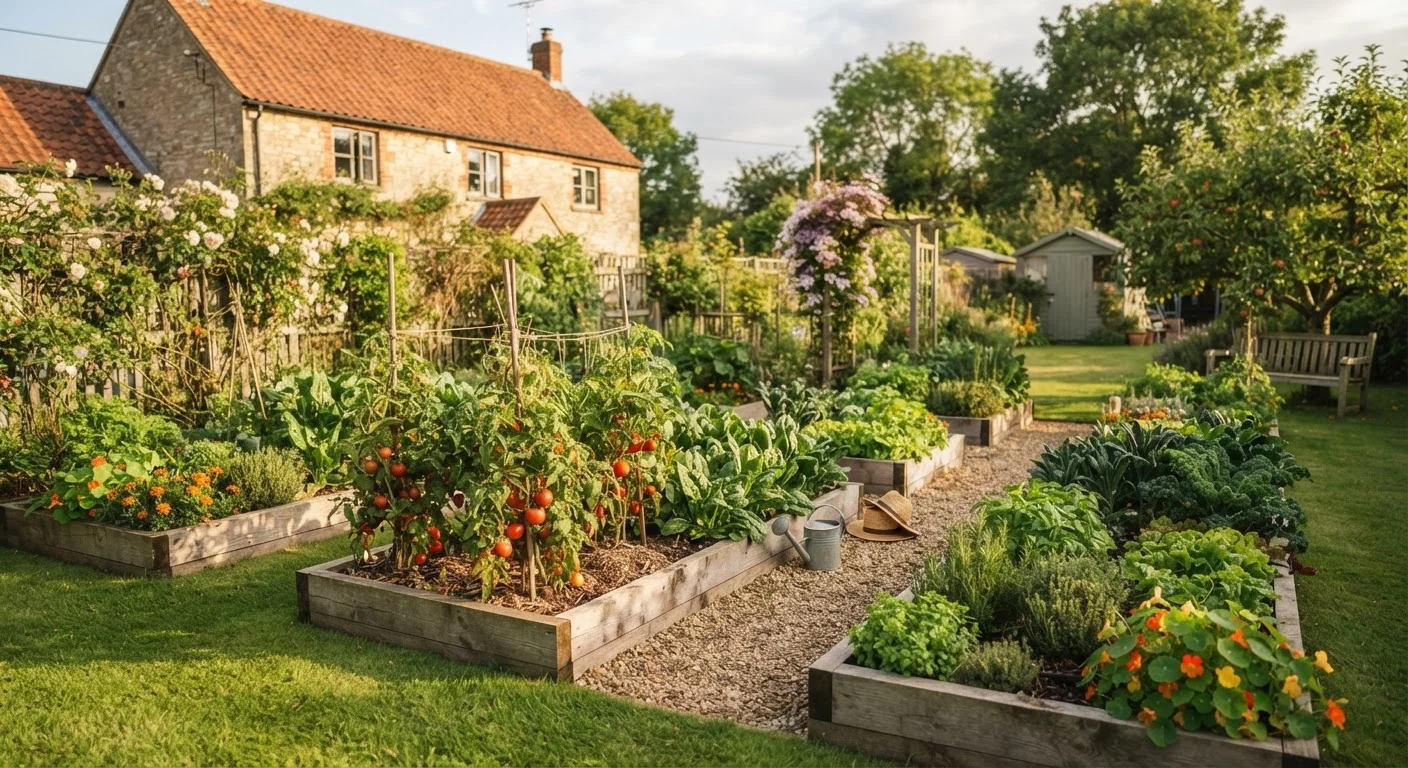
Resist the urge to plant everything at once. A 4×8 foot bed is an excellent starting size — large enough to grow several vegetables, small enough to manage on a weekend schedule. Sketch your layout on paper before you put a shovel in the ground.
A few layout principles that pay off quickly:
- Tall plants go north: Place taller crops like staked tomatoes or trellised beans on the north side of your bed so they don't shade shorter plants.
- Group by water needs: Thirsty plants like squash and cucumbers do better clustered together, making watering more efficient.
- Leave working space: You need to reach the center of your bed without stepping on the soil and compacting it. Keep beds no wider than four feet if you're accessing from both sides, or two feet from one side.
Note your local last frost date — available from your local cooperative extension office — and use it as the backbone of your planting calendar. This date tells you when it's safe to set out warm-season transplants and when to direct-sow cool-season seeds outdoors.
For broader context on maintaining a productive outdoor space through every season, the Yard & Garden Care resource hub is a useful ongoing reference.
Preparing the Soil
Healthy soil is the foundation every vegetable garden stands on. Before planting, you need to understand what you're working with. A basic soil test — available through most county extension offices for a modest fee — tells you your soil's pH and nutrient levels, so you can amend with purpose rather than guessing.
Most vegetables prefer a pH between 6.0 and 7.0. Outside that range, nutrients become less available to plant roots even if they're present in the soil.
Test Before You Amend
Spend a little time and money on a soil test before adding any fertilizers or lime. Amending soil without knowing its current state can push pH or nutrient levels in the wrong direction. Your county's cooperative extension service often offers low-cost testing and will interpret the results for you.
To improve soil structure and fertility, work in a generous amount of organic matter before planting:
- Compost — 2 to 3 inches worked into the top 8 to 12 inches of soil — is the most versatile amendment. It improves drainage in clay soils, helps sandy soils retain moisture, and feeds soil biology. Making your own is easier than many people expect; our guide to composting at home explains the process from start to finish.
- Aged manure adds nitrogen and organic matter. Use well-composted manure only — fresh manure can burn plants and introduce pathogens.
Avoid working soil when it's saturated — squeezing a handful should crumble, not form a muddy ball. Tilling wet soil destroys the structure you're trying to build.
Selecting and Planting Vegetables
Choose crops that match your climate, your family's eating habits, and your patience level. For a first garden, prioritize vegetables that produce quickly and tolerate beginner mistakes.
Reliable beginner crops
- Lettuce and salad greens: Ready in as little as 30 days; grow well in partial shade and cool weather.
- Green beans: Direct-sow seeds after frost; minimal fuss, high yield.
- Zucchini and summer squash: Vigorous growers that reward almost any gardener — plant just one or two to avoid being overwhelmed by the harvest.
- Cherry tomatoes: More forgiving than large-fruiting varieties; productive over a long season.
- Radishes: Fastest return of any vegetable — mature in three to four weeks.
Seeds vs. transplants
Some crops — beans, squash, and root vegetables — grow best direct-sown from seed because they don't transplant well. Others, like tomatoes and peppers, are typically started indoors weeks before the last frost date or purchased as young plants from a nursery. Seed packets and plant tags list spacing and depth requirements; follow them — crowded plants compete for light and air circulation, inviting disease.
Ongoing Care and Your First Harvest
A vegetable garden rewards consistent, modest attention rather than occasional intensive effort. Build a simple weekly routine around these four priorities:
- Water deeply and consistently. Aim for about one inch per week. Deep, infrequent watering encourages roots to grow downward rather than staying shallow and vulnerable to drought. A simple rain gauge helps you know whether nature has already covered the week's need.
- Weed early and often. Weeds compete directly with your vegetables for water and nutrients. Pulling them when they're small takes minutes; waiting until they're established takes much longer and risks disturbing neighboring roots.
- Monitor for pests and disease. Flip leaves and look at stems during your weekly check. Catching an aphid colony or early signs of fungal disease when it's small is far easier than managing a full outbreak. Remove affected plant material promptly.
- Harvest regularly. Picking vegetables at their peak — or even slightly early — signals the plant to keep producing. Leaving overripe squash or beans on the vine slows production significantly.
Don't be discouraged by setbacks. Every gardener loses plants to weather, pests, or simple mistakes. Each season teaches you something the previous one couldn't. For homeowners who are also navigating other improvement projects around the house, the home improvement primer for first-time homeowners offers practical framing for tackling multiple projects without getting stretched too thin.