
What Makes a Plant a Perennial or an Annual?
The distinction is simpler than it sounds. Annuals complete their entire life cycle — germination, flowering, seed production, and death — within a single growing season. You plant them, they dazzle you, and then they're done. Perennials, by contrast, die back in winter (in most climates) but regrow from their root system the following spring, returning for three or more years.
A third category worth knowing: biennials, which take two growing seasons to complete their cycle. They're less common in home gardens but worth recognizing so you aren't surprised when a plant doesn't bloom in year one.
Understanding this basic biology helps you set realistic expectations — and plan a garden that delivers across multiple seasons rather than peaking in just one. For a broader look at how planting choices interact with soil and layout decisions, see our guide to raised beds vs. in-ground planting.
Perennials: Strengths, Limitations, and Best Uses
Perennials are often described as the backbone of a garden — and for good reason. Once established, they return reliably with minimal effort. Over time, many spread and fill in, reducing the bare soil where weeds take hold.
Where perennials shine
- Lower long-term cost: You pay more upfront, but you don't repurchase every year.
- Structural consistency: Clumping perennials like coneflowers, daylilies, and black-eyed Susans anchor a bed visually season after season.
- Wildlife value: Many perennials, especially native species, support pollinators and birds. Our overview of native plants explores this further.
Where perennials fall short
- Most bloom for just a few weeks per season, leaving gaps in color if you don't plan carefully.
- Establishment can take one to two years before plants reach full performance — gardeners sometimes say "sleep, creep, leap."
- Some require division every few years to stay vigorous.
Layer for Continuous Color
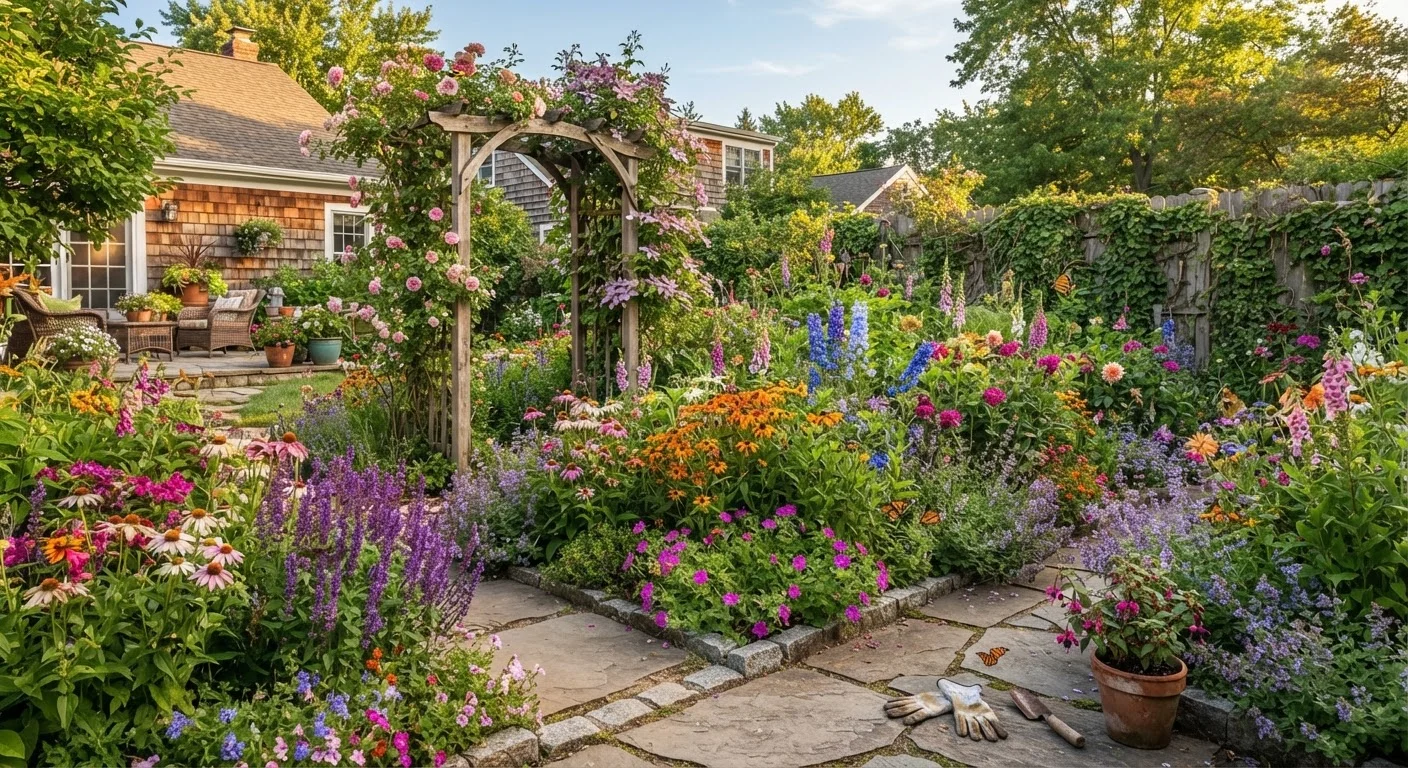
A reliable rule of thumb: for every three perennials you plant, add one annual to cover bloom gaps. Early-spring bulbs (which behave like perennials), summer-blooming coneflowers, fall asters, and warm-season annuals like zinnias can create a garden with color in almost every month of the growing season. Plan bloom times on paper before buying plants to avoid empty patches.
Annuals: Strengths, Limitations, and Best Uses
Annuals earn their place through sheer flower power. Because they put all their energy into blooming and setting seed, they typically produce far more continuous color than perennials over the same period. That nonstop performance is why annuals dominate container plantings and window boxes.
Where annuals shine
- Season-long color: Varieties like zinnias, marigolds, and impatiens bloom from planting until frost.
- Design flexibility: Want a different color scheme next year? Simply plant something new. Annuals let you experiment without commitment.
- Quick results: Unlike perennials, annuals perform in their first season — ideal for new gardens or recently moved-into homes.
Where annuals fall short
- Cumulative cost adds up. Buying annuals every spring — plus the labor of replanting — represents a recurring expense.
- They provide no structural presence in winter, leaving beds looking bare unless combined with evergreen elements.
- Some annuals need deadheading (removing spent flowers) regularly to keep blooming.
Pairing annuals with a healthy soil foundation pays dividends. See our guide to composting at home for building the kind of rich soil that helps both plant types thrive.
Side-by-Side: How the Two Approaches Compare
Weighing perennials against annuals across the factors that matter most to home gardeners makes the trade-offs concrete and easier to act on.
| Perennials | Annuals | |
|---|---|---|
| Lifespan | 3+ years from same roots | One growing season only |
| Bloom duration | A few weeks per season | Continuous until frost |
| Upfront cost | Higher per plant | Lower per plant |
| Long-term cost | Lower — no annual repurchase | Higher — replanted every year |
| Design flexibility | Fixed palette year to year | Change colors each season |
| Establishment time | 1–2 seasons to peak performance | Performs fully first season |
| Maintenance | Division every few years | Regular deadheading often needed |
| Winter interest | Seedheads; some evergreen types | None — beds go bare |
The table above makes clear that neither type is universally superior — they complement each other's gaps.
Building a Mixed Garden That Works Season After Season
The most effective home gardens use perennials as the primary structure and fill remaining space with annuals. Here's a practical framework:
- Map your bloom windows. List which perennials bloom in spring, summer, and fall. Aim to have at least one category represented per zone of the garden.
- Identify the gaps. Periods where perennials aren't blooming are prime spots for annuals to carry the color.
- Use annuals at the edges and in containers. The front of a border and container plantings are low-commitment spots where annuals make the most visual impact.
- Repeat perennial groupings. Planting perennials in clusters of three or five (rather than single specimens) creates a cohesive look as they grow.
- Account for shade. Not every part of your yard gets full sun — our shade gardening guide covers both annual and perennial options for lower-light conditions.
For a season-by-season maintenance rhythm that keeps mixed plantings looking their best — from spring soil prep to fall cutback — see our seasonal yard maintenance checklist.