
What Makes a Plant 'Native'
The word native gets used loosely in gardening conversations, but it has a specific ecological meaning. A native plant is one that occurred in a particular region before European colonization and developed alongside the local web of insects, birds, mammals, fungi, and soils over millennia. That long co-evolution matters: native plants have formed relationships with local species that non-native plants simply haven't had time to develop.
Importantly, nativeness is always geographically defined. A black-eyed Susan (Rudbeckia hirta) native to the eastern US is not considered native in Southern California. When assessing whether a plant is right for your yard in native-plant terms, the question isn't just "does this grow here?" but "did this evolve here?"
This distinction separates native plants from two other common categories: naturalized plants, which are non-natives that have established themselves in the wild without necessarily causing harm, and invasive plants, which are non-natives that spread aggressively and crowd out indigenous species. For a deeper look at how landscaping choices affect plant survival, see our common landscaping myths article.
Why Native Plants Matter Ecologically
Native plants anchor local food webs in ways that many non-native ornamentals cannot. Research by entomologist Douglas Tallamy has documented that many native caterpillars — the primary food source for songbird nestlings — can only feed on specific native plant genera. A yard planted exclusively with non-native species may look lush while providing relatively little usable habitat for native insects and the animals that depend on them.
4,000+
Native bee species in North America
According to the USDA Agricultural Research Service, North America hosts over 4,000 native bee species, many of which depend heavily on native flowering plants.
96%
Of land bird species that rely on insects to feed young
Entomologist Douglas Tallamy's research has documented that the vast majority of North American land birds depend on insects — particularly caterpillars — to feed their nestlings, underlining the link between native plants and bird populations.
50–80%
Potential water savings in established native landscapes
The EPA's WaterSense program notes that established native and climate-adapted landscaping can reduce outdoor water use substantially compared to conventional turf and ornamental plantings, though actual savings vary by region and design.
Pollinators tell a similar story. Native bees, which number over 4,000 species in North America alone, evolved alongside native flowering plants. While honeybees (themselves a European import) can forage on many plant types, native bees often show strong preferences — even dependencies — on native flowering species that bloom at specific times of year. Native plantings can help shore up these populations, which are under pressure from habitat loss and pesticide exposure.
Beyond wildlife, native root systems provide environmental services. Deep-rooted prairie natives, for instance, can improve soil structure, increase water infiltration, and reduce runoff compared to shallow-rooted turf grasses. These aren't abstract ecological benefits — they translate to less standing water, less erosion, and healthier soil on your own property.
What Native Plants Mean for Yard Maintenance
One of the most practical reasons homeowners turn to native plants is reduced upkeep. Because these plants evolved to thrive in local conditions, they generally don't need the external inputs that sustain non-native species in the same environment.
- Water: Most established native plants are adapted to regional rainfall patterns and require little or no supplemental irrigation in an average year. This is especially significant in drought-prone areas of the West and South.
- Fertilizer: Native plants evolved in local soils and typically don't need regular fertilizing once established. Adding excess nutrients can actually harm some natives by encouraging excessive foliage growth at the expense of flowers and root development.
- Pesticides: Because native plants have co-evolved with local insects, they often have natural defenses — and even when insects do feed on them, the damage is usually tolerable rather than fatal. That insect activity is also ecologically productive rather than purely destructive.
The trade-off is that getting natives established takes patience. Most require consistent watering and sometimes weed suppression during their first season or two. After that initial investment, maintenance demands often drop substantially. This lifecycle approach pairs well with the thinking behind planning a garden with perennials and annuals, since many native perennials return reliably each year with minimal intervention.
Getting Started: Practical Considerations
Transitioning part or all of your yard to native plants doesn't require starting from scratch. Even replacing a section of lawn or a single planting bed with native species delivers real benefits and gives you a low-risk way to learn what works in your specific location.
A few principles to guide your approach:
- Start with your region, not a general plant list. Native plant societies, your local Cooperative Extension office, and the USDA PLANTS Database are all reliable sources for region-specific plant lists. What thrives in the Mid-Atlantic may struggle or behave invasively in the Southwest.
- Match plants to your existing conditions. Note how much sun your yard receives, whether your soil drains quickly or stays wet, and what your average rainfall looks like. Natives are adapted to their home region's conditions — but choosing a wetland species for a dry, sunny slope won't produce good results.
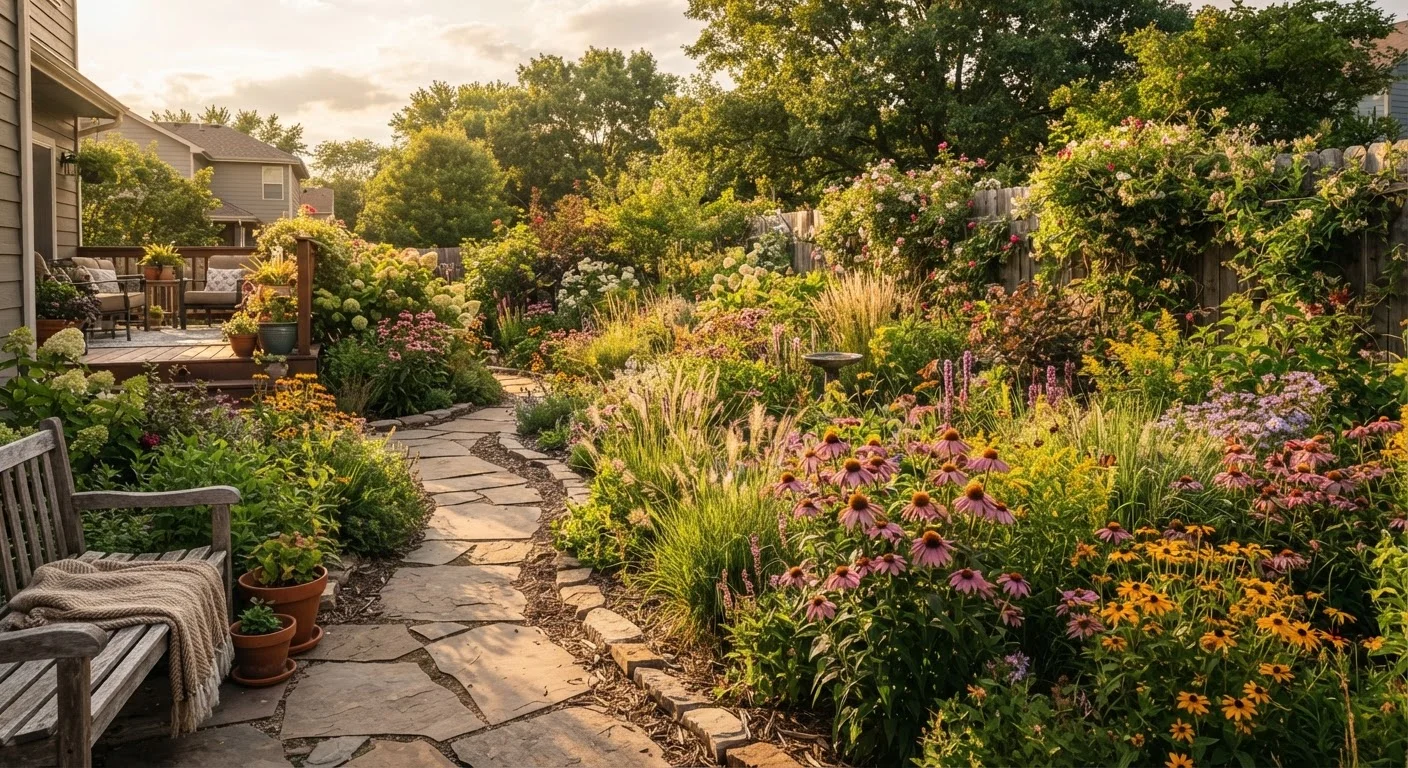
- Plan for seasonal interest. A thoughtfully designed native planting can offer blooms, berries, seed heads, and fall color across multiple seasons. This kind of planning is explored in more detail in our complete yard and garden care resource.
- Consider how you'll manage the bed. If you're using raised or defined planting areas, our overview of raised beds versus in-ground planting can help you think through the setup that fits your space and goals.
Native landscaping isn't an all-or-nothing commitment. A yard that blends native species with carefully chosen non-natives can still support local wildlife, reduce maintenance demands, and look exactly as intentional and attractive as any conventional design.