
Why Small Pet Nutrition Isn't One-Size-Fits-All
It's tempting to assume that small herbivores and rodents eat more or less the same things. In reality, rabbits, guinea pigs, hamsters, and gerbils have evolved very different digestive systems — and feeding the wrong diet can quietly cause serious health problems over time.
This reference is designed to give you a clear, species-by-species picture of what each animal actually needs, so you're not piecing it together from conflicting sources. If you're still deciding which small pet suits your household, our comparison of rabbits and guinea pigs is a good place to start.
| Rabbit Diet Foundation | Unlimited grass hay (80%+ of diet) (General veterinary consensus) |
| Guinea Pig Vitamin C Need | 10–30 mg daily from food sources (Small animal veterinary guidelines) |
| Hamster Diet Type | Omnivore — seeds, grains, protein |
| Gerbil Origin | Desert; adapted to low-moisture diets |
| Fresh Water | Required daily for all four species |
| Rabbit Pellet Serving (adult) | ~¼ cup per 5 lbs body weight/day (Common veterinary guideline) |
Rabbits: Hay Is Non-Negotiable
Rabbits are strict herbivores, and their digestive health depends almost entirely on unlimited access to grass hay — timothy, orchard, or meadow hay for adults. Hay should make up roughly 80% of a rabbit's daily diet. It provides the long-strand fiber that keeps gut motility healthy and wears down continuously growing teeth.
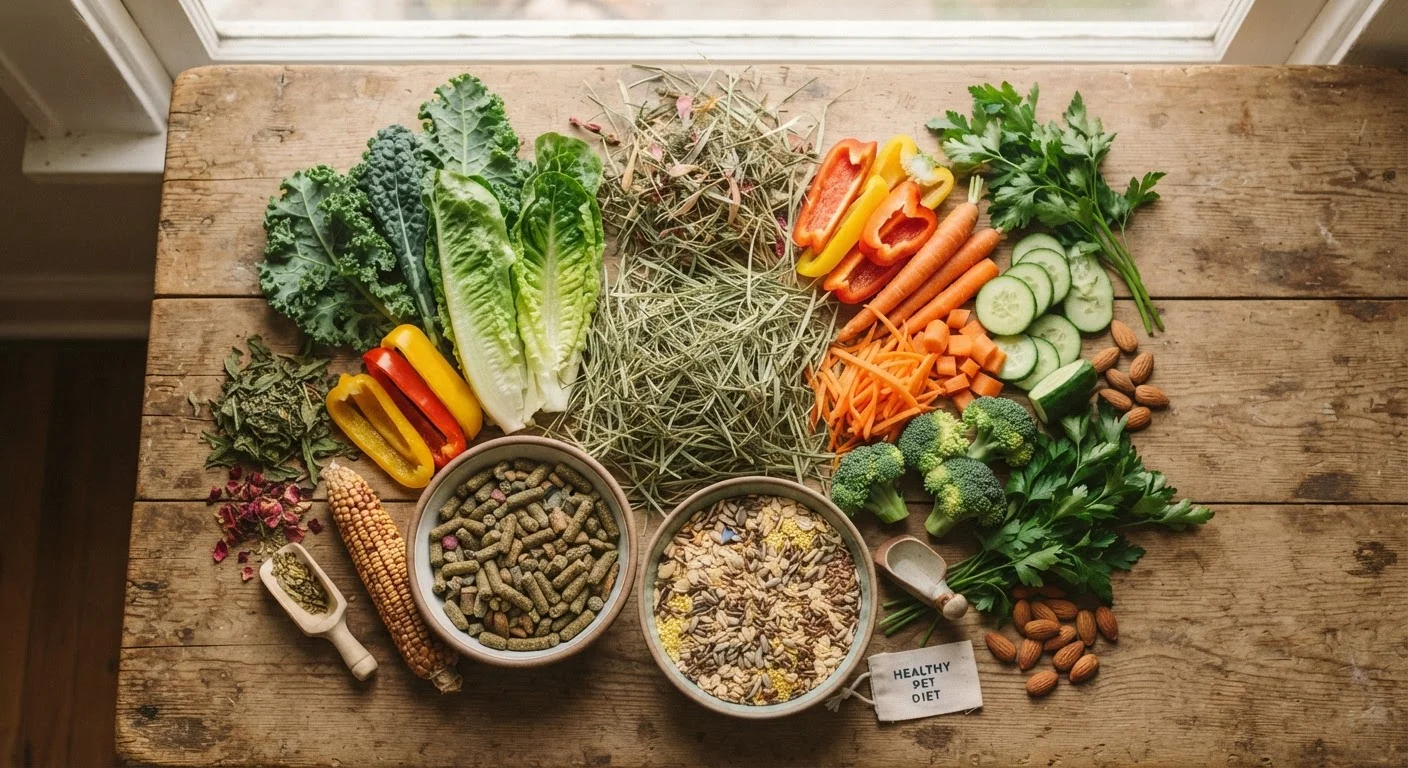
Fresh leafy greens (romaine lettuce, cilantro, parsley) can supplement hay in moderate daily amounts, roughly one to two packed cups per five pounds of body weight. Pellets, while convenient, should play a minor supporting role rather than the starring one — about a quarter cup per five pounds daily for adults is a common veterinary guideline. High-sugar treats like fruit should be occasional at most.
Fresh water must always be available. For more on how diet connects to overall rabbit well-being, see our article on what rabbits need beyond a cage.
Guinea Pigs: The Vitamin C Requirement
Guinea pigs share one critical nutritional trait with humans: they cannot synthesize vitamin C on their own and must obtain it through food every day. Deficiency leads to scurvy, which causes joint pain, weakness, and poor wound healing. Bell peppers (especially red), leafy greens, and parsley are reliable dietary sources.
Like rabbits, guinea pigs thrive on unlimited grass hay as their foundation. Fresh vegetables should be offered daily, and guinea pig pellets — specifically formulated with added vitamin C — round out the diet. Avoid pellets marketed for rabbits, as they lack the necessary vitamin C fortification.
Because guinea pigs are highly social, they rarely do well alone — and a bonded pair will share foraging behaviors that support mental as well as physical health.
Hamsters and Gerbils: Small Omnivores With Different Needs
Both hamsters and gerbils are omnivores, meaning they eat a mix of plant and animal material — but their specific needs diverge enough to warrant separate consideration.
Hamsters
Hamsters in the wild forage for seeds, grains, insects, and occasional plant matter. A hamster's diet should center on a quality commercial hamster mix or lab block, supplemented with small amounts of fresh vegetables and occasional protein sources like a tiny piece of plain cooked egg or mealworm. Avoid citrus fruit, onion, and anything sugary. Hamsters are prone to diabetes, particularly dwarf species, so limiting sweet foods matters.
Gerbils
Gerbils are desert animals adapted to low-moisture, seed-based diets. A gerbil seed mix with varied grains provides a good base, supplemented with modest amounts of fresh vegetables and occasional protein. Unlike hamsters, gerbils are naturally social and do better in pairs. If you're comparing the two, our hamster vs. gerbil guide covers temperament and care differences in detail.
For both species, fresh water should always be available, and food dishes should be cleaned regularly to prevent mold.
Common Feeding Mistakes to Avoid
Across all four species, a few recurring mistakes tend to cause the most problems:
- Over-relying on seed mixes for rabbits and guinea pigs. These species need hay as a true dietary foundation, not a side dish.
- Feeding rabbit pellets to guinea pigs. Rabbit pellets don't contain added vitamin C, which guinea pigs require daily.
- Offering too many sugary treats. Fruit, yogurt drops, and honey-based treats are often marketed for small pets but can contribute to obesity and diabetes in susceptible species.
- Inconsistent fresh water access. Bottle or bowl — either works, but it must be cleaned and refilled daily.
- Assuming one pellet fits all. Species-specific formulations exist for a reason; cross-species feeding can lead to nutritional gaps.
If you're preparing for a new small pet, our preparation checklist can help you stock the right foods before your animal even arrives.
This article is for general informational purposes only and is not a substitute for veterinary advice. Always consult a qualified veterinarian for guidance specific to your pet's health and dietary needs.