
The Science Behind Guinea Pig Sociality
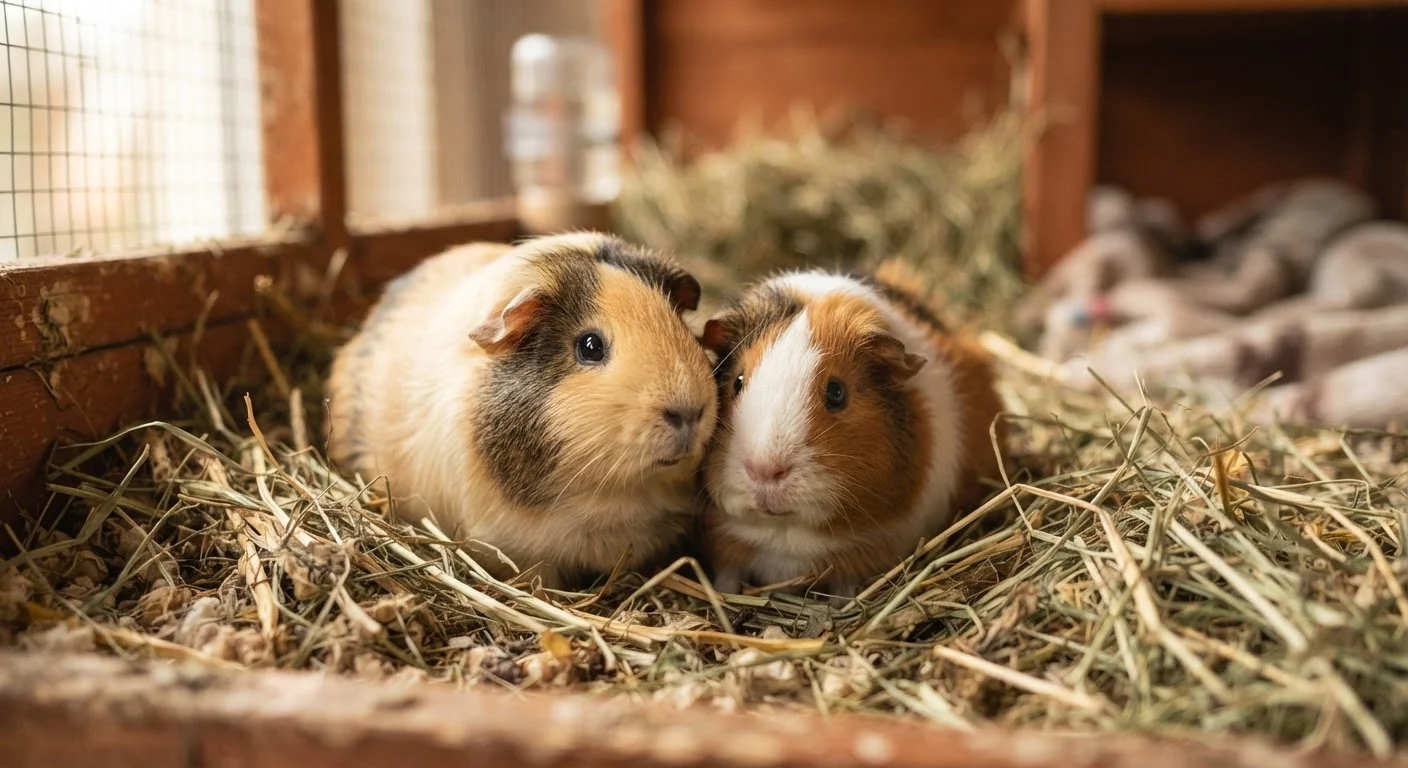
Guinea pigs are not solitary animals that happen to tolerate company — they are genuinely social creatures that depend on group living for emotional and physiological balance. In the wild, they live in herds that offer safety in numbers, shared warmth, and constant social cues. Domestication has not changed this core need.
Research in animal behavior has shown that guinea pigs isolated from others show elevated cortisol levels, a hormonal marker of stress. Over time, chronic stress suppresses immune function, disrupts digestion, and can shorten a pet's life. This is not an abstract concern; it is a measurable biological response to an unmet social need.
If you're weighing guinea pigs against other small pets, our guide on rabbit vs. guinea pig care covers how their social requirements stack up against other popular options.
What About 'Mirror Tricks' and Stuffed Animals?
Some owners try placing a mirror or a stuffed toy in the enclosure to give a lone guinea pig the illusion of company. While these may provide brief stimulation, they do not fulfill the genuine social needs of a herd animal. A mirror reflection cannot groom, vocalize, or share warmth. Veterinary and animal welfare experts consistently recommend a living companion rather than substitutes.
What Loneliness Actually Looks Like
Owners sometimes assume a quiet guinea pig is a content guinea pig. In reality, a lonely guinea pig may show its distress in subtle ways that are easy to misread. Common signs include:
- Lethargy and reduced activity — spending most of the day motionless in a hide
- Repetitive behaviors — pacing along enclosure walls or chewing at bars, a response to understimulation
- Decreased appetite — stress hormones can suppress the urge to eat
- Excessive vocalizations toward humans — seeking contact because no other guinea pig is available
These behaviors can overlap with illness, so any behavioral change warrants a veterinary check-up first. But when health is ruled out, social deprivation is a logical next consideration.
It's also worth noting that even a very attentive owner cannot fully replace a guinea pig companion. Humans sleep, work, and leave the home. Another guinea pig is present 24 hours a day, communicates in the same language, and provides the grooming, warmth, and proximity that only another of the same species can offer.
Choosing the Right Companion
The most straightforward pairing is two females (called sows). They typically coexist peacefully and rarely develop serious territorial disputes. Two males (boars) can also live together successfully, particularly if introduced as young litter-mates or if one is neutered — though two intact adult males may occasionally clash, especially in smaller enclosures.
Mixed-sex pairs require at least one neutered animal. A female and a neutered male often form a harmonious bond, but responsible ownership means ensuring no unplanned litters occur — guinea pigs can reproduce rapidly.
Adopting from a shelter or rescue is an especially practical route because staff can often pair guinea pigs that are already bonded, removing the guesswork from introductions. Before bringing any new pet home, our small pet preparation checklist can help you make sure your setup is ready for two.
2+
Minimum recommended guinea pigs per enclosure
Animal welfare organizations and veterinary groups consistently recommend keeping guinea pigs in pairs or small groups as a baseline standard of care.
7.5 sq ft
Minimum enclosure space for a pair
Many guinea pig welfare advocates recommend at least 7.5 square feet for two guinea pigs, with larger spaces strongly encouraged for their physical and psychological health.
Several
European countries with guinea pig social-housing laws
Countries including Switzerland and Austria have enacted animal welfare legislation requiring guinea pigs to be housed with at least one companion, reflecting scientific consensus on their social needs.
How to Introduce Guinea Pigs Safely
Even when two guinea pigs will ultimately share a home, the introduction process matters. Rushing it can create lasting tension or outright aggression. Here's what a careful introduction looks like:
- Quarantine first. Any new guinea pig should be housed separately for at least two weeks to monitor for illness before contact with your existing pet.
- Use neutral territory. Set up a playpen or temporary space neither animal has previously occupied. Both guinea pigs will explore without defending established turf.
- Supervise the first meetings. Short, supervised sessions of 15–20 minutes help you watch for serious aggression. Light chasing, sniffing, and teeth chattering are normal dominance negotiation — biting that draws blood is not.
- Clean the enclosure thoroughly. Before moving both guinea pigs into a shared permanent space, wash it completely to eliminate scent claims from the original occupant.
- Provide multiple resources. Two food bowls, two water sources, and multiple hides prevent competition that can escalate into conflict.
For additional context on how other social small pets navigate housing needs, see our guide on rabbit housing requirements, which explores similar enrichment and space principles.