

Why the Standard Cage Falls Short
Walk into any pet store and you'll find cages marketed for rabbits that are genuinely too small for a rabbit to live comfortably. The image of a bunny tucked into a hutch is deeply embedded in popular culture — but it doesn't reflect what rabbits actually need to be healthy. Rabbits are active, intelligent animals that can run up to 25 mph in the wild. Even a calm house rabbit needs room to express natural behaviors: running, jumping, stretching out fully, and exploring.
A cage might function as a safe home base — a place to sleep, eat, and use the litter box — but it should never be the whole world. If your rabbit spends most of its life confined in a small enclosure, you're likely to see signs of stress, boredom, and physical decline over time. Common first-month mistakes often center on underestimating exactly how much space and stimulation rabbits require.
Hutches Outdoors: Extra Considerations Apply
Outdoor hutches present additional challenges — rabbits are vulnerable to temperature extremes, predator stress (even without direct contact), and isolation from their human family. If an outdoor setup is used, welfare organizations strongly recommend it be paired with substantial daily indoor time and that hutch dimensions exceed the minimums used for indoor enclosures. Always verify local climate suitability and predator risk before housing a rabbit outdoors.
What a Proper Rabbit Setup Actually Looks Like
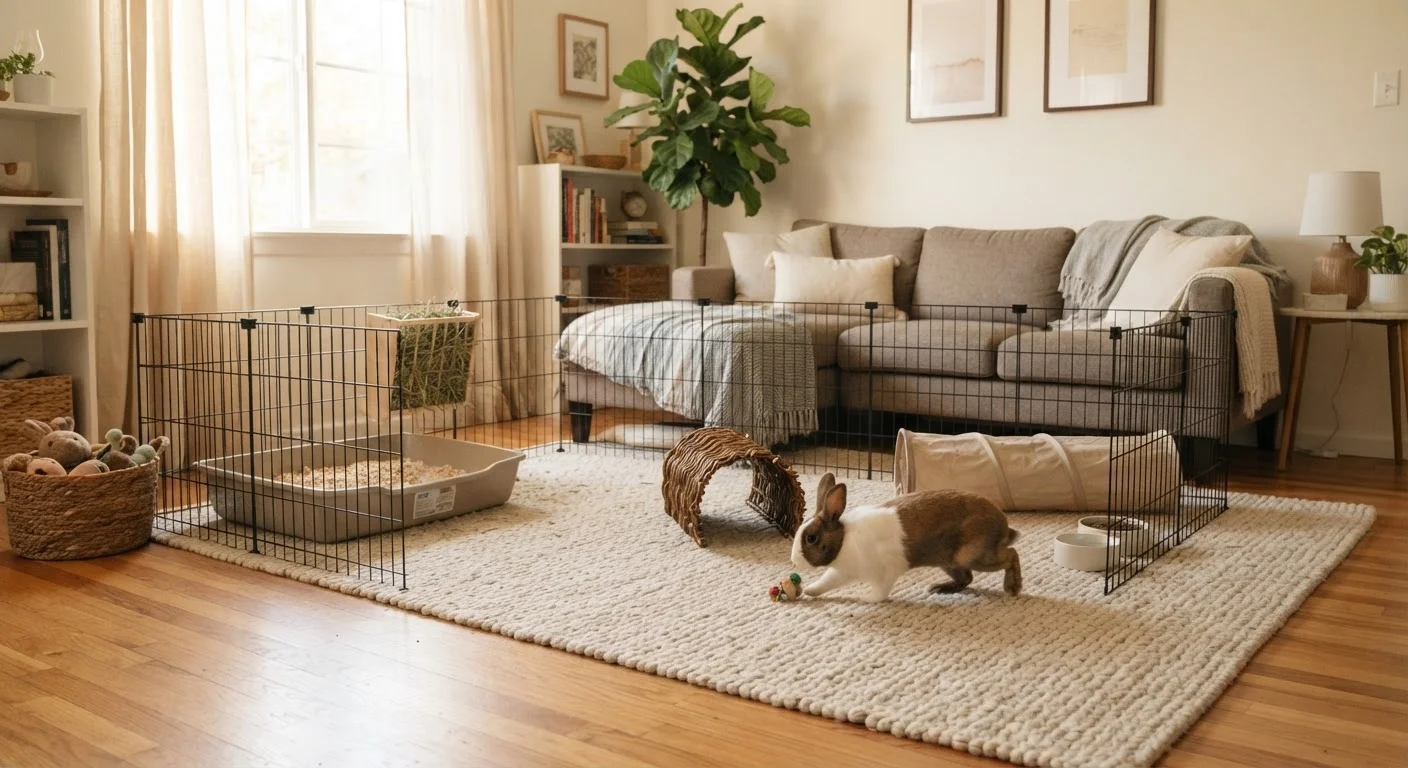
The gold standard for rabbit housing combines a large enclosure with a dedicated free-roaming area. Animal welfare organizations generally recommend at minimum a 12-square-foot enclosure (roughly 3 ft × 4 ft) plus an exercise area of at least 32 square feet — and most rabbit advocates would encourage going considerably larger. Many owners convert an entire room or use large puppy pens linked together to create a generous, safe zone.
Inside the enclosure, your rabbit needs:
- A litter box filled with paper-based litter and topped with hay — rabbits graze while they toilet, which supports healthy digestion
- A hay rack or hay pile that's always fully stocked — hay should make up roughly 80% of a rabbit's diet
- At least one hiding space, such as a cardboard box or wooden hideaway, where your rabbit can retreat and feel secure
- A water source — either a heavy ceramic bowl or a bottle, keeping the bowl clean and fresh daily
- Safe flooring — never wire mesh, which causes painful sore hocks; use fleece mats, carpet tiles, or foam puzzle mats instead
For broader diet context, our small pet nutrition guide covers what rabbits should be eating alongside their housing setup.
Enrichment: The Part Most Owners Skip
A rabbit's environment needs to be mentally engaging, not just physically adequate. Enrichment isn't a luxury — it directly affects your rabbit's wellbeing and behavior. Bored rabbits often become destructive, withdrawn, or even aggressive.
Effective enrichment options include:
- Cardboard tunnels and boxes to explore and chew
- Digging boxes filled with shredded paper or hay
- Safe wooden chews and willow balls
- Foraging activities — hide pellets or leafy greens in hay for your rabbit to find
- Rearranging the environment periodically to provide novelty
Rotating items every week or two keeps the space interesting. You don't need expensive toys — a toilet paper roll stuffed with hay is often just as appealing as anything sold in a pet store.
Make Foraging Part of Every Day
Instead of placing pellets in a bowl, try scattering a small amount through hay or wrapping leafy greens in a paper bag for your rabbit to open. Foraging activities engage a rabbit's natural instincts and make mealtimes mentally stimulating. Even five minutes of foraging play can noticeably reduce boredom-related behaviors.
Free-Roaming Time and Rabbit-Proofing Your Home
Beyond the enclosure, rabbits need several hours of free-roaming time each day — ideally in a rabbit-proofed space. Rabbits chew instinctively, which means exposed electrical cords, houseplants, and baseboards are all at risk. Before letting your rabbit roam, cover or conceal cables, remove toxic plants (many common houseplants are harmful to rabbits), and block off areas where your rabbit could get stuck or injured.
Some owners choose to make a full room or a large portion of their home permanently rabbit-accessible, which is the ideal scenario. Others use exercise pens to create a safe free-roam zone. Either approach works — what matters is that your rabbit gets consistent, daily time to run and explore outside its enclosure.
If you're still deciding whether a rabbit is the right fit for your household, our comparison of rabbits versus guinea pigs may help you think through the commitment involved. And if you're preparing for a new rabbit's arrival, the small pet preparation checklist is a useful starting point for getting your home ready.