
Space and Exercise: A Bigger Gap Than Most People Expect
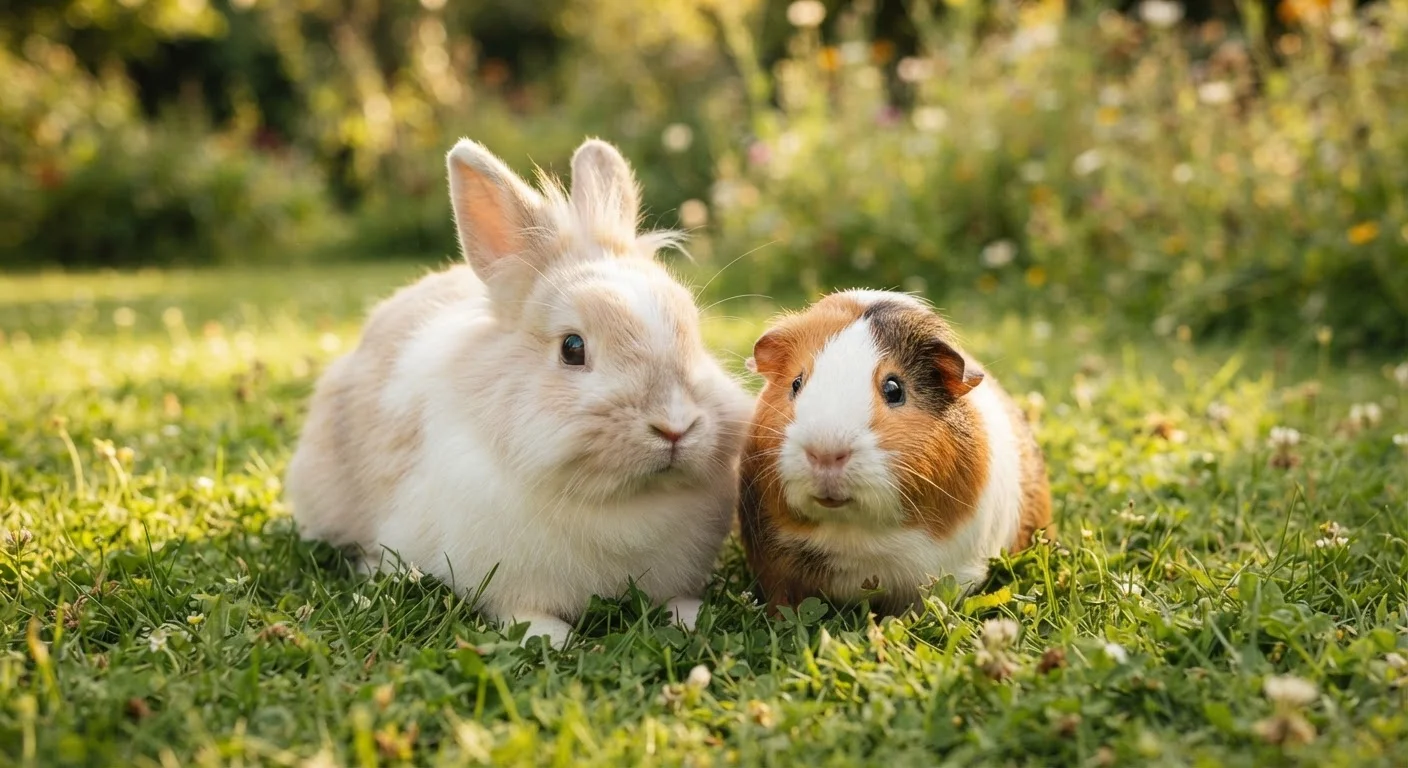
One of the most common surprises for new small-pet owners is just how much room a rabbit needs. Domestic rabbits are active animals — they need space to run, jump, and stretch fully upright. Most rabbit welfare organizations recommend a minimum of 12 square feet of living space plus several hours of supervised exercise outside the enclosure each day. A small hutch alone won't cut it. For more on what a rabbit's home environment should really look like, see our guide on what your bunny actually needs beyond a cage.
Guinea pigs are more compact in their spatial needs. A pair of guinea pigs typically does well in a 7–8 square foot enclosure, with room to move but without requiring free-roaming time the way rabbits do. That said, enrichment matters — tunnels, hides, and foraging opportunities keep guinea pigs mentally active and content.
If your living space is limited or your schedule doesn't allow for daily supervised exercise sessions, guinea pigs are likely the more practical choice.
Social Needs: Alone, Paired, or in a Group?
Guinea pigs are deeply social animals. In the wild, they live in herds, and solitary housing is genuinely stressful for them. Most veterinarians and guinea pig welfare groups strongly recommend keeping at least two together. If you're considering a guinea pig, plan for two from the start — it's far better for the animal's wellbeing. Our dedicated article on why guinea pigs should almost never live alone explains the risks of solitary housing and how to introduce a companion safely.
Rabbits can be kept alone or bonded with another rabbit. A single rabbit that receives plenty of human interaction can live happily, but many rabbit owners find that bonded pairs keep each other company when humans aren't around. Introducing rabbits to each other does require patience — they're territorial and bonding takes time and a careful process.
| Rabbit | Guinea Pig | |
|---|---|---|
| Space requirement | 12+ sq ft plus daily exercise | 7–8 sq ft per pair |
| Social needs | Can live alone with good human contact | Strongly recommended in pairs or groups |
| Vitamin C requirement | Produces own; no dietary need | Must get from diet; critical to health |
| Litter training | Yes, generally trainable | Not reliably trainable |
| Ease of handling | Dislikes being lifted; floor-based bonding | Tolerates handling well; calm when held |
| Typical lifespan | 8–12 years | 4–7 years |
| Suitable for children | Older children with guidance | Generally child-friendly |
The key takeaway: if you're only ready for one animal, a rabbit may adapt better to solo life with good human engagement. If you want two animals, a guinea pig pair is a natural, harmonious fit.
Diet and Nutrition: More Similar Than Different, With Important Exceptions
Both rabbits and guinea pigs rely on unlimited grass hay — usually timothy hay for adults — as the core of their diet. Hay provides the fiber that keeps their digestive systems functioning and their teeth worn down properly. Fresh leafy greens round out the diet for both species, but there are critical differences in their nutritional requirements.
Guinea pigs cannot produce their own vitamin C, a trait they share with humans. This means their diet must include vitamin C-rich vegetables like bell peppers and leafy greens consistently. Without adequate vitamin C, guinea pigs can develop scurvy. Rabbits don't have this vulnerability — their bodies produce vitamin C naturally.
Pellets play a supplementary role for both, but should never be the foundation of the diet. For a full breakdown of what each species actually needs, our reference on small pet nutrition by species is a helpful starting point.
Handling and Temperament: Which Pet Fits Your Household?
Guinea pigs are generally considered more forgiving for families with children. They rarely bite, they vocalize clearly (the famous wheeks and purrs communicate hunger, happiness, and stress), and they tend to settle quickly when held properly. Their compact size also makes them easier to hold securely.
Rabbits have a more complex personality profile. Many rabbits dislike being picked up — they're prey animals, and being lifted triggers instinctive fear. A rabbit can injure itself or a handler if it kicks to escape. This doesn't mean rabbits aren't affectionate; many are deeply bonded to their owners and enjoy being petted and spending time together at floor level. But they're better suited to households where adults or older children understand their body language and boundaries.
New rabbit owners often underestimate how much there is to learn in those first weeks. Our article on common mistakes new rabbit owners make covers the most frequent missteps worth avoiding.
If you're comparing across species more broadly — including hamsters and gerbils — our piece on hamster vs. gerbil explores similar trade-offs for rodent pets.
This article is for general informational purposes only and is not a substitute for advice from a qualified veterinarian familiar with your pet's individual needs.