

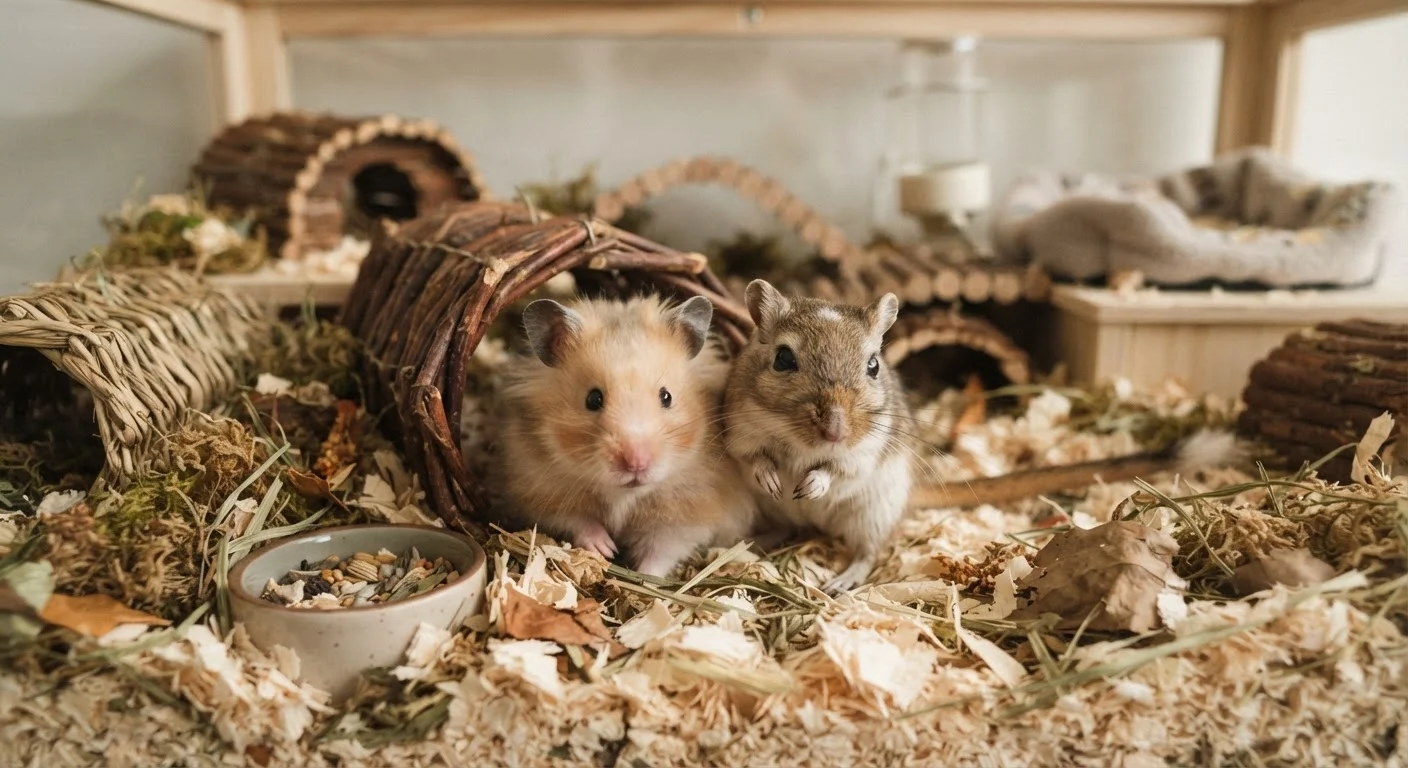
Social Needs: Alone or Together?
The single biggest difference between these two animals comes down to companionship. Hamsters are obligate solitary animals. In the wild, Syrian hamsters — the most common pet variety — are territorial and will fight to the death if housed with another hamster. Dwarf hamster species can sometimes coexist in pairs, but this requires careful monitoring and is not guaranteed to remain peaceful.
Gerbils are the opposite. In their natural habitat, they live in close-knit family groups. A gerbil kept alone is at real risk of loneliness, stress, and shortened lifespan. Most animal welfare organizations recommend keeping gerbils in same-sex pairs at a minimum. Two gerbils don't require twice the work — they largely entertain each other — but you do need to plan for a larger enclosure and the possibility of one outliving the other.
This social distinction alone rules out one animal for many households. If your living situation means you can reliably care for two animals long-term, gerbils may suit you well. If a single, independent pet is what you're after, a hamster is the clear fit.
Activity Patterns and Handling
Hamsters are nocturnal, meaning they're wired to sleep through much of the day and become active after dark. This matters more than many new owners expect. A hamster that is repeatedly woken during daylight hours can become stressed and nippy — not because it has a bad temperament, but because its sleep is being disrupted. If you or your family are home mainly during the day and want to interact with your pet, this mismatch can be frustrating.
Gerbils, by contrast, follow a crepuscular and polyphasic pattern — short bursts of activity interspersed with rest across the full 24-hour cycle. You're more likely to find a gerbil alert and curious during daytime hours, which makes interaction more natural for most households.
For handling, hamsters generally have an edge for beginners. A well-socialized hamster will often sit calmly in a cupped hand. Gerbils are fast, darting animals that are harder to hold securely — especially for children. That said, both species benefit greatly from patient, gentle socialization from an early age. Rushing or mishandling either animal can produce a pet that bites defensively and rarely gets the interaction it deserves.
| Criterion | Hamster | Gerbil |
|---|---|---|
| Social needs | Solitary — must live alone | Social — needs a companion |
| Activity timing | Nocturnal | Active throughout the day |
| Ease of handling | Calmer once tamed | Faster, harder to hold |
| Minimum housing space | 450 sq in floor space | 450+ sq in (pair needs more) |
| Lifespan | 2–3 years (Syrian) | 3–5 years |
| Suitable for children | Generally yes, with supervision | Better for older children |
| Number to keep | One only | Minimum two |
For more on common misconceptions around hamster temperament and care, see common hamster myths debunked.
Housing, Space, and Enrichment
Both hamsters and gerbils suffer in the small, plastic starter cages still widely sold for them. Current guidance from veterinary and animal welfare sources suggests a minimum of 450 square inches of unbroken floor space for either species — and more is always better. For gerbils kept in pairs, additional horizontal space is important since they're highly active diggers and runners.
Hamsters need deep bedding — at least six inches — to express their natural burrowing behavior. Shallow bedding is a common welfare problem. Gerbils also burrow enthusiastically and do well with deep substrate, though they're somewhat more adaptable to tank-style setups with a sand bath section for grooming.
Both species need a solid-surface exercise wheel (mesh or barred wheels can injure feet and tails), hides, chews, and opportunities to forage. Gerbils particularly enjoy digging and shredding materials, so paper-based nesting material is a good addition to their habitat.
Before bringing either animal home, a little advance preparation goes a long way. Our small pet preparation checklist walks through everything you'll want in place before your new pet arrives. For a deeper look at what each species actually needs to eat, small pet nutrition by species covers the essentials. And if neither a hamster nor a gerbil feels quite right, other small pets worth considering explores some genuinely rewarding alternatives.