

Why Hamster Myths Persist
Hamsters are often marketed as low-maintenance starter pets, and that reputation has stuck — even though it doesn't match what animal behaviorists and small-mammal veterinarians actually recommend. Most of the misinformation circulates because hamster care standards in popular media and even many pet stores haven't caught up with current research. The result? Well-meaning owners end up with setups that leave their hamsters stressed, bored, or physically unwell.
The good news is that correcting these myths doesn't require an overhaul of everything you know — just a few key adjustments can make a meaningful difference in your hamster's quality of life. If you're also comparing hamsters to other small rodents, our hamster vs. gerbil guide breaks down how their needs really differ.
Myth
A small cage is perfectly fine for a hamster — they're tiny animals, after all.
Fact
Hamsters need significantly more space than most commercial starter cages offer. Many animal welfare organizations recommend a minimum of 40 gallons of usable floor area.
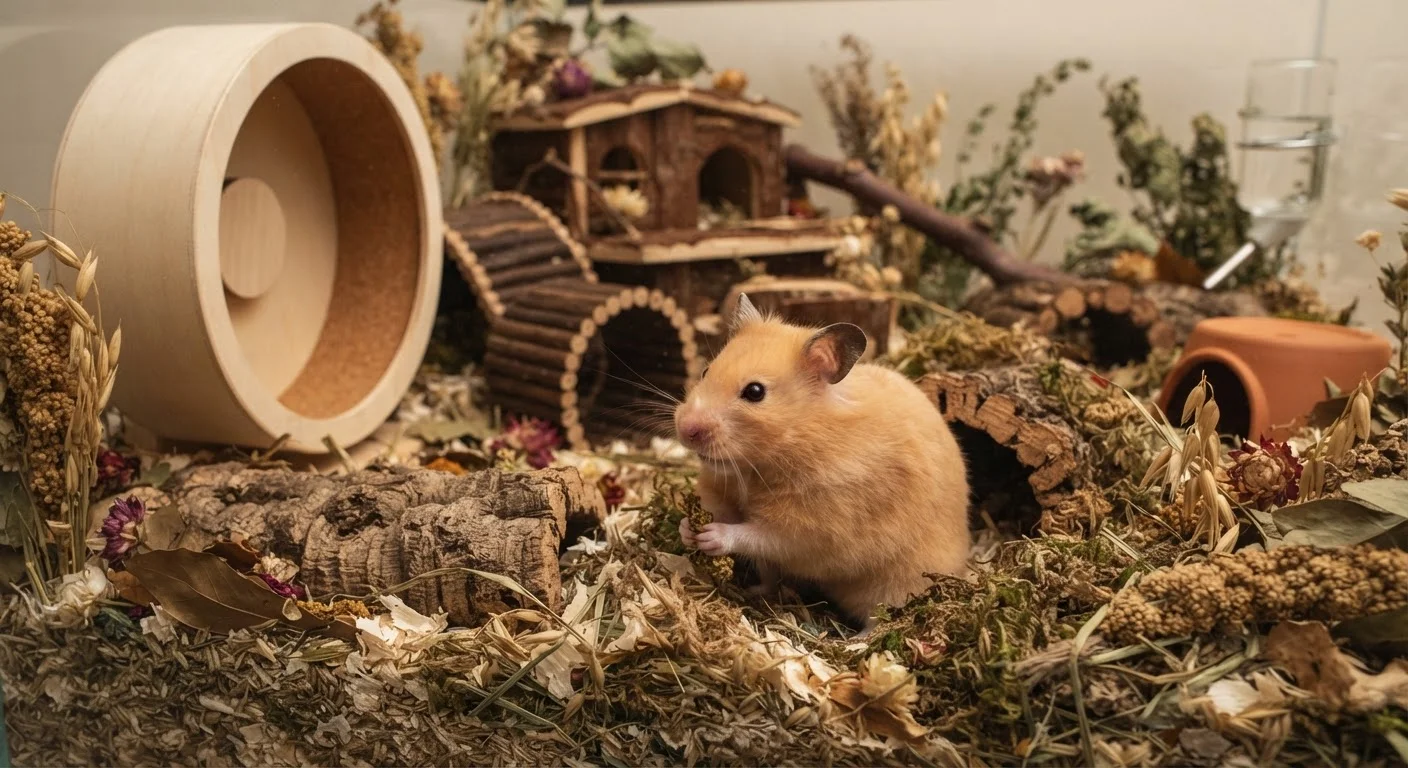
In the wild, Syrian hamsters can roam several miles per night. Confining them to a small cage restricts natural foraging and movement behaviors, which is linked to increased stereotypic behavior — repetitive movements like bar-chewing or pacing — that signal chronic stress. Larger enclosures with deep substrate allow for burrowing, which is one of the most important outlets for a hamster's instincts.
Myth
Hamsters are great daytime pets and enjoy being handled throughout the day.
Fact
Hamsters are crepuscular to nocturnal animals, meaning they are naturally most active at dawn, dusk, and through the night.
Waking a hamster during the day to handle it is disruptive and stressful for the animal. A hamster that bites when disturbed mid-sleep isn't being aggressive — it's reacting the way any creature would if startled awake. Scheduling interaction for the evening hours, when your hamster is naturally alert and curious, leads to calmer, more positive handling experiences for both of you.
Myth
Dwarf hamsters are friendlier and easier to handle than Syrian hamsters.
Fact
Individual temperament varies widely regardless of species. Dwarf hamsters are often faster and harder to handle due to their small size, not easier.
Syrian hamsters are often considered better suited to handling precisely because they're larger, slower, and easier for children and beginners to hold safely. Dwarf species can be more skittish and quick-moving, which can make calm handling more challenging to achieve. Consistent, gentle interaction from a young age matters far more than species selection when it comes to tameness.
Myth
An exercise wheel is a fun optional accessory, not a necessity.
Fact
A properly sized, solid-surface exercise wheel is an essential piece of hamster equipment — not optional enrichment.
Hamsters that lack adequate running opportunities are prone to obesity and stress-related behaviors. The wheel must be the right size: Syrian hamsters need a wheel at least 10–11 inches in diameter to run without arching their spine, which can cause pain and injury over time. Mesh or barred wheels pose a risk of foot and leg injuries and should be avoided. Running is a core biological need, not a luxury.
Myth
Hamsters enjoy living with a companion — they get lonely alone.
Fact
Most hamster species, particularly Syrian hamsters, are strictly solitary and will fight — sometimes fatally — if housed together.
Syrian hamsters are territorial by nature and must always be housed alone after weaning. Even dwarf species that are sometimes kept in pairs require careful monitoring, and many welfare organizations now recommend single housing as the safest default. Signs of stress in a cohoused hamster can be subtle at first, but injuries from fighting can be severe. Providing enrichment and regular interaction from their owner meets a hamster's social needs adequately.
Setting the Record Straight on Hamster Care
Once you move past the myths, hamster care becomes more intuitive. These animals have predictable instincts — burrowing, foraging, running — and meeting those instincts is the core of good husbandry. Providing deep substrate for digging, a wheel sized correctly for their body, and a habitat large enough to support natural movement goes a long way.
Diet is another area where misconceptions are common. Seed-only mixes, for example, can lead to nutritional deficiencies because hamsters selectively eat their favorite pieces and skip the rest. Small-pet nutrition guidance can help you understand what a balanced hamster diet actually looks like. And if you've ever wondered whether small animals need more space than their enclosures suggest, the same pattern applies to rabbits — rabbit housing needs mirror many of the same principles around enrichment and room to move.
5–8 miles
Distance hamsters may run nightly in the wild
Research on wild Syrian hamster behavior, cited widely in small-mammal veterinary literature, documents extensive nightly ranging activity.
40+ gallons
Minimum recommended enclosure size
Several European animal welfare bodies and small-animal veterinary associations recommend at least 775 sq inches of floor space as a baseline for Syrian hamsters.
The bottom line: hamsters are resilient little animals, but they have specific needs that are easy to meet once you know what to look for. Ditch the outdated assumptions, and you'll likely find your hamster is far more active, curious, and personable than you expected.