
Understanding Remodel Scope: Cosmetic vs. Full Gut
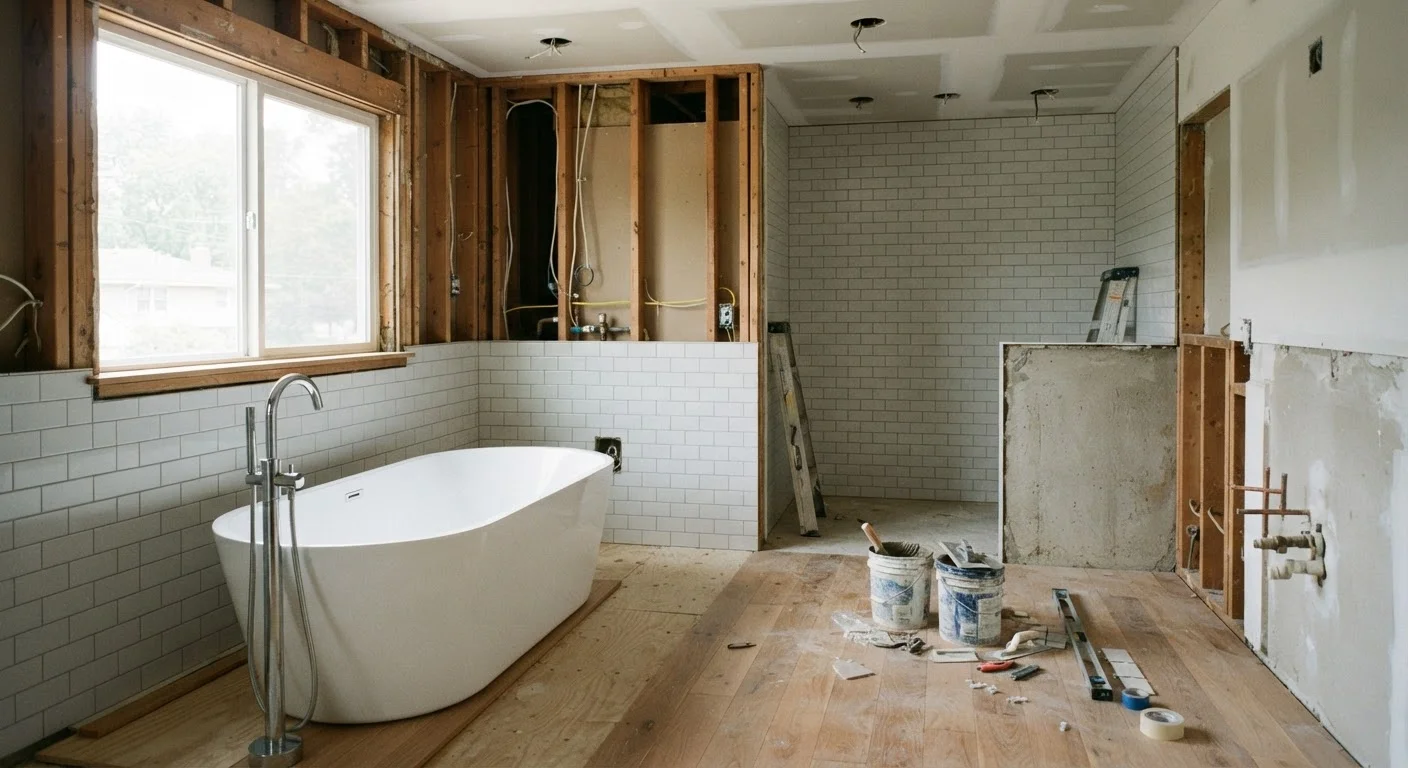
Bathroom projects exist on a spectrum. At one end, a cosmetic refresh — new paint, a vanity swap, updated hardware — keeps costs low and disruption minimal. At the other end, a full gut renovation strips the room to studs and subfloor, touching plumbing rough-ins, electrical circuits, waterproofing membranes, and every visible surface.
Most projects land somewhere in the middle. A mid-level remodel typically replaces fixtures and finishes without moving walls or drain locations. A full remodel may reconfigure the layout, upgrade the ventilation, and address whatever surprises emerge once drywall comes down.
Knowing which tier you're pursuing before you start talking to contractors protects you from scope creep — one of the most common reasons bathroom projects exceed budget. See our primer for first-time homeowners for a broader framework on scoping any renovation project.
Realistic Cost Ranges by Project Level
Cost estimates for bathroom remodels vary by region, home age, and material choices, but general ranges provide a useful anchor:
- Cosmetic refresh ($1,500–$5,000): Paint, new faucets, light fixture, toilet, mirror, and accessories. No tile removal, no plumbing moves.
- Mid-level remodel ($8,000–$15,000): New vanity, tub or shower replacement in existing footprint, tile work, updated electrical for lighting and GFCI outlets, new flooring.
- Full gut renovation ($18,000–$35,000+): Layout changes, new plumbing rough-in, complete tile installation, custom shower, radiant floor heat, high-end fixtures.
These are general industry reference ranges, not guarantees. Labor markets, local permit fees, and material selections all shift the final number. Always get multiple quotes and build a 15–20% contingency into your budget for what lurks behind the walls — rot, outdated wiring, failed waterproofing — because surprises are the rule, not the exception.
$11,000–$15,000
Median mid-range bathroom remodel cost (US)
Figures cited in the National Kitchen & Bath Association's industry cost surveys as a general mid-level reference range.
60–67%
Average cost recouped on bathroom remodel at resale
Remodeling Magazine's Cost vs. Value report historically shows mid-range bathroom remodels recovering roughly 60–67% of cost in resale value.
15–20%
Recommended contingency buffer for bathroom projects
Industry contractors and renovation advisors consistently recommend this buffer to cover hidden structural, plumbing, or electrical issues.
Layout Changes and When They're Worth It
Moving a toilet, sink, or shower drain means rerouting supply and drain lines — work that requires a licensed plumber and almost always a permit. The cost premium for moving a toilet drain, for example, can add $1,000–$3,000 or more depending on floor construction and drain depth.
That cost is sometimes worth it. A layout change might allow a larger walk-in shower, better circulation, or accessibility improvements that make the home usable for years longer. But if the goal is simply aesthetic, keeping plumbing in place almost always delivers better value per dollar spent.
For context on return-on-investment thinking across project types, our article on interior vs. exterior renovations walks through how different scopes compare.
Fixtures, Tile, and Finishes: Where Choices Compound
Fixtures and tile are where bathroom budgets quietly balloon. A standard toilet runs $150–$400; a wall-hung model with in-wall tank starts at $800 before installation. Entry-level porcelain tile is $2–$4 per square foot; large-format stone can exceed $20 per square foot — and requires more skilled installation.
Finish consistency matters visually and practically. Mixing metal tones (brushed nickel faucet, chrome towel bar, matte black toilet paper holder) reads as uncoordinated. Choosing a single finish family early and sticking to it prevents expensive swaps later.
Order all fixtures and tile before demolition begins, not after. Lead times on special-order items can stretch 6–12 weeks, and starting demo before materials arrive is a fast path to a half-finished bathroom for months.
Supply chain delays remain a real factor in renovation timelines; material availability drives more project overruns than most homeowners anticipate.
Ask your tile setter to do a dry-lay of the pattern on the floor before any adhesive goes down. Seeing the actual layout — not just a rendering — reveals grout line placement and edge cuts you may want to adjust.
Small adjustments to tile placement before installation are free; correcting them after adhesive has set means removing and replacing tile at full cost.
Before finalizing any finish selections, review our room refresh checklist — some of those same editing principles apply to bathroom spaces.
Ventilation, Waterproofing, and the Work Behind the Walls
Two behind-the-scenes elements are more important than any fixture: ventilation and waterproofing. Both are invisible once the project is complete, and both determine whether the room holds up for a decade or starts failing within two years.
Exhaust fans should be sized to the room (measured in cubic feet per minute, or CFM) and vented directly to the exterior — not into the attic. Many older homes have fans that vent into attic space, creating a slow-moving moisture problem. Upgrading to a properly vented, appropriately sized fan during a remodel is almost always worthwhile.
Waterproofing in wet areas — the shower pan, the walls behind tile — must be applied correctly before any tile goes down. Cement board alone is not waterproof. A dedicated waterproofing membrane, properly lapped and sealed at seams and corners, is the industry-standard approach. This is not a step to skip or economize on.
Never Tile Over Failing Waterproofing
If existing shower tile shows efflorescence (white mineral deposits), grout that crumbles, or soft spots behind the wall, the waterproofing membrane has likely already failed. Tiling directly over compromised substrate traps moisture, accelerates rot, and leads to mold — often invisible until the damage is extensive. Strip back to solid substrate and apply fresh waterproofing before any new tile work begins.
Permits, Inspections, and Working with Contractors
Any work that changes plumbing, adds or modifies electrical circuits, or alters the structure of the home typically requires a permit in most US jurisdictions. Skipping permits creates real risk: unpermitted work can complicate home sales, void homeowner's insurance claims, and require costly removal if discovered during inspection.
When hiring contractors, verify licenses and insurance for every trade involved — plumber, electrician, tile setter. Ask for references from similar-scope bathroom projects specifically. Get itemized written quotes, not lump-sum bids, so you can see where the money is going and compare accurately across contractors.
Our guide on keeping a home improvement project on track covers the practices — scope-setting, milestone check-ins, punch lists — that keep bathroom projects from drifting.
Always verify permit requirements with your local building department before beginning work. Requirements vary by municipality and project type.
Trade-Offs to Make Deliberately
Every bathroom remodel involves trade-offs. Understanding them in advance lets you make choices you won't regret:
- Tub vs. shower-only
- Removing a tub in the only full bath can affect resale appeal; in a secondary bath, it's often a neutral or positive change. Consider your household's needs and your local market.
- DIY vs. professional tile work
- Tile is technically achievable for a motivated DIYer on simple, small surfaces. Large-format tile, complex patterns, and shower pans are better left to experienced tile setters — mistakes here mean water intrusion.
- Speed vs. cost
- Rushing a contractor to finish faster typically costs more and increases the risk of cut corners. Build realistic timelines — a mid-level bathroom remodel commonly runs two to four weeks.
- Premium fixtures vs. contingency funds
- Spending to the top of your budget on visible finishes leaves nothing for the structural surprises that bathrooms commonly hide. Reserve the contingency first; upgrade finishes with what remains.
If this remodel is part of a broader home refresh, the principles in our bedroom décor guide offer useful framing for thinking about how adjacent spaces connect stylistically.