
How Natural Light Shapes a Room
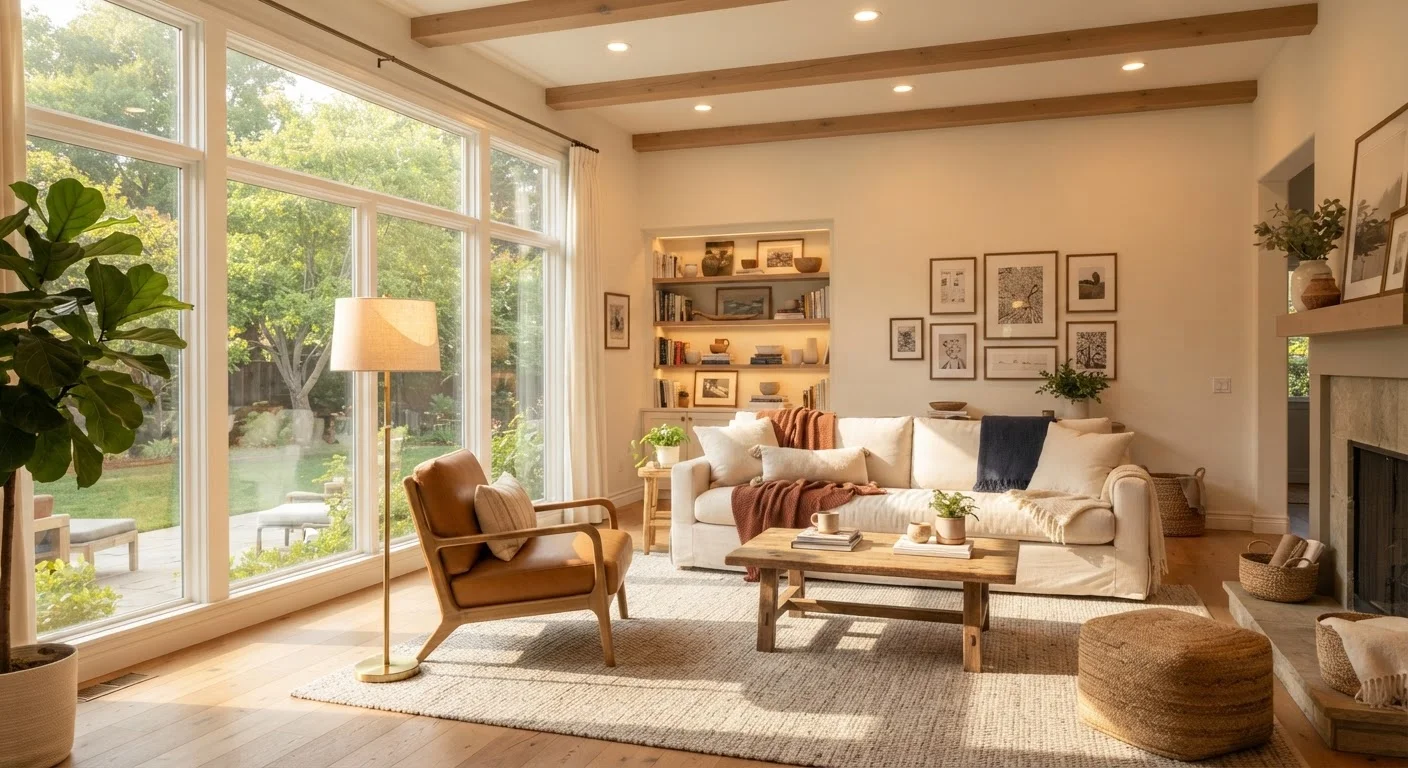
Natural light is one of the most powerful — and most underutilized — tools in home design. Unlike artificial fixtures, sunlight is dynamic: it shifts in angle, intensity, and color throughout the day and across seasons, meaning a room that feels energetic and bright at noon can feel moody and dim by late afternoon.
The direction your windows face plays a significant role. North-facing rooms receive consistent, cool-toned indirect light, which is excellent for true color rendering but can feel flat. South-facing rooms get the most light overall, warming up significantly midday. East-facing rooms are bright in the morning with a warm golden hue, while west-facing spaces come alive in the late afternoon and evening with amber tones.
These shifts directly affect your decor choices. A paint color that reads as a calm sage green in morning east light might take on a cool blue cast in a north-facing room. This is why the advice to test paint colors in different lighting conditions is so practical — what you see in the paint store is rarely what you get at home.
Test Paint Swatches in Both Lights
Before committing to a wall color, paint a large swatch (at least 12 inches square) directly on the wall and observe it at three points: morning natural light, midday, and evening under your actual artificial fixtures. Colors can shift significantly between these conditions. This step takes one extra day but prevents costly repaints.
Understanding Artificial Light: Three Layers That Work Together
When natural light fades or simply isn't enough, artificial lighting takes over — and how you design that system determines whether your room feels comfortable or awkward after dark. Interior designers typically think about artificial light in three layers:
- Ambient lighting is the base layer — general illumination that fills the room. Ceiling fixtures, recessed lights, and chandeliers all fall here. This is what most people default to, but using it alone produces flat, shadowless light.
- Task lighting focuses light where you need it for specific activities — reading lamps by a sofa, under-cabinet lights in a kitchen, a desk lamp in a workspace.
- Accent lighting is decorative and directional, used to highlight architectural features, artwork, or plants. Wall sconces, picture lights, and LED strip lighting fit this category.
A well-lit room uses all three layers, giving you the ability to dial up or down based on time of day and activity. For bedrooms in particular, this layered approach supports both function and rest — a topic explored in depth in bedroom décor and lighting guidance.
Color Temperature: The Detail Most People Overlook
Beyond brightness, the color of your light — measured in Kelvin (K) — shapes a room's entire atmosphere. Warm bulbs (2,700–3,000 K) emit a soft amber glow similar to candlelight, ideal for spaces meant to feel intimate and relaxing. Cool bulbs (4,000–5,000 K) mimic daylight more closely and feel crisp and alerting — well suited to kitchens and bathrooms.
The mismatch most people don't notice: if your paint color was chosen under warm evening light, it can look completely different under the cool light of a cloudy afternoon. Warm light amplifies warm tones in paint (reds, yellows, oranges) while cool light pulls out the blue and green undertones in neutral colors. A greige wall can look pink under incandescent light and distinctly gray under daylight-balanced bulbs.
2,700 K
Warm white bulb color temperature
This Kelvin rating is the standard for incandescent-equivalent LED bulbs, producing the warm amber tone associated with cozy, residential lighting.
~1%
Daylight transmitted through typical drapes
Heavy blackout drapes can reduce visible light transmission to near zero, while sheer panels typically allow 50–80% of available daylight to pass through.
3 layers
Lighting layers recommended by designers
Ambient, task, and accent lighting are the three foundational layers consistently recommended in professional interior lighting design.
This interaction between light and color is why the visual feel of a design style can shift so dramatically depending on the room's lighting scheme. Minimalist interiors, which rely on subtle tonal variation, are especially sensitive to color temperature choices.
Strategies for Maximizing Both Light Sources
The goal isn't to choose between natural and artificial light — it's to make them work together across all hours. A few practical approaches make a meaningful difference:
- Amplify what's already there. Mirrors placed on walls opposite windows bounce daylight deeper into a room. Light-reflective paint sheens (eggshell, satin) do the same on a subtler level. This is particularly valuable in rooms where houseplants or other light-sensitive elements need indirect brightness — an approach worth considering when choosing plants for each room's light conditions.
- Use dimmers wherever possible. A single fixture with a dimmer switch can shift from task-level brightness to ambient evening light without swapping bulbs. This is one of the most cost-effective lighting upgrades available.
- Layer your window treatments. Sheer panels allow daylight diffusion while blocking direct glare. Blackout liners give you control in sleeping spaces. Combining both gives you range.
- Audit your fixtures at night. Walk through your home after dark and note every area that feels too dim or too harshly lit. This simple exercise usually reveals exactly where a floor lamp or additional accent light would transform the feel of a space.
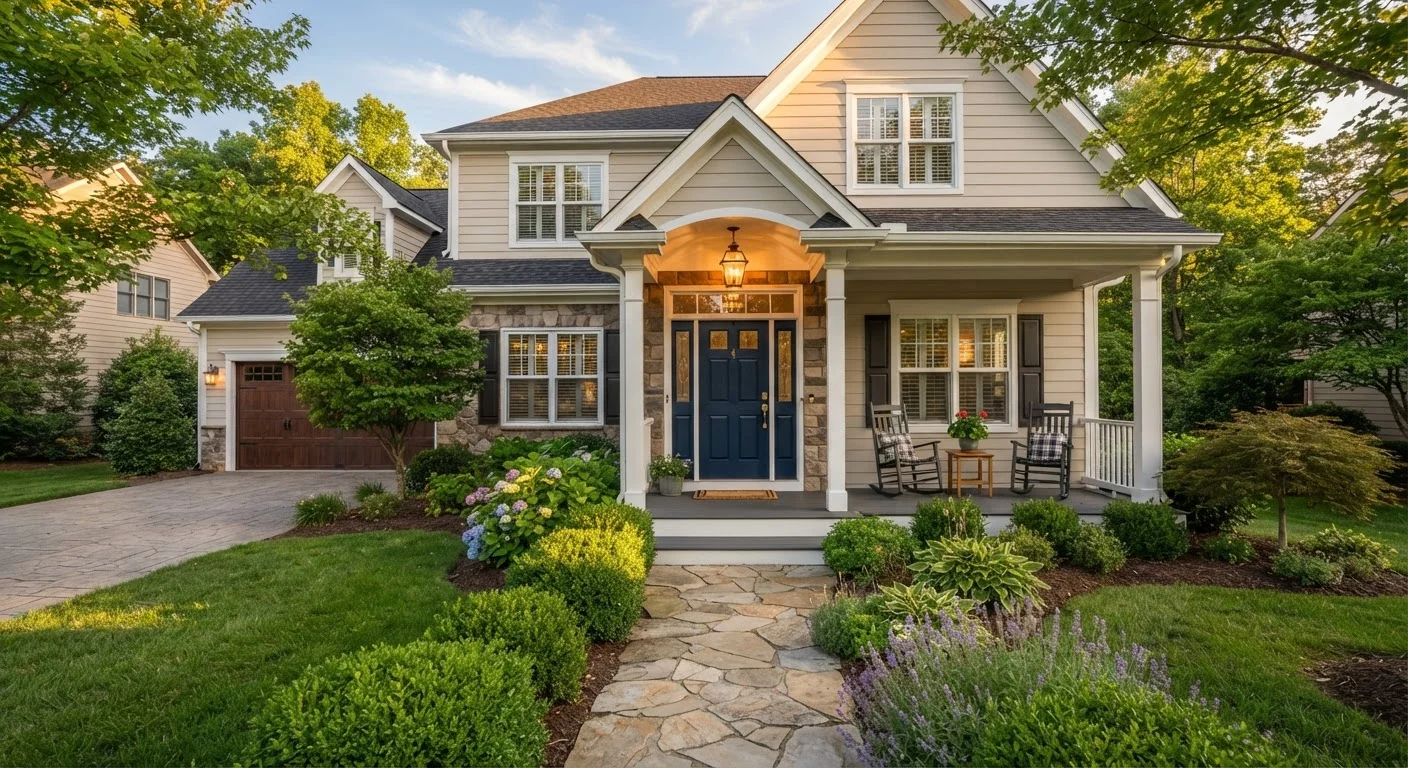
Lighting decisions extend to curb appeal as well — the effect of exterior lighting on how a home reads from the street follows the same principles of layering and directionality.