
Why Conditions Come Before Aesthetics
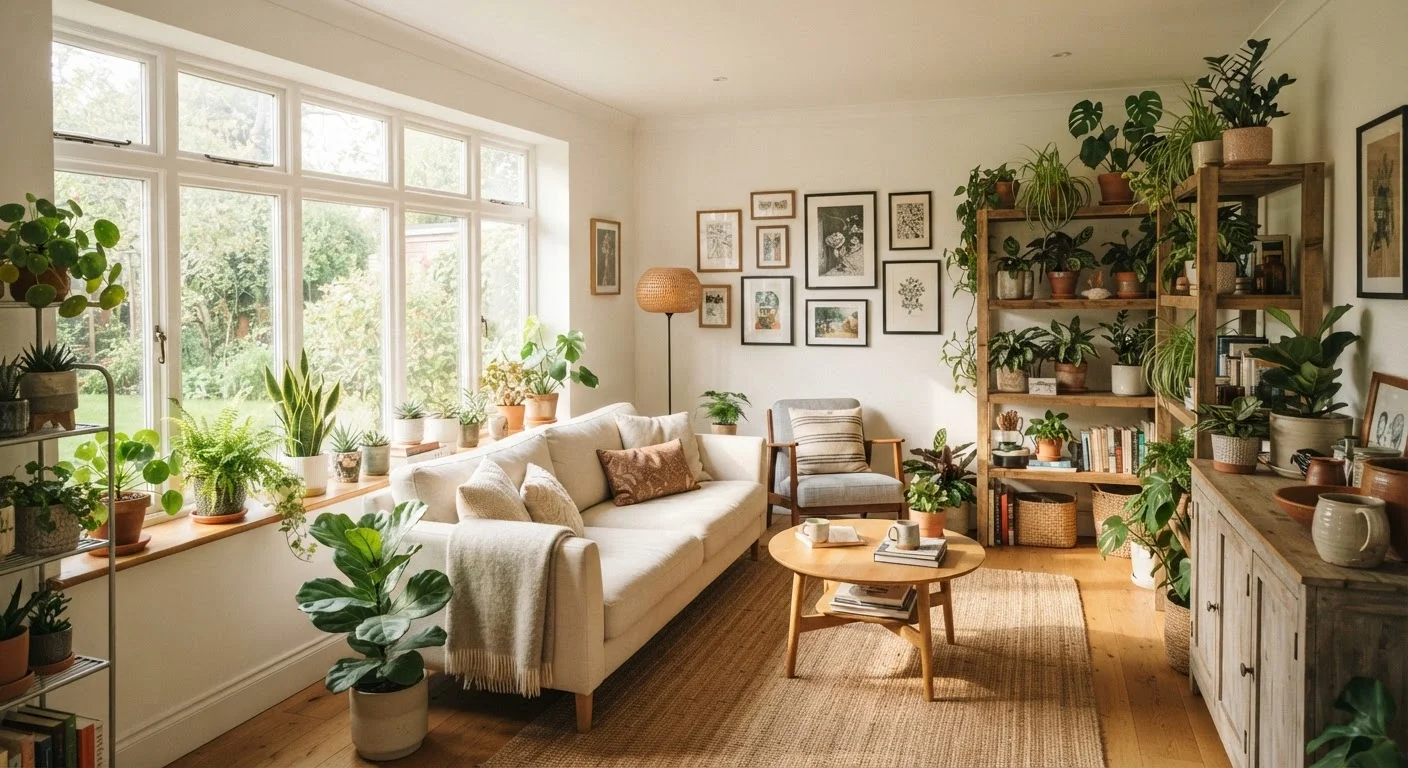
Houseplants fail most often not from neglect but from misplacement. A beautiful plant put in the wrong room becomes a slow decline — and a source of frustration. Treating each room as its own microenvironment, with its own light intensity, humidity, and temperature range, is the foundation of using plants effectively as décor.
Understanding how light works indoors is especially important. The difference between bright indirect light and low light can be a matter of just a few feet from a window. If you want to explore how natural and artificial light shapes your interior spaces beyond plant placement, our guide on light in interior design covers the principles in depth.
Use a Light Meter App Before Buying
Free smartphone light meter apps give a surprisingly accurate reading of foot-candles in any spot in your home. Take measurements at different times of day and in different seasons before purchasing a plant — what feels bright to your eyes may still be too dim for many popular species. A quick reading can save you from a costly mismatch.
The steps below walk you through a systematic process for reading your rooms and selecting plants that will genuinely perform — visually and biologically — in each space.
What you will need
Step-by-Step: Choosing and Placing Plants Room by Room
Check for Toxic Plants Before Purchasing
Several popular houseplants — including pothos, philodendron, and peace lily — are toxic to dogs, cats, and young children if ingested. Before buying any plant, verify its toxicity status against a reliable veterinary or horticultural reference. Place toxic species well out of reach, or choose pet- and child-safe alternatives entirely.
Audit each room's light before choosing any plant
Walk through your home at mid-morning and again in the afternoon. Note which rooms receive direct sun, which get bright indirect light, and which are genuinely dim. South-facing windows deliver the most light year-round; north-facing windows offer consistent but lower levels. East windows provide gentle morning sun; west windows deliver stronger afternoon light that can scorch sensitive foliage.
Write down your findings room by room. This single step prevents the most common houseplant mistake: buying a plant for how it looks rather than whether it will survive where you want to put it.
Measure humidity in bathrooms, kitchens, and living areas
Humidity varies dramatically between rooms. Bathrooms with regular shower use often stay above 50–60% relative humidity — ideal for tropical plants like ferns, orchids, and air plants (Tillandsia). Kitchens hover around 40–50% when cooking is frequent. Living rooms and bedrooms in centrally heated homes can drop to 30% or below in winter, which stresses moisture-loving plants.
An inexpensive hygrometer (humidity gauge) takes the guesswork out of this. Match plants that prefer higher humidity to your naturally humid rooms rather than adding the burden of daily misting.
Scale the plant to the room and the design role you need it to play
Decide what design job the plant needs to do. A floor-standing fiddle-leaf fig or bird of paradise anchors an empty corner of a large living room the way a piece of furniture would. A trailing pothos or string of pearls on a high shelf draws the eye upward and adds softness to a rigid bookshelf. Small succulents or a single herb pot cluster on a kitchen windowsill adds life without competing with counter space.
For small rooms, choose plants with airy, upright forms rather than wide, spreading ones. In a compact living room, a tall, narrow plant like a snake plant (Sansevieria) adds vertical interest without eating into floor space.
Match specific plant types to each room's confirmed conditions
Use your light and humidity notes to guide specific choices:
- Bright, sunny rooms (south or west windows): Succulents, cacti, aloe, citrus trees, and herbs like basil and rosemary thrive here.
- Bright indirect light (east windows or set back from south windows): Pothos, rubber plants, monsteras, and peace lilies do well. These are often the most forgiving and visually impactful choices.
- Low light (north-facing rooms, interior walls): Cast iron plants (Aspidistra), ZZ plants (Zamioculcas zamiifolia), and certain dracaenas tolerate genuinely dim conditions — though no plant thrives in total darkness.
- High-humidity spaces (bathrooms, kitchens): Ferns, orchids, and air plants welcome the moisture. Many of these struggle in dry living areas without supplemental humidity.
For bedroom placement, pairing a low-maintenance plant like a snake plant with thoughtful décor can complement a restful environment — see our guide on bedroom décor that supports rest for the broader picture.
Select containers that reinforce your room's design style
The pot is part of the décor, not an afterthought. Terracotta works in warm, earthy, or Mediterranean-inspired spaces and also benefits plants that prefer drying out between waterings, since terracotta is porous. Ceramic glazed pots suit contemporary or eclectic interiors. Woven basket covers (with a plastic nursery pot inside) add texture and warmth to Scandinavian or bohemian rooms.
Always ensure any decorative outer pot or basket allows for drainage — either use a nursery pot with a saucer inside, or check that decorative pots have drainage holes. Standing water at the root zone is the leading cause of houseplant death.
Arrange, observe, and adjust over the first four weeks
Place your plants in their chosen spots and observe them for a full month before making decisions about their long-term placement. Signs a plant is getting too much direct light include bleached or scorched patches on leaves. Signs of insufficient light include leggy, pale new growth reaching toward the nearest window. Yellowing older leaves combined with wet soil suggest overwatering or poor drainage.
Light and conditions also change with the seasons — a spot that works well in summer may be too dim in winter. Being willing to shift plants a few feet, or supplement with a grow light during darker months, makes the difference between plants that merely survive and those that genuinely thrive as living design elements.
For those who also maintain outdoor gardens, it's worth noting that indoor plant selection follows similar logic to outdoor shade gardening — matching the plant to available light rather than forcing a sun-lover into a dim spot. Our shade gardening guide covers analogous principles for outdoor low-light spaces.