
Choosing the Right Bag
Bag selection is one of the most consequential packing decisions you'll make, yet first-timers often overlook it until the night before departure. The core question is simple: checked luggage or carry-on only?
For most international trips under two weeks, a carry-on bag (typically 22" x 14" x 9" or smaller to fit major airline overhead bins) paired with a personal item handles everything you need. Traveling carry-on only eliminates baggage fees, removes the wait at baggage claim, and means your belongings stay with you — reducing lost-luggage risk entirely.
If you're traveling longer or to a climate requiring bulky gear, a checked bag may be necessary. In that case, use a hard-sided spinner suitcase or a structured duffel with lockable zippers. Always check your airline's specific size and weight allowances, which vary by carrier and fare class — this is especially important on international itineraries with multiple legs or regional carriers.
For carry-on travelers, a structured backpack or rolling carry-on both work well. Backpacks offer mobility advantage in cities with cobblestones or stairs, while rolling cases are easier on longer airport walks. See our comprehensive packing guide for longer international trips for detailed bag-selection criteria by trip type.
Documents and Entry Requirements
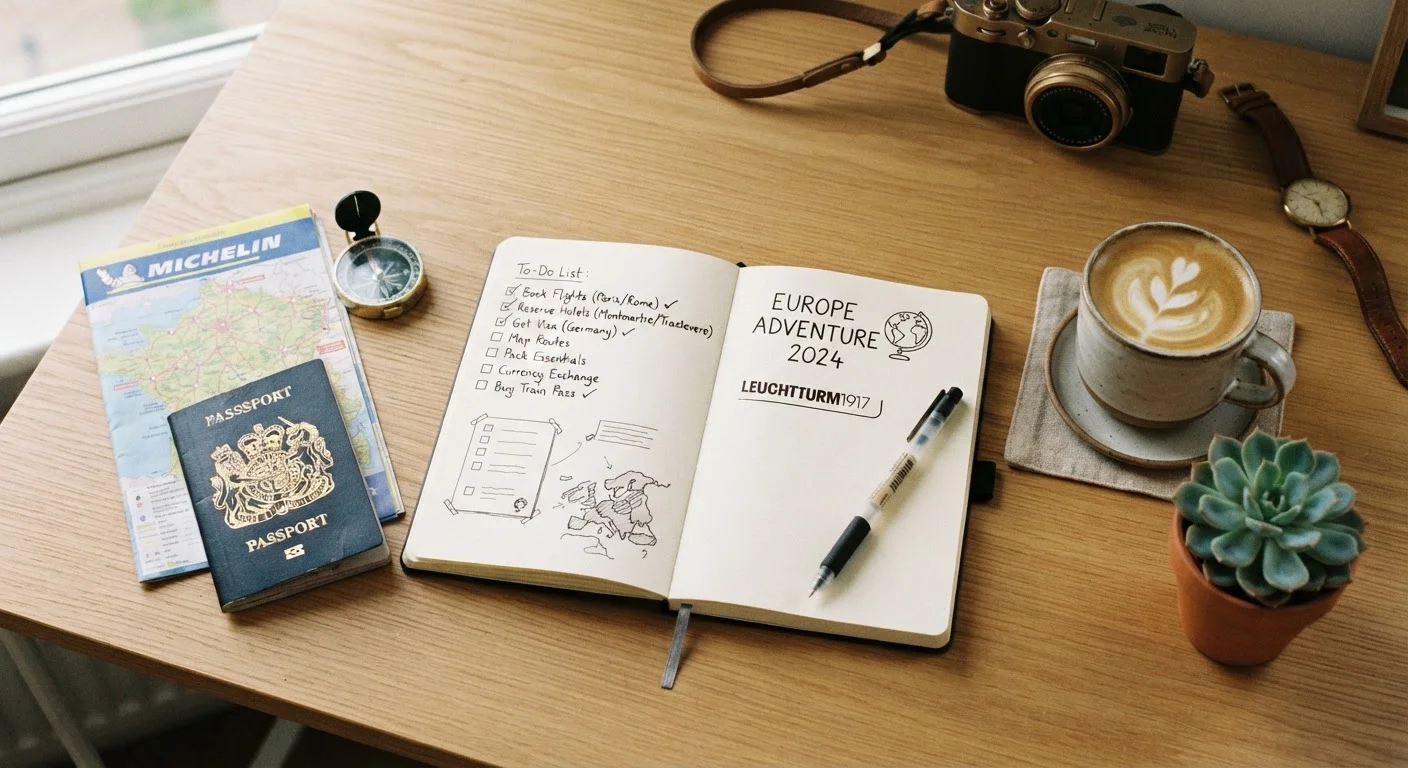
Document preparation is where international travel diverges sharply from domestic trips. Skipping or rushing this step is the most common — and most damaging — mistake first-timers make.
Carry-on allowance
The maximum bag size and weight a passenger may bring into the aircraft cabin without checking it. Limits vary by airline and fare class.
Visa
Official government permission, usually stamped or affixed to your passport, allowing you to enter a foreign country for a specific purpose and duration.
Electronic Travel Authorization (ETA)
A pre-trip digital approval required by some countries before boarding — separate from a traditional visa and usually applied for online.
TSA 3-1-1 rule
A U.S. Transportation Security Administration rule limiting carry-on liquids to containers of 3.4 oz (100ml) or less, all placed inside one quart-sized clear bag.
Dual-voltage device
An electronic device designed to operate on both 110V (U.S. standard) and 220–240V (common internationally), making it safe to use abroad with only a plug adapter.
Universal travel adapter
A compact device that converts your home plug shape to fit outlet types used in other countries. It does not change voltage — it only changes the physical plug shape.
Passport: Verify your passport is valid for at least six months beyond your return date. Many countries enforce this rule strictly at the border. If your passport is expiring sooner, apply for renewal well in advance — processing times fluctuate and are published on the U.S. State Department's website.
Visa: Research your destination's entry requirements. Some countries offer visa-free access to U.S. citizens for short stays; others require advance visa applications that can take weeks. A handful of destinations now require an electronic travel authorization (ETA), which is separate from a traditional visa. Verify requirements directly through the destination country's official embassy or consulate website — not third-party services.
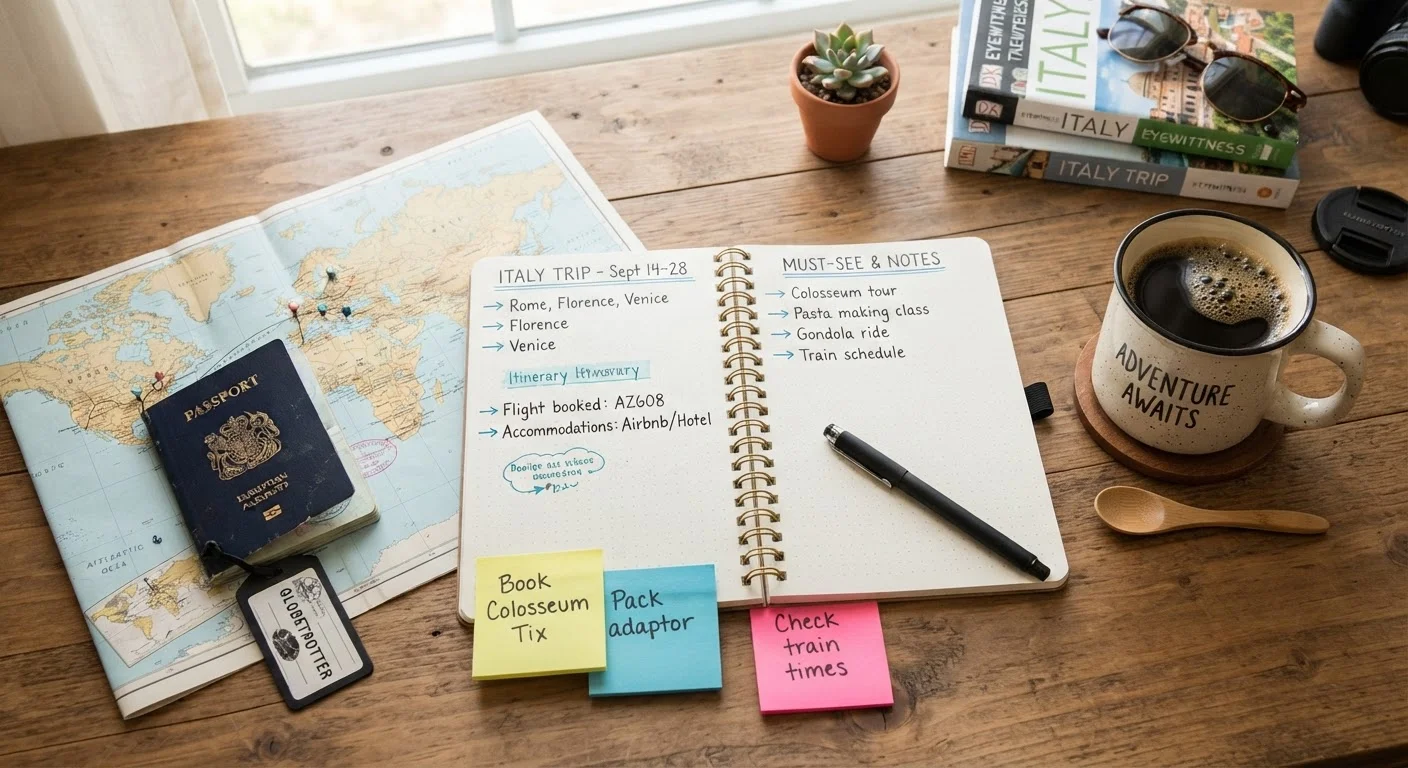
Other documents to carry: Travel insurance policy details, accommodation confirmations, return flight itinerary, and any vaccination records if required. Our full walkthrough of international trip prep pillars covers each of these in depth.
For document storage and backup strategy, see our travel document organization guide.
The Packing Framework: What Actually Goes In
Effective packing isn't about fitting more in — it's about bringing less while covering every scenario. Use this category-by-category approach:
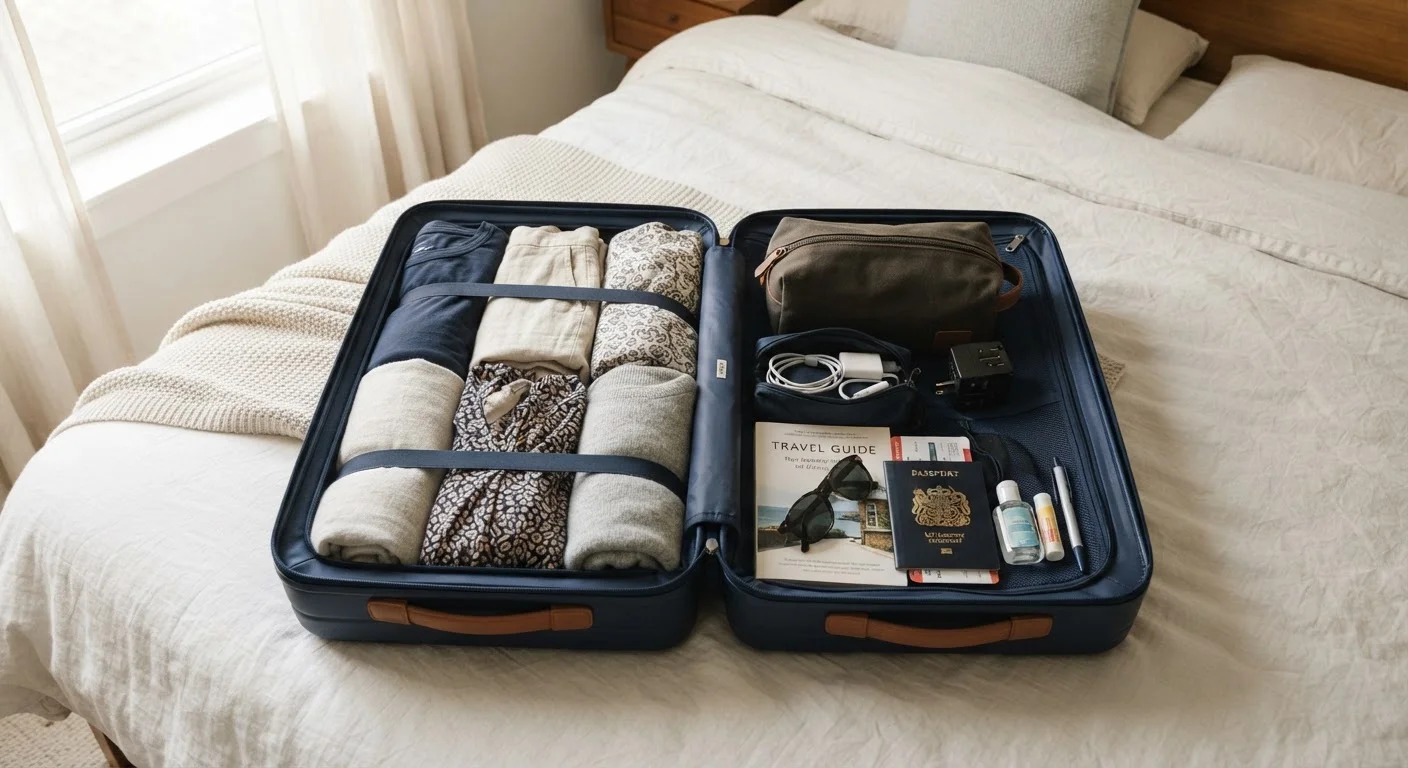
- Clothing: Build outfits around 2–3 neutral base colors so pieces mix and match. Aim for 4–5 days of clothing and plan to do laundry mid-trip if traveling longer. Roll clothes instead of folding to reduce volume and wrinkles.
- Shoes: Limit to two pairs — one for walking (broken in before the trip) and one for evenings or formal situations. Shoes are heavy and bulky; a third pair is rarely worth the space.
- Toiletries: TSA's 3-1-1 rule limits carry-on liquids to 3.4 oz (100ml) containers, all fitting in one quart-sized clear bag. Buy full-size products at your destination if you need more. Solid toiletries (shampoo bars, solid sunscreen) bypass liquid restrictions entirely.
- Medications: Pack all prescription medications in their original labeled containers and carry a letter from your prescribing physician if traveling with controlled substances or injectable medications. Review our guide to traveling with medications and medical devices for security-specific guidance.
- Valuables: Minimize what you bring. Leave irreplaceable jewelry at home. Use a hidden travel pouch for your passport and extra cash when in transit.
Tech, Power, and Connectivity Abroad
International travel introduces two practical tech challenges most first-timers underestimate: power compatibility and phone connectivity.
Label Your Devices Before You Pack
Before your trip, photograph the voltage label on every device you plan to bring — it's usually printed on the charger brick or device underside. Dual-voltage devices are marked "100–240V" and are safe internationally with just a plug adapter. Single-voltage devices (marked only "110V" or "120V") need a voltage converter, which is bulkier and heavier — often a sign it's worth leaving that device at home.
Power adapters vs. voltage converters: Different countries use different plug shapes (Type A, C, G, and more) and electrical voltages (110V in the U.S. vs. 220–240V in most of Europe, Asia, and beyond). A universal travel adapter handles the physical plug shape. But if your device is only rated for 110V, plugging it into a 220V outlet — even with an adapter — can damage it permanently. Check device labels for "100–240V" or "dual voltage" before plugging in. Most modern laptops, phone chargers, and camera chargers are dual-voltage; hair dryers and electric shavers often are not.
Phone connectivity: Contact your U.S. carrier before departure to understand your international plan options. Alternatively, purchasing a local SIM card at your destination is often less expensive for longer stays. An unlocked phone is required for local SIM use — confirm your device's unlock status with your carrier before you leave.
Keep digital copies of your itinerary, documents, and reservations accessible offline or via cloud storage in case you lose connectivity. Using a password manager to secure travel accounts is also worth considering — see our beginner's guide to password managers if you're unfamiliar with them.
Final Checks Before You Leave Home
The week before departure is where preparation solidifies into confidence. Use this window systematically to catch anything overlooked.
- Notify your bank and credit cards of your travel dates and destinations. Card issuers sometimes flag international charges as fraud and freeze accounts — a difficult problem to solve from abroad.
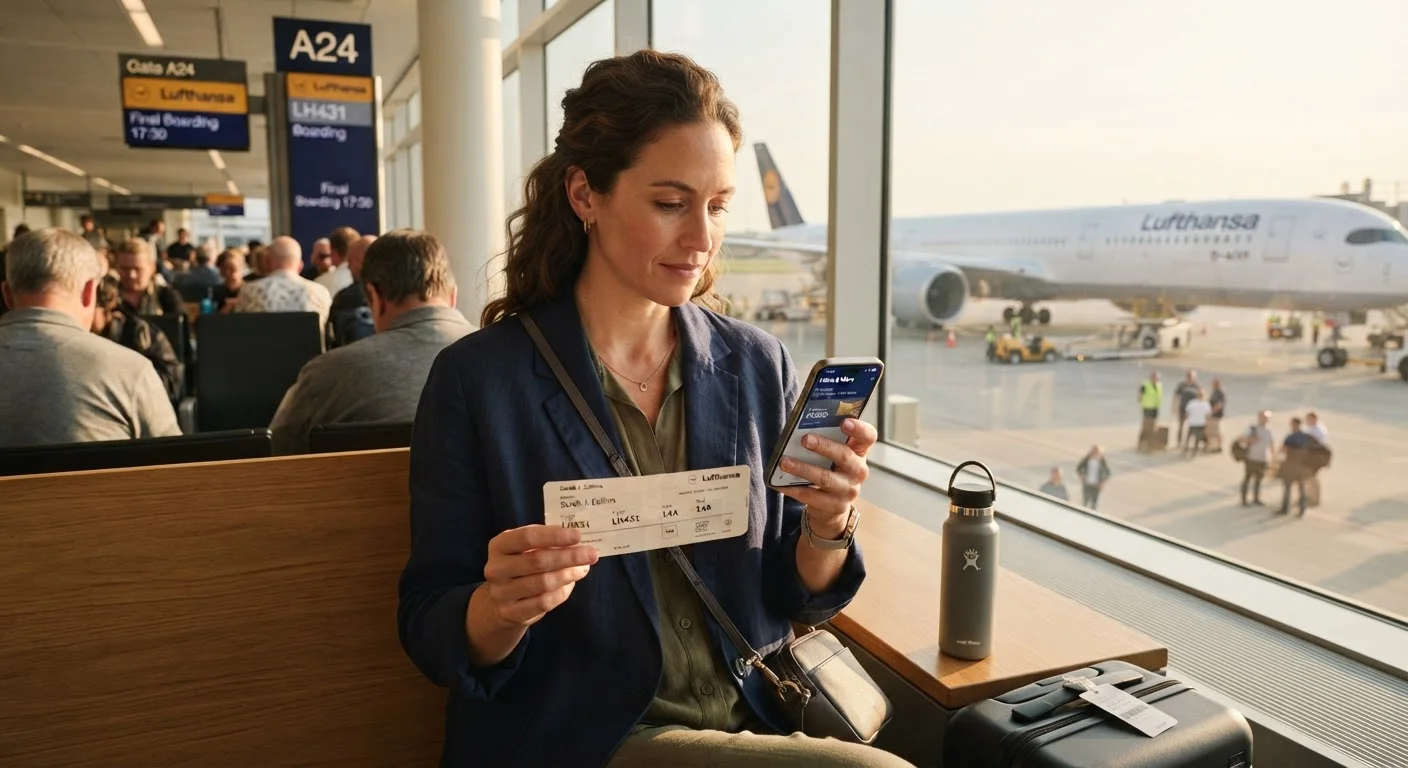
- Check in online 24 hours before departure when airlines allow it. This confirms your seat, reduces airport time, and flags any issues with your booking early.
- Weigh your bags. Most international carriers enforce checked-bag weight limits strictly (typically 50 lbs / 23 kg). Overweight fees are significant. Weigh before you leave, not at the check-in counter.
- Confirm ground transportation at your destination. Know how you're getting from the airport to your accommodation before you land — especially if you're arriving at night or don't have local cell service yet.
- Complete a day-by-day checklist for the final seven days. Our week-before-departure plan walks through exactly what to handle each day so nothing slips through.
First-time international travel involves more moving parts than a domestic trip, but each part is manageable when handled in the right order. Build your timeline backward from departure day, tackle documents first, and pack last — and you'll arrive with everything you need and nothing you don't.