
Which Documents You Actually Need
International travel generates more paperwork than most people expect. Before departure, gather every document that may be requested — at the airport, at the border, or at the hotel front desk. Missing even one can create costly delays.
| Passport validity required | 6 months beyond return date (most destinations) (Varies by country; verify with destination embassy) |
| Documents to print in advance | Boarding pass, hotel confirmation, visa approval, insurance summary |
| Passport copies to carry | At least 2 — one on your person, one in checked luggage |
| Digital backup locations recommended | 2 minimum — cloud storage and encrypted phone folder |
| Insurance card must-have info | Policy number and 24/7 emergency contact number |
| Card emergency numbers | Store separately from wallet in case cards are lost |
Here is a practical breakdown by category:
- Identity & entry: Passport (valid for at least six months beyond your return date in most destinations), visa or e-visa approval if required, and any entry authorization forms submitted in advance.
- Flights & transport: Airline booking confirmations with your PNR (Passenger Name Record) code, any connecting rail or ferry tickets, and car rental agreements.
- Accommodation: Hotel, hostel, or vacation rental confirmation emails that show check-in dates, address, and contact number — some countries ask for this at immigration.
- Health & insurance: Travel insurance policy summary with the emergency contact number, vaccination records if required by your destination, and a brief medication list. See our guide on traveling with prescription medications for what documentation to carry alongside prescriptions.
- Financial: A backup debit or credit card kept separately from your primary wallet, and the international customer-service numbers for each card.
If this is your first international trip, the full international trip prep walkthrough covers each of these pillars in greater depth, including visa research and vaccinations.
How to Organize Physical Documents
The goal of physical organization is immediate retrieval — not scrambling through a bag at the immigration counter.
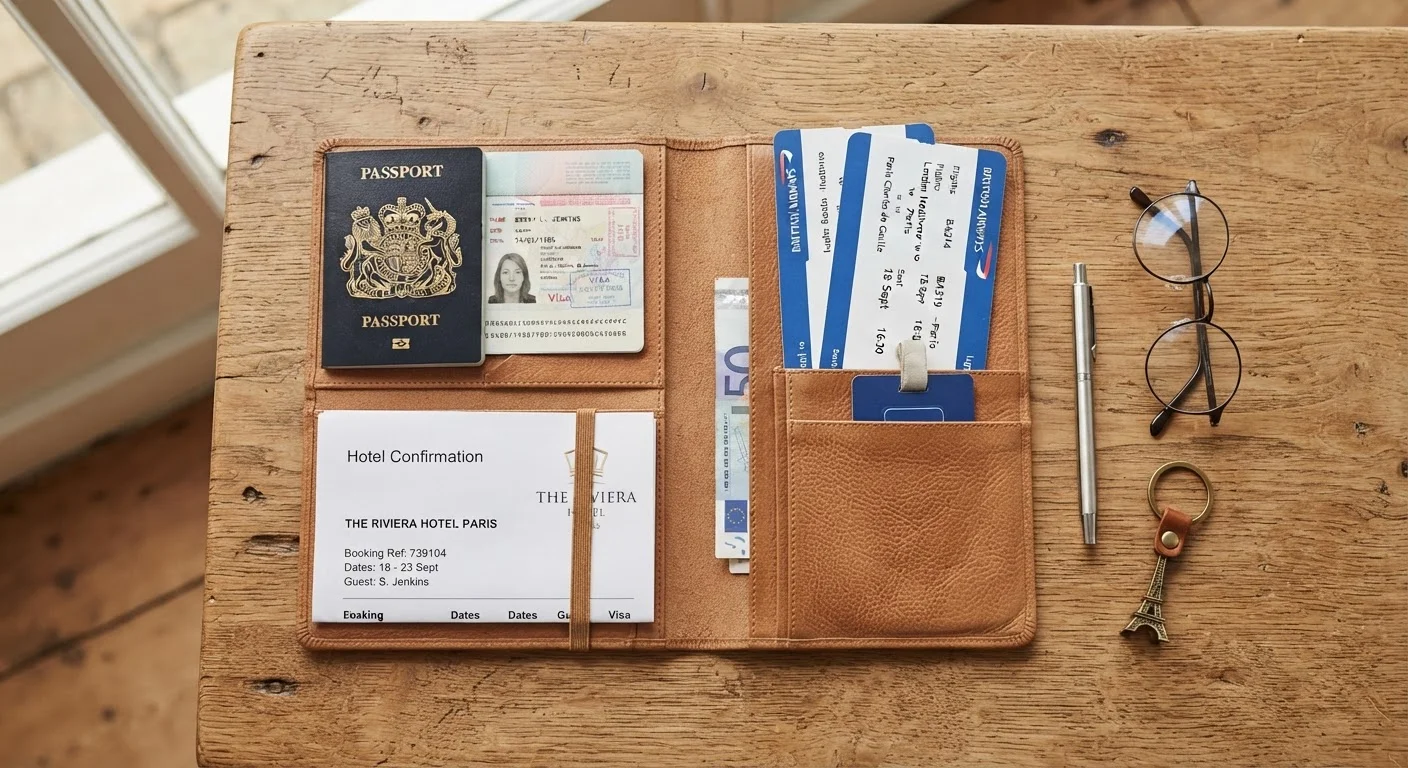
Use a single travel document holder that keeps everything together: passport, printed boarding pass, and accommodation confirmation at minimum. Choose one with a dedicated passport slot and several flat pockets for folded papers.
Layer by use sequence. Documents you need first — boarding pass, passport — go at the front. Hotel confirmations and rental agreements sit behind them, since you'll typically need those only after landing.
Print key documents even if you have digital copies. Airport Wi-Fi can be unreliable, phone batteries die, and some border agents specifically request paper. A single printed page with your hotel address, local emergency contact, and travel insurance number costs almost nothing and can resolve a stressful situation quickly.
Keep a photocopy of your passport's data page stored separately from the original — in a checked bag or at the bottom of your carry-on. If your passport is lost or stolen, this copy speeds up the replacement process at the nearest U.S. embassy or consulate. Always verify the embassy's specific requirements before you travel, as procedures vary by country.
Building a Digital Backup System
A reliable digital backup means you can access your documents from any device, anywhere, even if your phone is lost.
Scan or photograph every document at full resolution: passport data page, visas, insurance policy, booking confirmations, and your card emergency numbers.
Store copies in at least two places:
- A cloud storage service (such as a personal cloud account) that you can log into from any browser.
- An encrypted folder on your phone for offline access.
For the cloud login itself, use a strong, unique password. If you reuse passwords or store them in a notes app, our introduction to password managers explains a simpler approach to keeping login credentials secure.
Email yourself a single document summary. A brief email containing your PNR codes, hotel addresses, and insurance contact number is easy to find in a pinch and doesn't require a specific app.
Share access with someone at home. A trusted contact who has your itinerary and scanned documents can assist remotely if something goes wrong — whether that's rebooking a flight or contacting your insurer on your behalf.
For a broader look at how document prep fits into the full packing process, the packing and prep primer for first-time international travelers is a useful companion to this guide.
This article provides general travel information only. Always verify entry requirements, visa rules, and health documentation with official government sources and your airline before traveling, as requirements change and vary by nationality and destination.