

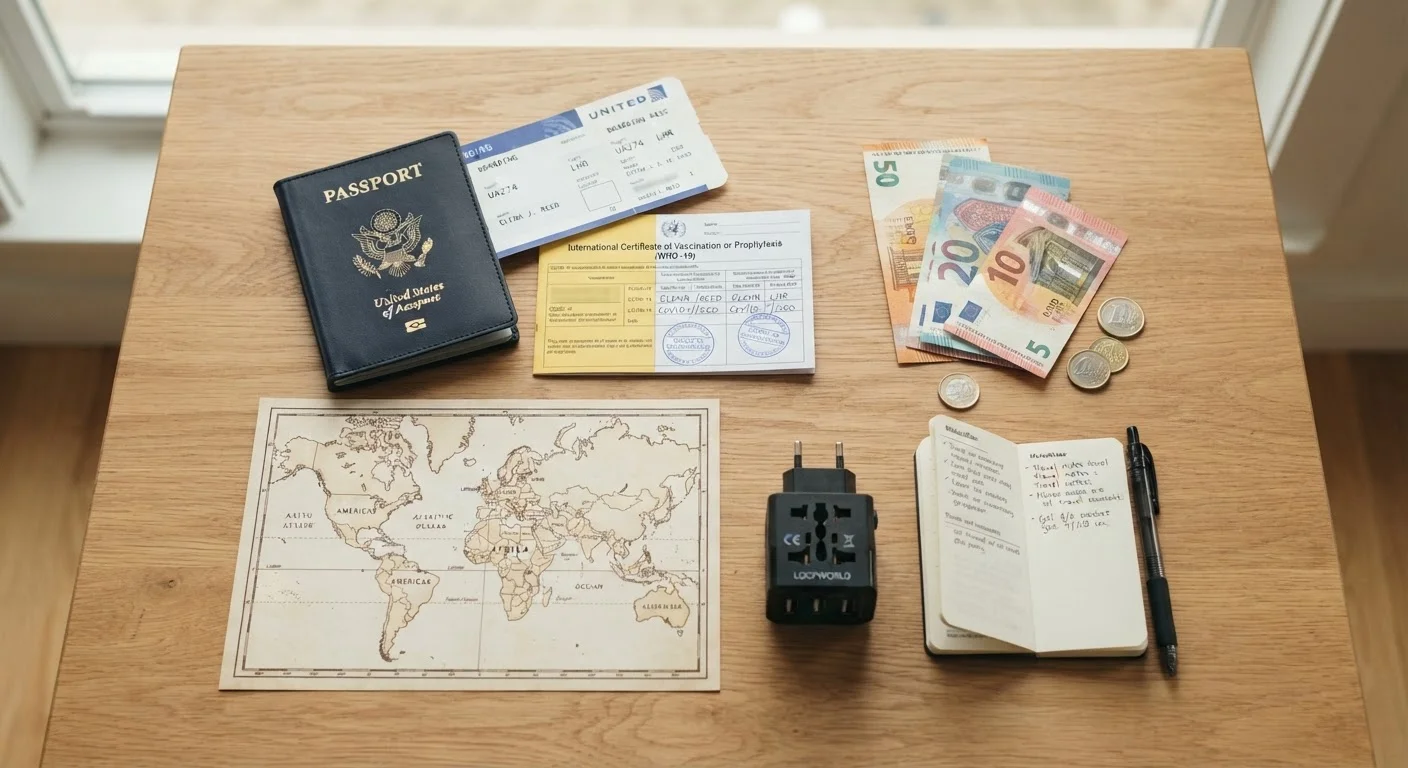
Passports and Visas: Your Non-Negotiable Starting Point
No document is more important to your international trip than a valid passport. For US citizens, passports must typically be valid for at least six months beyond your intended return date — many countries will deny boarding or entry if this threshold is not met. Check your passport's expiration date immediately and, if renewal is needed, factor in current processing times, which can run 6–8 weeks or longer for routine applications.
Visas are equally critical and far more destination-specific. Some countries grant US citizens visa-free access for short stays; others require you to apply weeks or months in advance. Never rely on travel forums for this — go directly to the official embassy or consulate website of your destination country, or use the US Department of State's country information pages. Requirements can change, and the consequences of arriving without the right documentation are severe.
Passport validity requirement
Many countries require your passport to remain valid for at least six months past your return date. If your passport expires sooner, you may be denied boarding or entry even if it is technically unexpired.
Visa
A visa is official permission from a foreign government allowing you to enter their country. It may be a stamp, sticker, or electronic authorization, and requirements vary by destination and the traveler's nationality.
Foreign transaction fee
A fee charged by your bank or card issuer — typically 1–3% — on purchases made in a foreign currency or processed through a foreign bank. Many travel-focused cards eliminate this fee.
Travel insurance
A policy that can reimburse you for covered financial losses related to travel, such as medical emergencies abroad, trip cancellations, or lost luggage. Coverage terms vary significantly between policies.
Dynamic currency conversion
An option offered at some foreign payment terminals that lets you pay in US dollars instead of local currency. It typically applies a poor exchange rate, costing you more than paying in local currency.
International Driving Permit (IDP)
An official document that translates your US driver's license into multiple languages, recognized by many countries as a supplement to (not replacement for) your home license when driving abroad.
If you plan to drive abroad, research whether your destination recognizes a US license or requires an International Driving Permit (IDP), which you can obtain before departure through authorized US organizations.
Health Prep: Vaccinations and Staying Safe Abroad
Health preparation for international travel goes beyond packing pain relievers. Depending on your destination, certain vaccinations may be required for entry — such as yellow fever for some countries — while others are simply recommended to reduce your personal risk. The CDC's travel health website provides destination-specific guidance, but the most reliable step is scheduling a travel medicine appointment with your doctor at least four to six weeks before departure. Some vaccines require multiple doses spread over time.
Beyond vaccinations, research whether your destination has tap water safety concerns, food hygiene considerations, or altitude factors relevant to your itinerary. Pack a basic travel health kit including any prescription medications (with documentation), and carry enough supply for the full trip plus a buffer in case of delays. For longer or more remote trips, consult your doctor about standby medications for traveler's diarrhea or altitude sickness. Always verify current health entry requirements — such as proof of vaccination or negative tests — with official sources close to your departure date, as policies can shift.
Money Matters: Currency, Cards, and Hidden Fees
Managing money abroad is one area where first-timers lose the most to preventable fees. Start by notifying your bank and credit card issuers of your travel dates and destinations — failing to do so can trigger automatic fraud blocks that leave you without access to funds mid-trip.
Understand your cards' foreign transaction fees before you travel. These fees, typically 1–3% per transaction, add up quickly over a week abroad. Many travel-oriented debit and credit cards waive them entirely; if yours charges them, it may be worth opening an account designed for travel use before departure. For general guidance on evaluating financial products, see our budget travel primer.
Use ATMs Strategically, Not Airport Counters
Withdrawing local currency from a bank ATM at your destination almost always gives you a better exchange rate than airport currency exchange booths. Check whether your bank reimburses ATM fees abroad, and withdraw a reasonably sized amount in one transaction rather than making multiple small withdrawals to minimize per-transaction charges.
Arrive with a modest amount of local currency for immediate needs — transport from the airport, small purchases, or tips. Airport currency exchange counters typically offer poor rates; withdrawing from a local ATM at your destination is generally more cost-effective, though ATM fees apply. Avoid dynamic currency conversion at point-of-sale terminals, which lets merchants charge you in US dollars at unfavorable rates.
Travel Insurance: Why It Belongs in Every Budget
Many first-time international travelers treat travel insurance as optional. It is not. Standard US health insurance plans provide limited or no coverage outside the country, and if you need emergency medical care or evacuation abroad, the out-of-pocket cost can be financially devastating. A comprehensive travel insurance policy typically covers emergency medical treatment, medical evacuation, trip cancellation or interruption, lost or delayed baggage, and sometimes travel delays.
Policies vary widely in what they cover and exclude, so read the policy documents before purchasing — not just the marketing summary. Pay particular attention to pre-existing condition clauses, adventure activity exclusions, and cancellation trigger definitions. Travel insurance is general consumer financial information; for guidance specific to your situation and health history, consult a licensed insurance professional. Before you finalize any booking, our pre-booking budget checklist can help you account for insurance costs alongside other trip expenses.
Final Logistics: Connectivity, Copies, and Departure-Day Readiness
Once documents, health, and finances are in order, address the practical details that prevent last-minute chaos. Make both digital and physical copies of your passport, visa, travel insurance policy, vaccination records, and key booking confirmations. Store the digital copies in a secure, cloud-accessible location and carry physical copies separately from your originals — if your bag is lost or stolen, you will still have access to critical information.
For connectivity, contact your mobile carrier before departure to understand international data options. Alternatively, research local SIM cards or eSIM services available in your destination. Staying reachable — and able to look up information — matters more abroad than at home. Also confirm your accommodation's check-in process, local emergency numbers, and the location of the nearest US embassy or consulate at your destination.
For the packing side of preparation, our international traveler's packing primer covers bag selection and entry document organization in detail. If your trip runs two weeks or longer, this extended-trip packing guide walks through every category. Planning a domestic trip alongside or before your international one? Compare the prep requirements with our domestic pre-trip checklist.
This article provides general travel information for educational purposes. Entry requirements, health regulations, and visa policies change frequently. Always verify current requirements with official government sources — including the US Department of State and your destination country's embassy — before traveling.