

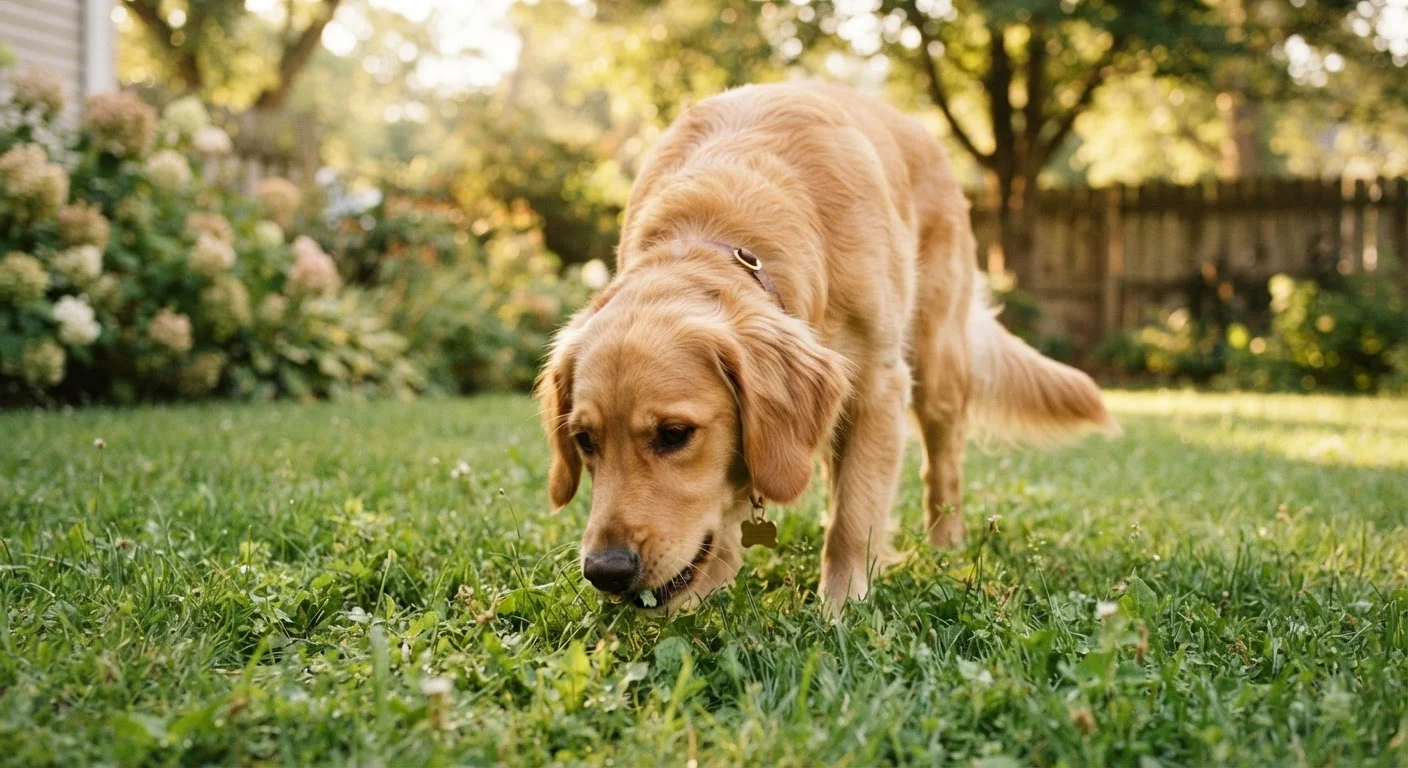
What We Actually Know About Why Dogs Eat Grass
If you've ever watched your dog make a beeline for a patch of lawn and start munching away, you're in good company. Grass-eating is one of the most frequently reported behaviors among dog owners, and it's also one of the most misunderstood.
The most persistent myth is that dogs eat grass to make themselves vomit when they feel sick. It sounds logical, but the evidence doesn't really support it. A widely cited survey of over 1,000 dog owners found that fewer than 25% of dogs regularly vomited after eating grass, and most showed no signs of illness beforehand. That doesn't mean a nauseated dog never seeks out grass, but it does suggest that explanation covers far less ground than people assume.
So what is driving the behavior? Researchers and veterinarians have proposed several possibilities:
- Instinct: Dogs' wild ancestors ate whole prey, including the stomach contents of grass-eating animals. Some researchers believe plant consumption may be an evolutionary holdover.
- Fiber and digestion: Grass adds roughage, which may help move things along in the digestive tract. Dogs on lower-fiber diets may seek it out more.
- Boredom or enrichment: Some dogs, especially under-stimulated ones, simply graze because it gives them something to do.
- They enjoy it: Taste and texture may be reason enough. Some dogs seem to specifically prefer young, tender grass shoots.
The honest answer is that we don't have a single definitive explanation, and it likely varies from dog to dog. Many common assumptions about dog health turn out to be more folklore than fact — this one is no different.
When Grass-Eating Is Harmless — and When It Isn't
For most dogs, occasional grass-eating is nothing to lose sleep over. The behavior becomes a concern under a few specific circumstances.
Check Your Lawn Before Your Dog Grazes
Before letting your dog roam freely in your yard, confirm whether any herbicides, pesticides, or fertilizers have been applied recently. Most product labels recommend keeping pets off treated grass for at least 24–72 hours after application, though drying time and product type vary. When in doubt, wait longer or redirect your dog to an untreated area. If you're curious about what lawn discoloration might signal about your yard's chemical history, our guide on why grass changes color can help you read your lawn better.
Signs That Warrant a Vet Call
Grass-eating alone is rarely an emergency. But if you notice your dog eating grass with unusual urgency — frantically, persistently, and repeatedly — that's a different story, particularly when combined with any of the following:
- Vomiting more than once or twice
- Diarrhea or bloody stool
- Lethargy or loss of appetite
- A distended or visibly uncomfortable belly
- Eating foreign objects alongside grass
These combinations could point to gastrointestinal issues, intestinal parasites, or in rare cases something more serious. The signs that a dog may be in pain aren't always obvious, and grass-eating is occasionally one early signal among several.
The Pesticide Problem
One concrete and legitimate risk is treated grass. Lawns sprayed with herbicides, pesticides, or certain synthetic fertilizers can be genuinely dangerous for dogs. If your dog grazes on your own yard, it's worth knowing exactly what products have been applied and when. Public parks and neighbors' lawns are harder to control — keeping your dog leashed in unfamiliar areas is a simple precaution.
Diet, Routine, and Reducing Excessive Grass-Seeking
If your dog's grass-eating feels compulsive rather than casual, it's worth looking at the full picture of their daily life.
Diet quality matters. A dog eating a nutritionally balanced, age-appropriate diet is less likely to seek out supplemental plant material. The format of your dog's food — wet versus dry — can also affect fiber content, hydration, and overall digestive health. If you're unsure whether your dog's current diet is meeting their needs, that's a worthwhile conversation to have with your vet.
Feeding patterns play a role too. Dogs that eat infrequently, wait long stretches between meals, or consume food too quickly may experience more digestive discomfort — which could prompt more grass-seeking behavior. Common feeding schedule mistakes are easy to overlook but can quietly affect how your dog feels day to day.
Mental and physical enrichment helps. Dogs that are adequately exercised and mentally engaged tend to exhibit fewer compulsive behaviors overall. If your dog is grazing out of boredom, more interactive play, puzzle feeders, or structured walks can make a meaningful difference.
79%
Dogs observed eating plants regularly
A study published in the journal Applied Animal Behaviour Science found that 79% of dogs had eaten plants at some point, with grass being the most common choice.
<25%
Dogs that vomit after eating grass
Research involving over 1,000 dog owners found that fewer than one in four dogs regularly vomited after consuming grass, challenging the self-medication theory.
8%
Dogs appearing ill before eating grass
In the same large-scale owner survey, only about 8% of dogs showed signs of illness before engaging in grass-eating behavior.
Grass-eating that remains occasional, calm, and paired with a healthy dog in every other respect is almost certainly not a problem. Trusting your knowledge of your own dog — and knowing when something feels off — is genuinely the most useful tool you have.
This article is for general informational purposes only and is not a substitute for professional veterinary advice. Always consult a licensed veterinarian for concerns about your dog's health or behavior.