
The Core Difference: It's Mostly About Moisture
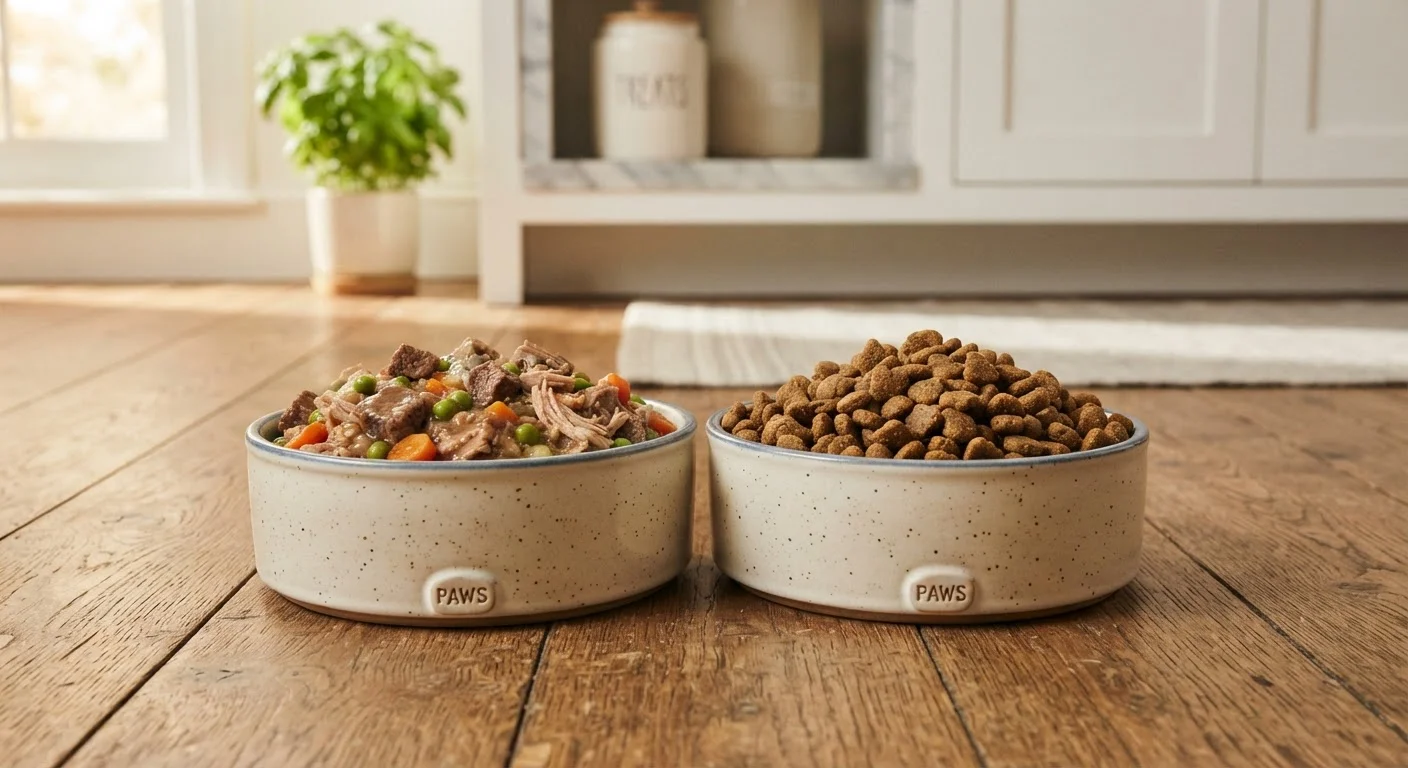
When you strip away the marketing language, the most fundamental difference between wet and dry dog food is water content. Kibble typically contains around 10% moisture. Canned wet food usually ranges from 70% to 80% moisture. That gap has real consequences for how your dog's body processes each meal.
Dogs who eat wet food passively take in a significant amount of their daily fluid through their food. This matters most for dogs who are light drinkers, those in warmer climates, or animals managing urinary health issues. Dry-fed dogs need to compensate by drinking more water on their own — something not all of them reliably do.
Both formats can be labeled "complete and balanced" under the guidelines set by the Association of American Feed Control Officials (AAFCO), meaning either can serve as a dog's sole diet when they meet those standards. The label is your first checkpoint — not the format itself. For a closer look at what those ingredient panels actually tell you, see our guide to reading dog food ingredient labels.
| Criterion | Dry Food (Kibble) | Wet Food (Canned) |
|---|---|---|
| Moisture content | ~10% | 70–80% |
| Cost per serving | Generally lower | Generally higher |
| Storage after opening | Room temperature, weeks | Refrigerate, 2–3 days |
| Palatability | Moderate | High (stronger aroma) |
| Ease of portioning | Easy to measure | Requires tracking calories |
| Suitable for dental issues | Limited — harder texture | Yes — soft and easy to chew |
| Supports hydration | Indirectly (must drink water) | Yes — moisture-rich |
| Caloric density | Higher per gram | Lower per gram |
When One Format Makes More Sense Than the Other
For most healthy adult dogs, kibble works well as the dietary foundation. It's easier to store (no refrigeration required), simpler to measure accurately, and typically more affordable per serving. Accurate portioning matters more than many owners realize — see common feeding mistakes dog owners make for how portion errors quietly affect health over time.
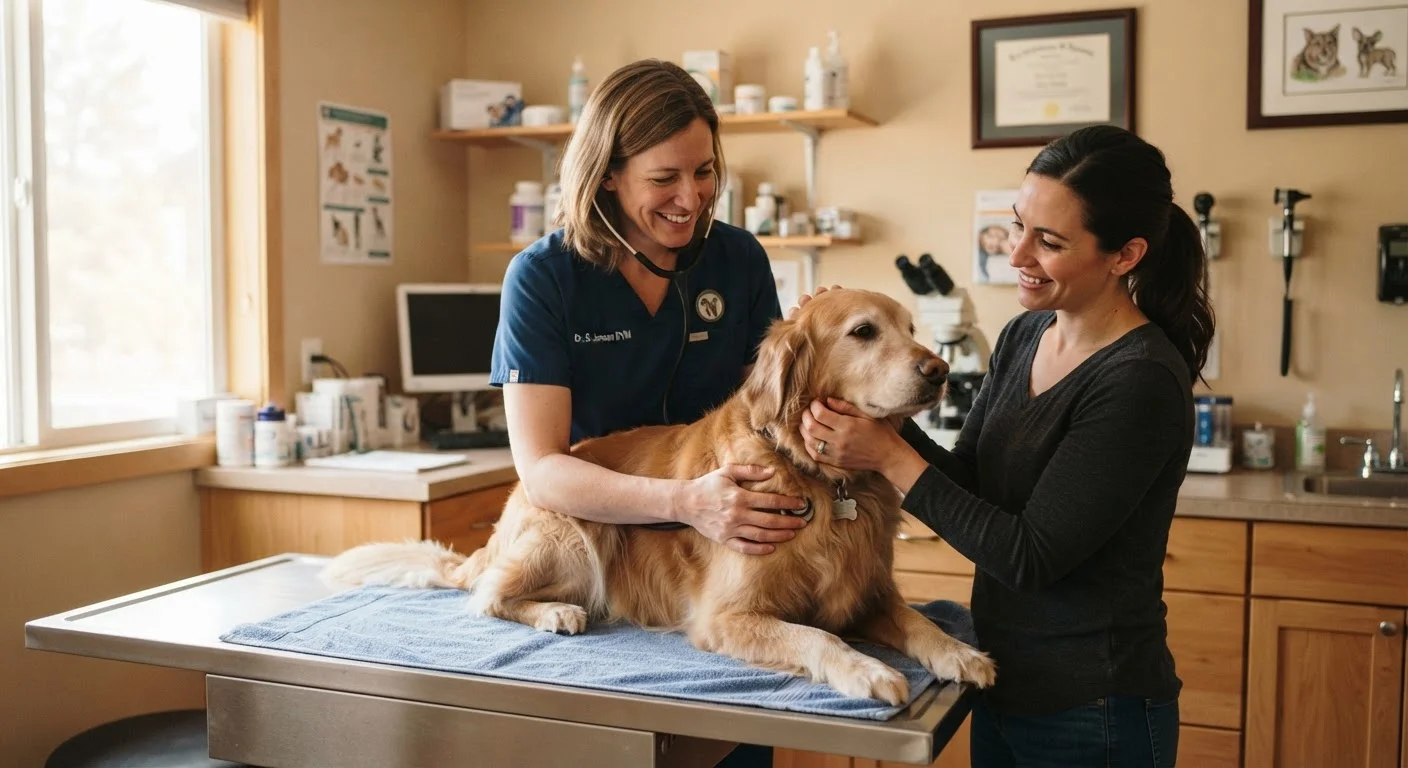
Wet food earns its place for specific situations. Senior dogs with dental disease, worn teeth, or jaw discomfort often chew kibble with difficulty or avoid it altogether. Wet food removes that barrier. Dogs recovering from illness, those on appetite-stimulating medications, or animals managing kidney disease may also benefit from wet food's higher palatability and fluid content — though any diet change related to a health condition should be discussed with your veterinarian first.
Puppies and dogs at different life stages have shifting nutritional demands too. Dogs' needs change significantly across their lifespan, and food format may reasonably shift as those needs evolve.
70–80%
Moisture content in wet dog food
Compared to roughly 10% in dry kibble, this difference substantially affects a dog's total daily fluid intake from food alone.
~10%
Moisture content in dry kibble
Dogs eating dry food exclusively must drink more water independently to meet their hydration needs.
2–3 days
Refrigerated shelf life of opened wet food
Opened canned dog food should be stored in a sealed container in the refrigerator and used within a few days to prevent spoilage.
Mixing Formats: A Practical Middle Ground
Many owners find that neither format alone is the perfect answer — and combining them is a reasonable approach. Adding a small spoonful of wet food to a bowl of kibble can increase palatability for a reluctant eater without committing to the cost of an all-wet diet. It also gives dogs some of the moisture benefits of wet food while keeping portioning and storage manageable.
If you go this route, keep total caloric intake in mind. Wet and dry foods have different caloric densities, so adding wet food without adjusting kibble volume can lead to unintentional overfeeding. Your veterinarian or a board-certified veterinary nutritionist can help you calculate appropriate amounts for your dog's size and activity level.
One thing that doesn't change with format: the importance of consistent feeding structure. Whether you serve wet, dry, or both, when and how you feed matters alongside what you feed.
This article is for general informational purposes only and is not a substitute for professional veterinary advice. Always consult your veterinarian before making significant changes to your dog's diet, especially if your dog has an existing health condition.