

Why Dogs Don't Always Show Pain Clearly
Dogs evolved as pack animals, which means showing vulnerability wasn't always safe. That instinct to mask discomfort hasn't gone away — even well-loved household pets may suppress obvious signs of pain until it becomes severe. This isn't stubbornness or stoicism for your benefit; it's biology.
That's why paying attention to changes in your dog's behavior matters more than waiting for an obvious signal like whimpering. Subtle shifts — in appetite, energy, posture, or social behavior — are often the earliest indicators that something is wrong. The more familiar you are with your dog's normal patterns, the easier it becomes to notice when something is off.
For context on how this compares across species, cats also instinctively mask discomfort, though the signs can look quite different.
Acute pain
Pain that comes on suddenly and is typically linked to a specific injury or illness. It usually resolves once the underlying cause is treated.
Chronic pain
Persistent or recurring pain that lasts beyond the normal healing period, often associated with conditions like arthritis or degenerative joint disease.
Guarding behavior
When a dog protects a painful area by flinching, pulling away, or snapping when that area is approached or touched. It's a common pain indicator during physical exams.
Analgesic
A medication used to reduce or relieve pain. Only veterinarian-prescribed analgesics should be given to dogs — many human versions are toxic to them.
Behavioral and Physical Signs to Watch For
Pain in dogs tends to show up in two broad categories: behavioral changes and physical changes. Neither category alone tells the whole story, but together they can give you a clearer picture.
Behavioral Signs
- Reduced activity or reluctance to move: A dog that suddenly avoids stairs, jumps less, or lags on walks may be experiencing musculoskeletal pain.
- Changes in appetite or water intake: Eating noticeably less — or more — can indicate discomfort, particularly if it's paired with other symptoms.
- Increased vocalization: Whimpering, whining, or growling when touched or during movement can be a direct pain response.
- Withdrawal or irritability: Dogs in pain often become less social. A normally friendly dog that now seeks isolation or snaps when approached may be hurting.
- Restlessness or difficulty settling: Pacing, shifting positions frequently, or an inability to lie still can signal chronic pain or acute discomfort.
Physical Signs
- Limping or altered gait: Even intermittent limping warrants attention — don't wait to see if it resolves on its own for more than a day or two.
- Licking, biting, or scratching a specific area: Dogs often focus on the painful spot, even when it's internal.
- Postural changes: Hunching, tucking the abdomen, or holding the head lower than usual can indicate pain in the back, abdomen, or neck.
- Changes in breathing: Shallow or rapid breathing at rest, especially without exertion, can signal significant pain or distress.
- Dental discomfort signs: Dropping food, favoring one side of the mouth, or resisting touch near the face may point to oral pain. Dental disease is one of the most overlooked sources of pain in dogs.
When to Contact Your Veterinarian
Not every sign of discomfort is an emergency, but some situations should prompt an immediate call to your veterinarian:
- Sudden severe limping or complete inability to bear weight
- Visible injury, swelling, or bleeding
- Distended or rigid abdomen
- Collapse, extreme lethargy, or unresponsiveness
- Signs of pain paired with vomiting, diarrhea, or difficulty breathing
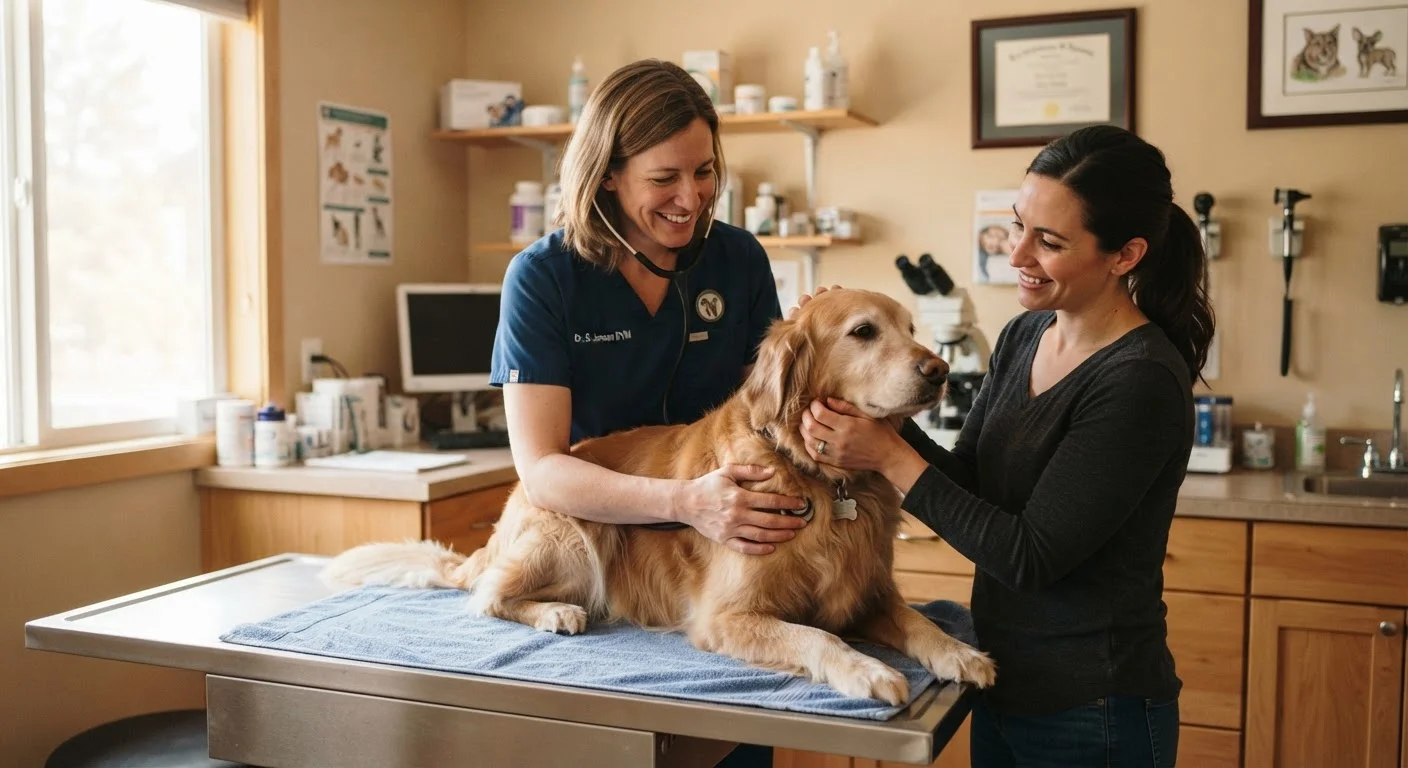
For concerns that are noticeable but not acute — a dog that's been a little slower than usual, or slightly off food for a day — a scheduled appointment within 24 to 48 hours is still appropriate. It's always better to have a vet rule out a problem than to wait and let pain become entrenched.
Never give your dog human pain medications such as ibuprofen or acetaminophen. These are toxic to dogs and can cause serious harm. Only administer any medication — including supplements — under veterinary guidance.
If you're nervous about the appointment itself, there are practical ways to make vet visits less stressful for both of you.
This article is for general informational purposes only and is not a substitute for professional veterinary advice, diagnosis, or treatment. If you have concerns about your dog's health, consult a licensed veterinarian.