
Why Dental Health Is So Easy to Miss
Most dog owners are diligent about vaccines, flea prevention, and annual checkups. Dental care, however, tends to fall to the bottom of the list — and it's easy to understand why. A dog's mouth isn't something we interact with closely every day, and unlike a limping leg or a visible wound, tooth decay doesn't announce itself in obvious ways.
Dogs are also naturally stoic about oral discomfort. A dog with significant dental disease may continue eating, playing, and acting normally, giving owners no clear signal that something is wrong. By the time symptoms like bad breath, difficulty chewing, or visible tartar become noticeable, the disease is often well established. For more on how dogs quietly signal pain, see our guide on signs your dog may be in pain.
It's also worth acknowledging a persistent myth: that dogs clean their own teeth adequately through chewing. While chew activity does provide some mechanical benefit, it is not a substitute for dedicated dental care. Our article on common dog health myths explores this and similar misconceptions in more detail.
How Dental Disease Actually Develops
The process begins with plaque — a sticky, colorless film of bacteria that forms on tooth surfaces within hours of eating. When plaque is not regularly disrupted by brushing or cleaning, minerals in saliva cause it to harden into tartar (also called calculus), a rough, yellowish substance that adheres firmly to the tooth.
Tartar accumulation irritates the gum tissue, leading to gingivitis — the earliest, reversible stage of periodontal disease. The gums become red, swollen, and may bleed. If inflammation continues unchecked, it progresses below the gum line, damaging the ligaments and bone that anchor teeth. At advanced stages, teeth become loose or are lost entirely, and bacteria can enter the bloodstream through damaged tissue.
~80%
Dogs with dental disease by age three
According to the American Veterinary Medical Association, the vast majority of dogs show signs of periodontal disease before they reach middle age.
Stage 1–4
Periodontal disease severity scale used by vets
Veterinarians use a standardized staging system to assess severity and guide treatment; Stage 1 is reversible, while Stage 4 involves significant bone loss.
Small breeds
Highest risk for early dental disease
Veterinary dental specialists note that smaller dogs tend to develop periodontal disease earlier and more severely than larger breeds due to tooth crowding.
Certain factors accelerate this progression. Smaller dog breeds and brachycephalic (flat-faced) breeds like Bulldogs and Pugs are particularly prone to dental problems due to crowded, misaligned teeth. Diet, genetics, age, and whether a dog receives regular at-home and professional care all play a role in how quickly disease advances.
What Prevention Actually Looks Like
The most effective tool available to dog owners is a simple one: a toothbrush. Daily brushing with a dog-safe toothpaste disrupts plaque before it can mineralize into tartar, making it the single highest-impact habit an owner can build. It takes patience to introduce, particularly with adult dogs unfamiliar with the process, but most dogs can be gradually acclimated with consistent, short sessions.
Incorporating dental habits into a broader at-home care routine makes them easier to maintain. Our dog grooming at home guide offers practical advice on building routines your dog will tolerate — dental care fits naturally alongside brushing, ear cleaning, and nail trims.
Beyond brushing, veterinary-approved dental chews, water additives, and certain diets may help reduce plaque accumulation, though none replace brushing entirely. The Veterinary Oral Health Council (VOHC) evaluates and lists products that have met standards for plaque or tartar reduction — a useful reference when evaluating options.
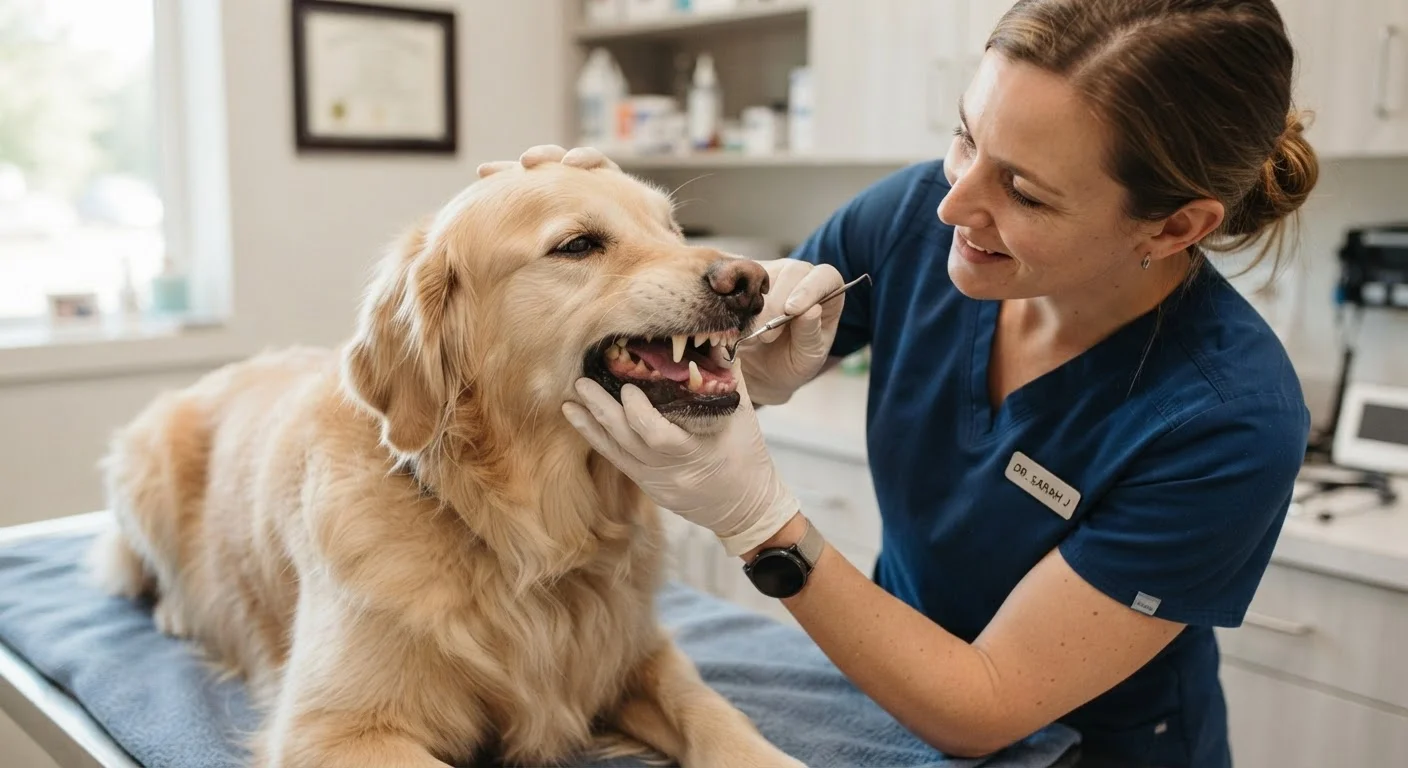
Professional dental cleanings, performed under anesthesia, allow veterinarians to clean below the gum line, assess for disease, and take dental X-rays that reveal problems invisible to the naked eye. These cleanings are an essential complement to daily at-home care, not a substitute for it. Owners curious about how dental care compares across species may find useful context in our piece on feline dental health.
Starting a Brushing Routine With Your Dog
Introduce toothbrushing gradually — start by letting your dog smell and taste the toothpaste, then progress to touching the gums with your finger before introducing a brush. Keep sessions short (30 seconds is a realistic goal at first) and end on a positive note. Consistency over weeks matters far more than perfection in any single session.