
Why Cats Conceal Pain
Cats are both predators and prey animals by nature. In the wild, showing vulnerability invites danger — so hiding weakness is deeply hardwired. Domestic cats carry this same instinct, meaning a cat in significant pain may appear perfectly calm to an untrained eye. This is one of the most important things any cat owner can understand: the absence of obvious distress does not mean the absence of pain.
Veterinary behaviorists widely recognize that cats suppress behavioral changes as long as possible, which means by the time a cat shows visible signs, discomfort may already be well established. Learning to recognize subtle shifts in behavior and appearance gives you a meaningful head start. For a broader look at how cats communicate, see what your cat's body language is really telling you.
Feline Grimace Scale
A validated, research-based tool developed by veterinary scientists to assess acute pain in cats by evaluating facial muscle tension, ear position, eye openness, whisker position, and head posture.
Stoic behavior
The tendency of cats (and some other animals) to suppress outward signs of pain or illness as a survival mechanism rooted in their evolutionary history as both predator and prey.
Over-grooming
Excessive licking, chewing, or biting of a specific area of the body, which can indicate localized pain, skin irritation, or an underlying medical condition.
Musculoskeletal pain
Discomfort originating in the muscles, joints, or bones — commonly seen in older cats with arthritis, or in any cat following an injury.
Behavioral Changes That May Signal Pain
Behavioral shifts are often the earliest and most reliable indicators that something is wrong. These changes can be gradual, so it helps to think of your cat's baseline — what is normal for your individual cat.
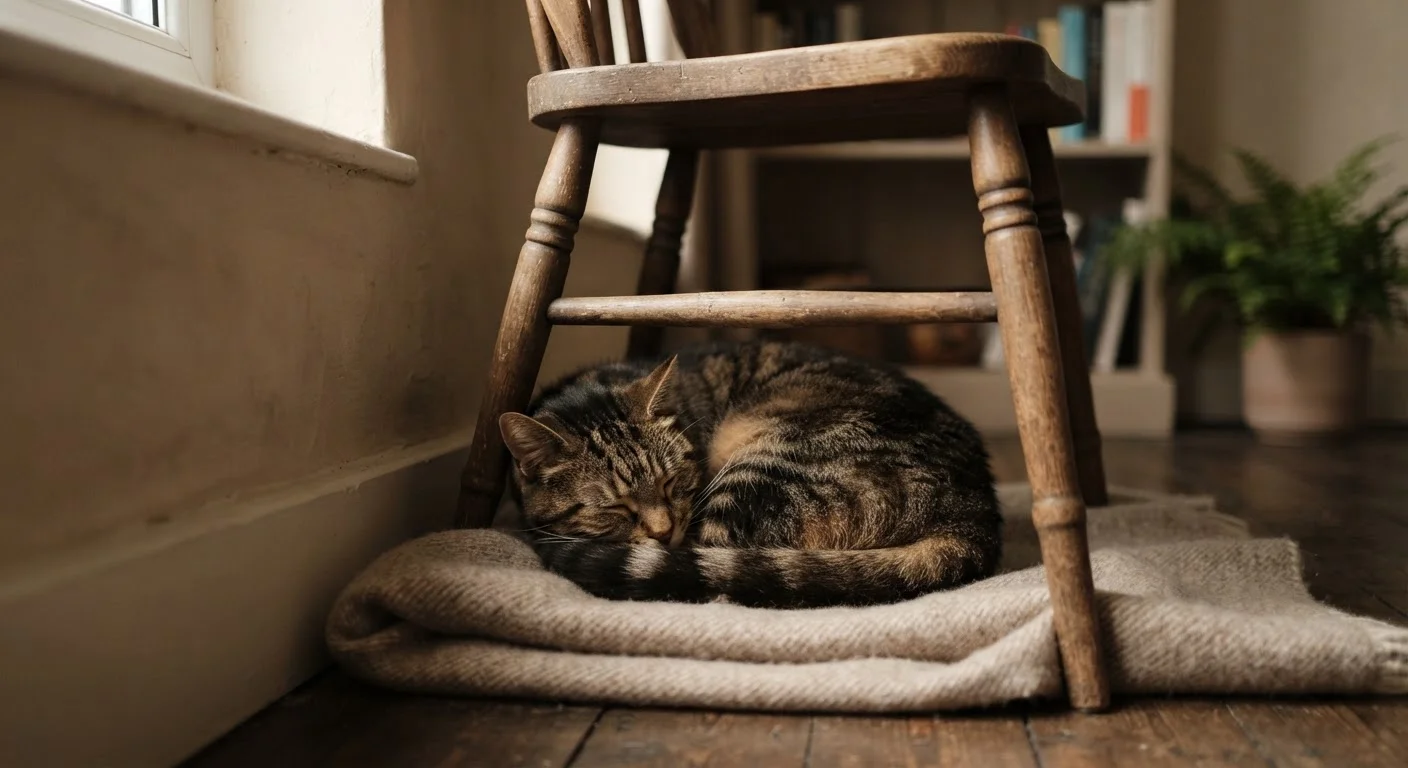
- Withdrawal and hiding: A usually social cat retreating to closets or under furniture is a meaningful change worth noting.
- Reduced grooming or over-grooming: Pain can cause a cat to stop grooming entirely, leading to a dull or matted coat. Alternatively, a cat may obsessively lick a specific painful area.
- Altered litter box habits: Avoiding the box, crying out while using it, or eliminating outside it can all indicate discomfort — particularly urinary or musculoskeletal pain. Litter box avoidance is rarely spite and often has a medical root.
- Reduced appetite or interest in food: Dental pain, nausea, or systemic illness can all suppress a cat's appetite.
- Increased vocalization or unusual silence: Some cats in pain vocalize more; others go unusually quiet. Know your cat's typical communication style.
- Aggression or irritability: A normally gentle cat that suddenly hisses, swats, or resists being touched — especially in one area — may be reacting to pain.
Physical Signs Worth Watching
In addition to behavioral cues, certain physical changes can indicate a cat is uncomfortable or unwell.
| Pain masking tendency | High — instinctive survival behavior (Veterinary behaviorist consensus) |
| Common early sign | Withdrawal or reduced activity |
| Validated pain assessment tool | Feline Grimace Scale (FGS) (Developed by Université de Montréal researchers) |
| Urgent physical sign | Labored or rapid breathing at rest |
| Often overlooked indicator | Reluctance to jump or use stairs (Commonly associated with feline arthritis) |
- Squinting or partially closed eyes: A cat guarding its eyes may have eye pain, or squinting can accompany generalized discomfort.
- Hunched posture: A cat sitting with a rounded back, tucked limbs, and a tense abdomen is often trying to protect a painful area.
- Changes in breathing: Rapid, shallow, or labored breathing at rest is always a reason to contact a veterinarian promptly.
- Limping or reluctance to jump: Cats affected by arthritis or injury may hesitate at stairs, avoid high surfaces they once used freely, or show stiffness after resting.
- Facial tension: Researchers have developed pain scales for cats (such as the Feline Grimace Scale) that identify pain through facial cues: ears flattened or rotated outward, narrowed eyes, a tense muzzle, and whiskers pulled back or bunched.
Pain manifests differently across conditions, and no single sign is definitive. If you notice several of these changes together — or any sudden shift from your cat's norm — a veterinary evaluation is the right next step. Unlike dogs, who tend to show discomfort more openly, cats require this more attentive approach. You can learn more about how that comparison plays out in recognizing pain signs in dogs.
This article is for general informational purposes only and is not a substitute for professional veterinary advice, diagnosis, or treatment. Always consult a licensed veterinarian if you have concerns about your cat's health.