

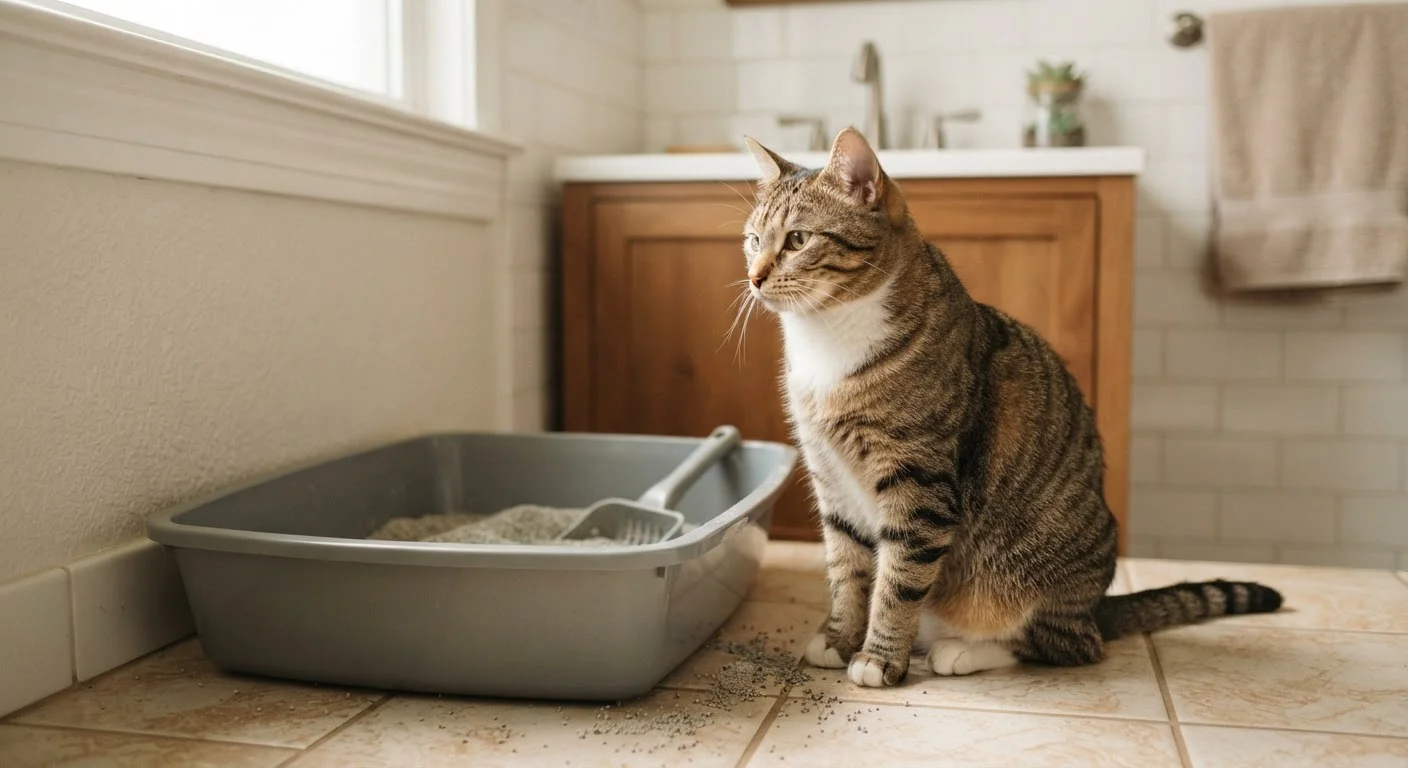
Why Cats Stop Using the Litter Box
Few things are more frustrating — or worrying — for a cat owner than finding that their cat has stopped using the litter box. The good news: when you understand what's actually driving the behavior, it becomes much more manageable. Cats aren't being spiteful when they eliminate outside the box. They're communicating that something in their world — medical or environmental — isn't right.
Litter box problems fall into two broad categories: medical causes (like a urinary tract infection or kidney issue) and environmental causes (like a dirty box, the wrong litter, or an uncomfortable location). Working through both systematically, ideally with your vet's guidance, usually uncovers the answer. Below are the most common mistakes cat owners make — and what to do instead.
Common Mistakes That Lead to Litter Box Avoidance
Most litter box problems are solvable once you know where to look. These are the errors that come up most often — and the adjustments that help.
Not cleaning the litter box frequently enough.
Why it happens: Many owners underestimate how sensitive cats are to odor — their sense of smell is roughly 14 times stronger than a human's. What seems acceptably clean to us can feel overwhelming to a cat.
Using a box that's too small for the cat.
Why it happens: Standard litter boxes sold in many stores are sized for average or smaller cats, and owners often don't think to size up as a kitten grows.
Placing the box in a loud, high-traffic, or hard-to-reach location.
Why it happens: Owners often tuck the litter box somewhere out of sight — near the washing machine, in a busy hallway, or in a basement — prioritizing convenience over the cat's comfort.
Not having enough litter boxes in a multi-cat household.
Why it happens: The general guideline — one box per cat, plus one extra — surprises many owners, especially those with two or three cats sharing a home.
Switching litter types abruptly or using heavily scented litters.
Why it happens: Owners often assume scented litters will make the box more appealing. In fact, strong artificial fragrances can actively repel cats.
Assuming avoidance is a behavioral problem before ruling out a medical cause.
Why it happens: When a cat starts eliminating outside the box, owners often focus first on discipline or environmental fixes, not realizing the cat may be experiencing real physical discomfort.
If you're navigating these issues with a new cat, our guide for first-time cat owners covers litter box setup basics that can prevent many of these problems from developing at all.
When to Stop Troubleshooting and Call a Vet
Not every litter box problem is a management issue you can solve with a different litter or a cleaner scoop routine. Any time a cat is straining to urinate, producing little to no urine, crying in the box, or showing blood in the urine, this is a veterinary emergency — particularly in male cats, who are prone to potentially life-threatening urinary blockages.
Urinary Blockages Are a Medical Emergency
Male cats in particular are at risk for urinary blockages, which can become fatal within 24 to 48 hours if untreated. If your cat is repeatedly entering the litter box and producing little or no urine, crying while trying to urinate, or seems lethargic and is licking at his abdomen, do not wait — contact a veterinary clinic immediately. This situation should never be managed at home.
Beyond emergencies, schedule a routine vet appointment whenever litter box habits change suddenly without an obvious environmental cause. Conditions like feline idiopathic cystitis (bladder inflammation with no identifiable infection), kidney disease, diabetes, and hyperthyroidism can all show up first as litter box changes. Cats are expert hiders of discomfort, so a shift in elimination habits is one of the clearest signals they give us that something is off.
Once medical causes are ruled out, behavioral support — like pheromone diffusers, reduced household stress, or gradual litter transitions — can be very effective. Reading your cat's body language throughout the process can help you gauge whether interventions are actually reducing their stress.
This article is for general informational purposes only and is not a substitute for professional veterinary advice. Always consult a licensed veterinarian about your cat's specific health needs.