
The Core Trade-Off: Visibility vs. Concealment
Every storage decision comes down to one question: do you want your belongings on display or hidden away? Open shelving puts contents front and center — which is an asset when those contents are attractive and neatly arranged, and a liability when they're not. Closed cabinets offer a clean visual slate no matter what's inside, which is why they've dominated home storage for decades.
Neither approach is universally superior. The smarter move is understanding what each does well, then matching that strength to the demands of each room in your home. A choice that's ideal for a dining room can be completely wrong for a bathroom.
For a deeper look at how storage and furniture choices affect the feel of smaller rooms, see our guide to decorating small living rooms.
| Criterion | Open Shelving | Closed Cabinets |
|---|---|---|
| Visual impact | Airy, personal, display-forward | Clean, uniform, unobtrusive |
| Dust & grease exposure | High — requires regular cleaning | Low — contents protected |
| Clutter concealment | None — everything is visible | Complete — doors hide contents |
| Typical installation cost | Generally lower | Generally higher |
| Best room fit | Living room, dining room, office | Kitchen, bathroom, bedroom |
| Flexibility / reuse | Easier to reposition or remove | More permanent once installed |
| Maintenance effort | Higher — frequent dusting needed | Lower — exterior wipe-down only |
Room-by-Room Breakdown
Kitchen
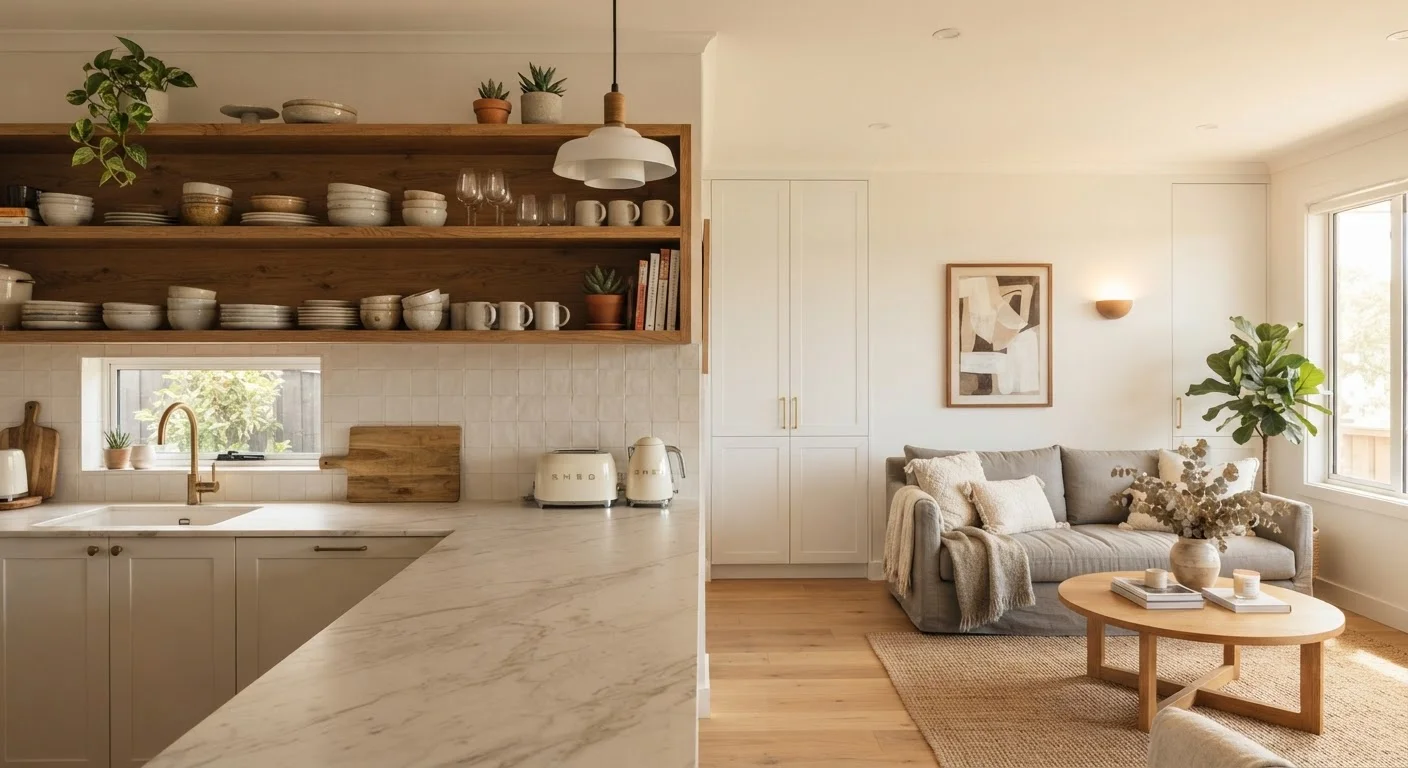
Kitchens are where the open-shelving debate gets most heated. Open shelves can make a kitchen feel airier and more personalized — but they also expose everything to cooking grease, steam, and airborne dust. Unless you cook infrequently and keep a tightly edited collection of cookware, open kitchen shelves require wiping down at least weekly. Our more detailed look at this trade-off is covered in the open shelving vs. upper cabinets kitchen guide.
Living Room
The living room is where open shelving genuinely shines. Built-in or freestanding shelves for books, plants, and decorative objects add visual layering and personality. Because living rooms don't generate grease or heavy moisture, dust accumulation is the primary maintenance concern — manageable with regular dusting. Closed media consoles or sideboards work well alongside open shelves to hide cords, gaming equipment, and less attractive items.
Bedroom
Bedrooms benefit from a hybrid approach. Open shelves work well for books, plants, or styled nightstand accessories; closed wardrobes and dressers keep clothing and personal items concealed, which generally makes the room feel calmer. Clutter in a bedroom is directly associated with poorer sleep quality, so leaning toward closed storage for everyday items is worth considering.
Bathroom
Bathrooms are the strongest case for closed storage. Humidity accelerates dust-to-grime buildup on open surfaces, and most bathroom items — medications, toiletries, cleaning supplies — aren't meant to be on display. A small open shelf for hand towels or a single plant is a reasonable accent; for everything else, closed vanity cabinets and medicine cabinets earn their place.
Home Office
In a home office, open shelving supports a functional, accessible system for frequently referenced books and files. The key is committing to a consistent organization method — because in an open-shelf office, disorganization is always visible. For items that don't need daily access, closed file drawers or cabinet doors prevent visual noise that can hurt focus.
Maintenance, Cost, and Practical Considerations
Open shelves are typically less expensive to install than full cabinet runs — particularly floating wall shelves, which require only brackets and boards. However, the ongoing time cost of keeping them tidy and dust-free should factor into your decision. If you're the kind of household where counters and surfaces accumulate clutter naturally, open shelving will amplify that tendency rather than solve it.
Closed cabinets involve higher upfront costs, especially for custom or semi-custom built-ins. But they pay back in low-maintenance concealment — a quick wipe of the exterior is usually sufficient. They also protect contents from UV fading, which matters for spices, paper goods, and fabric items stored near windows.
A practical middle-ground strategy is mixed storage: open shelves on upper walls for display and frequently used items, closed cabinets below for everyday clutter. This approach is used widely in kitchens and living rooms because it captures the visual openness of shelving while maintaining the practicality of enclosed storage. For principles on how layering different storage types contributes to a more cohesive room, see our article on layering décor for pulled-together rooms.