
Storage Capacity and Everyday Functionality
At its core, this debate comes down to how much you store and how often you reach for it. Upper cabinets win on raw storage volume — door fronts, adjustable shelving, and enclosed depth mean you can pack in far more without worrying about how it looks. Pots, mismatched containers, half-used pantry items, and rarely touched appliances all disappear behind a closed door.
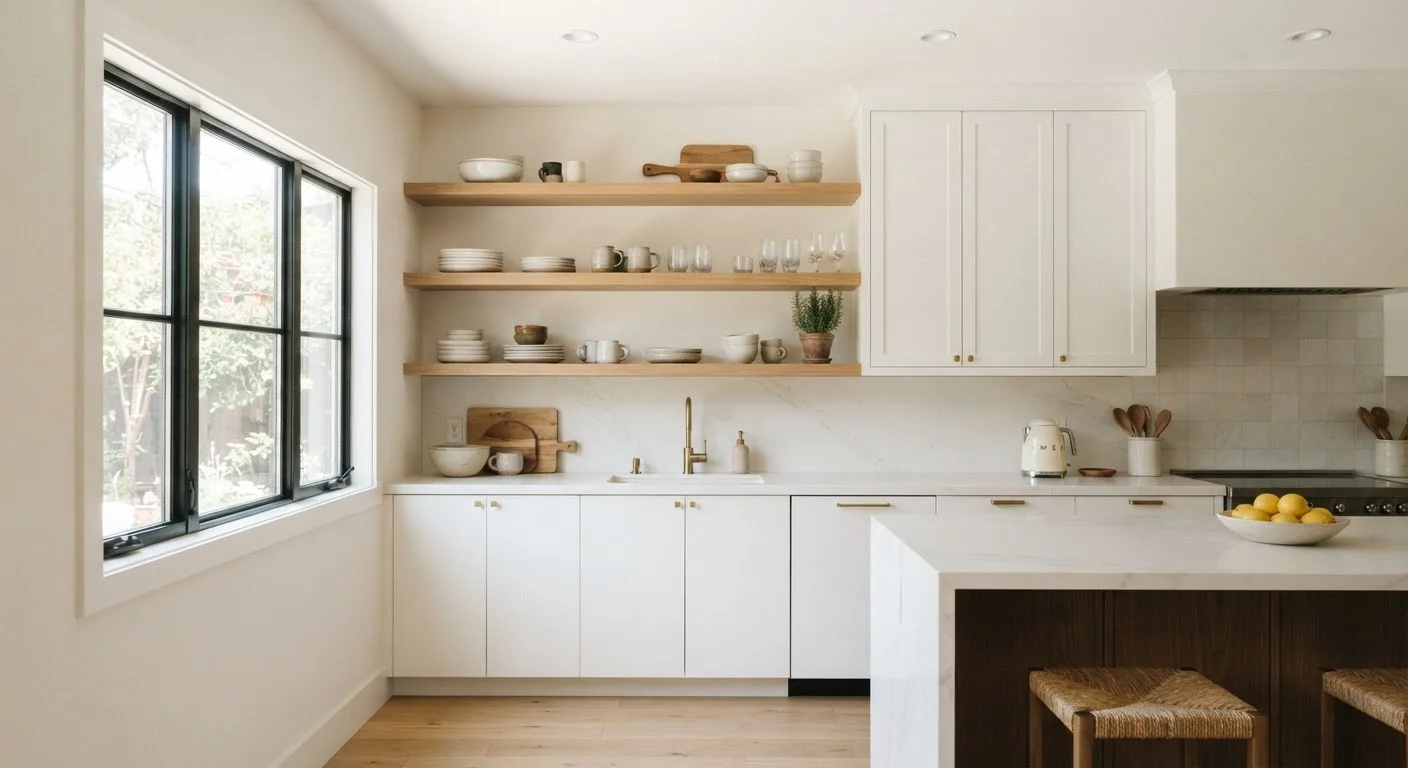
Open shelves, by contrast, work best for a curated, intentional collection. If your kitchen houses a full complement of everyday dishes, seasonal equipment, and the usual overflow of a working household, open shelving tends to highlight the mess rather than manage it. Realistically, most home cooks need more storage than open shelves comfortably provide — which is why many designers recommend keeping at least one wall of closed cabinetry even in shelf-forward kitchens.
| Criterion | Open Shelving | Upper Cabinets |
|---|---|---|
| Storage volume | Limited; best for curated items | High; accommodates full household |
| Maintenance effort | High; frequent dusting required | Low; enclosed doors protect contents |
| Upfront cost | Generally lower | Generally higher |
| Visual impact | Airy, spacious, display-forward | Uniform, contained, tidy |
| Clutter tolerance | Low; everything is visible | High; hides mismatched items |
| Best kitchen type | Low-traffic, styled kitchens | Busy, high-use family kitchens |
Maintenance, Dust, and Real-World Upkeep
Open shelves are honest: whatever sits on them is always on display, including the dust, cooking grease, and occasional splash. In an active kitchen, items on open shelves need wiping down weekly, and the shelves themselves need regular attention. This isn't a dealbreaker for everyone, but it's a real ongoing commitment that's easy to underestimate before installation.
Upper cabinets largely solve this problem. Enclosed doors protect dishes and glassware from airborne grease, dust, and humidity fluctuations. Cabinet exteriors do accumulate fingerprints and kitchen grime, but a wipe-down of flat surfaces takes far less time than cleaning every individual item on a shelf. For households with children, pets, or simply a preference for lower-maintenance spaces, cabinets are the more forgiving choice.
Cost, Installation, and What to Expect
Floating shelves are typically among the most affordable kitchen storage options — materials can range from simple wooden planks to stone or metal, and installation is straightforward for an experienced DIYer or a carpenter. The lower upfront cost makes open shelving appealing for kitchen refreshes on a modest budget.
Upper cabinets involve more material, hardware, and installation time. A full run of custom or semi-custom upper cabinets represents a meaningful investment, and installation almost always requires a professional. That said, quality cabinetry is durable and adds measurable value to a home — so the higher initial spend has long-term practical returns.
One factor often overlooked: switching from cabinets to open shelves during a renovation may still require patching and repainting the wall behind where cabinets stood, which adds cost and labor to what looks like a simplification.
Aesthetics, Style, and Making the Choice Work
Open shelving earns its reputation for making kitchens feel lighter and more spacious. Removing the visual weight of cabinet boxes from upper walls opens up the room, lets backsplash tile breathe, and creates an airy quality that photographs beautifully. For smaller kitchens especially, this can meaningfully change how the space feels day-to-day.
That said, the styled open shelf you see in design magazines is often the product of deliberate editing — matching vessels, a limited color palette, and items chosen as much for their look as their utility. Achieving that in a real kitchen requires ongoing curation. If that sounds appealing, open shelving rewards the effort. If it sounds exhausting, it probably will be.
A hybrid layout — open shelves in one or two targeted areas paired with closed upper cabinets elsewhere — is increasingly common for good reason. It captures the visual openness where you want it, without sacrificing the concealed storage a working kitchen needs. For ideas on how to style what's on those shelves, the principles behind layering décor apply directly to shelf arrangement. And if you're weighing this decision beyond just the kitchen, our broader look at open shelving versus closed cabinets room by room covers how each option plays out throughout the home.