A practical checklist covering bodywork, engine bay, interior, tires, and test drive observations to run through before committing to a used vehicle.
Key Takeaways
Always inspect a used car in daylight and on a level surface for the clearest view of body and undercarriage.
Rust, mismatched paint, and uneven panel gaps can signal prior accident damage that wasn't disclosed.
A cold start reveals engine issues that a pre-warmed car can mask — arrive early and ask the seller not to start it first.
Tire wear patterns often expose alignment or suspension problems that cost hundreds to fix.
No seller inspection replaces a pre-purchase check by an independent mechanic.
Why Your Own Walkthrough Still Matters
Buying a used car involves real financial risk. Even with a vehicle history report in hand, a private seller or dealer lot inspection is your first line of defense against surprises. A vehicle history report tells you what was reported — it won't catch unreported accidents, deferred maintenance, or cosmetic work done to hide damage.
Inspect all body panels in direct sunlight for paint color mismatches, overspray on trim, or texture differences that suggest repainting after a collision.Must
Check panel gaps (door edges, hood, trunk lid) — uneven spacing often indicates a structural repair or poor reassembly after an accident.Must
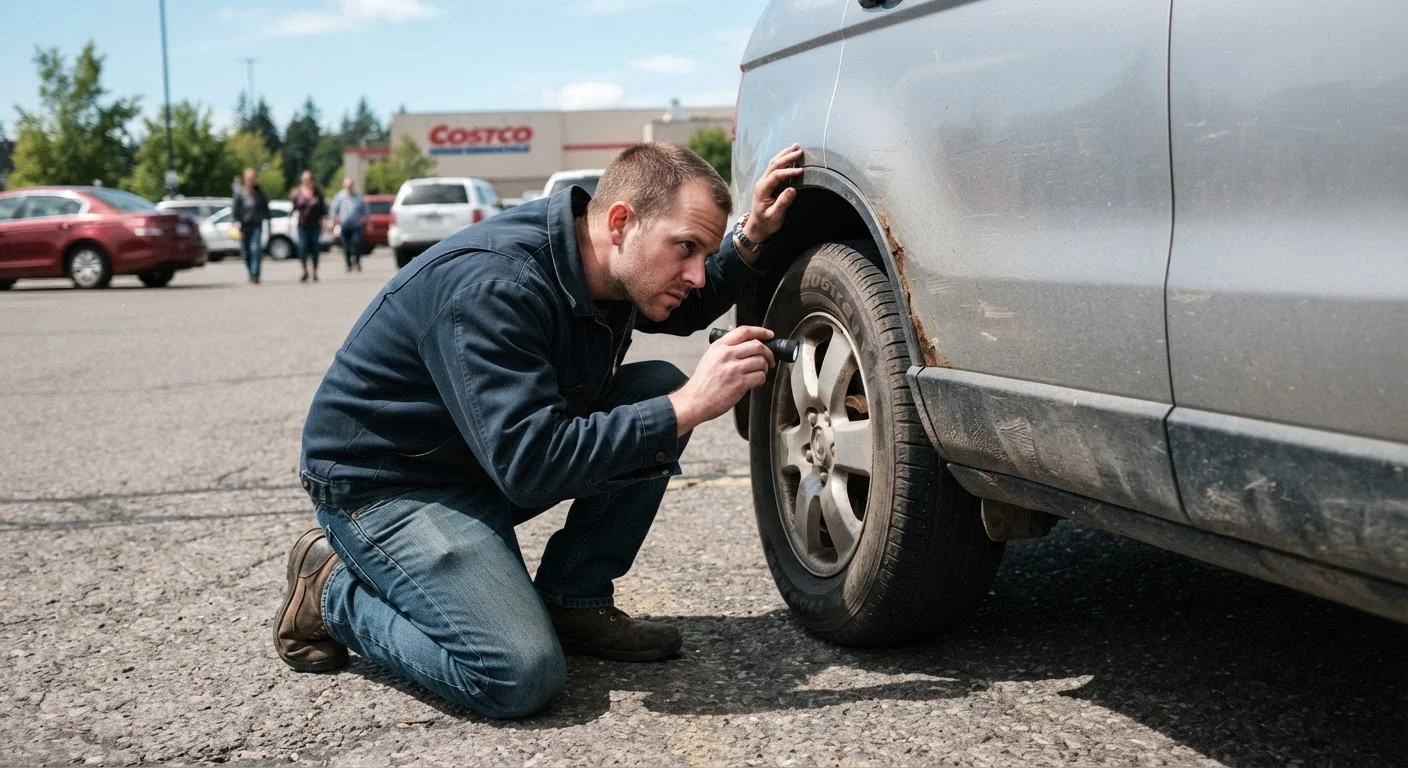
Look along the rocker panels, wheel wells, and underside edges for active rust or bubbling paint, which can spread and become structurally significant.Must
Examine all glass for cracks, chips, and delamination around the edges of the windshield.Should
Engine Bay
Check the oil dipstick — oil should be amber to light brown; black, gritty, or milky oil can indicate neglect or a serious internal issue like a blown head gasket.Must
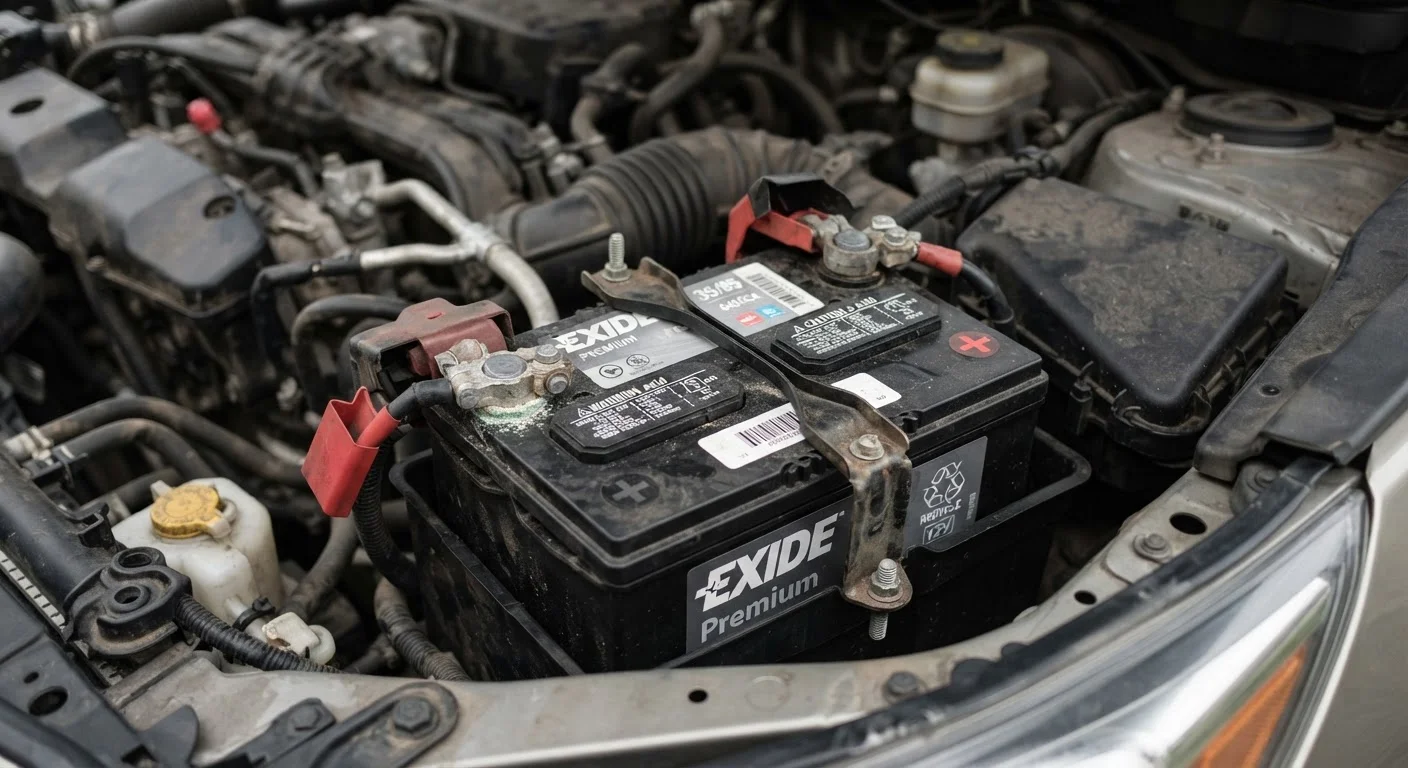
Look for coolant leaks, corrosion on the battery terminals, and any cracked or brittle belts and hoses.Must
Start the engine cold and watch the exhaust — white smoke after the first few seconds can signal coolant burning, while blue smoke suggests oil consumption.Must
Listen for knocking, ticking, or rattling sounds at idle that persist beyond the first 30 seconds of running.Must
Check fluid levels for brake fluid, power steering fluid, and transmission fluid where accessible — low or dark fluid can point to leaks or neglect.Should
Tires & Wheels
Measure tread depth on all four tires using a tread depth gauge or the quarter test — uneven tread suggests alignment or suspension problems.Must
Check that all four tires are the same brand and size, and look for sidewall cracking or bulging.Should
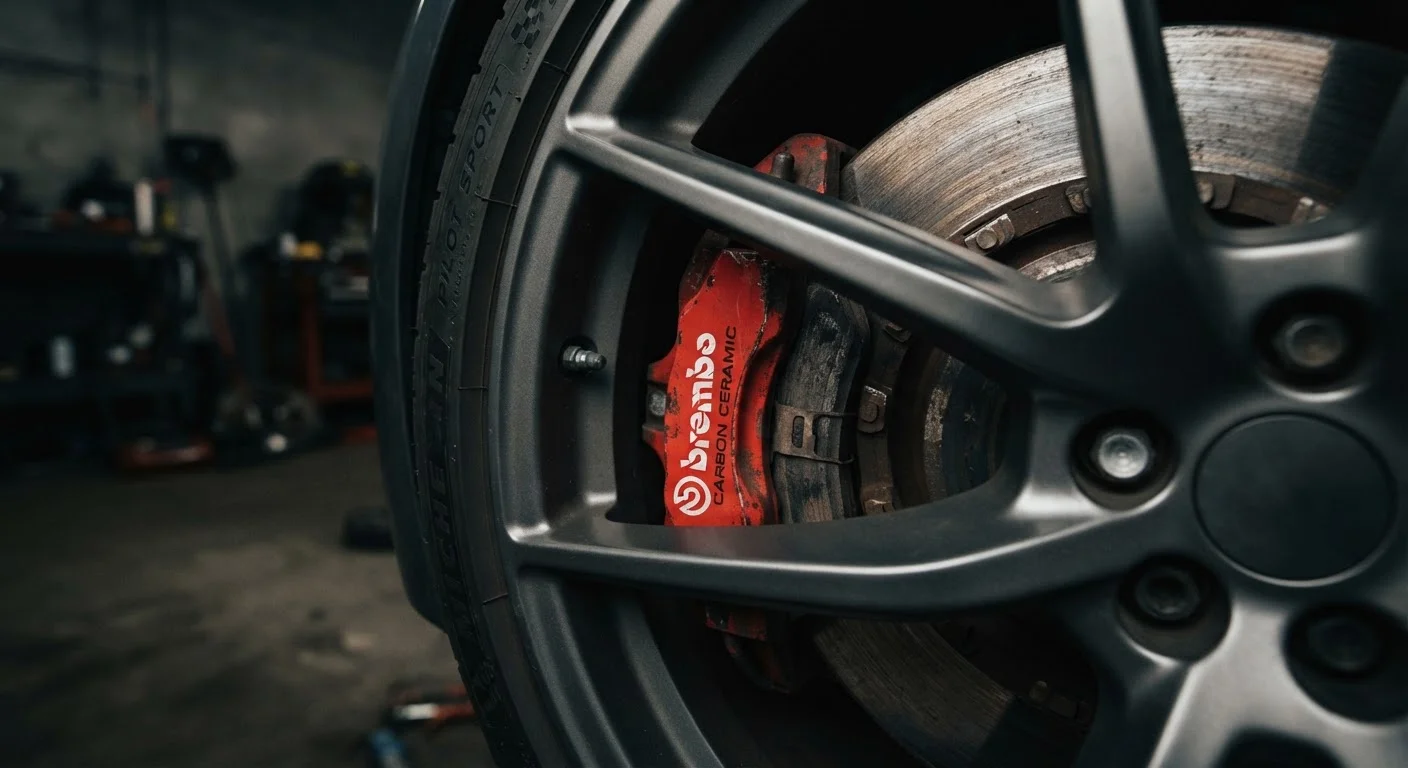
Inspect the brake rotors through the wheel spokes for deep grooves or heavy scoring that indicates worn brake pads left too long.Should
Interior
Test every electrical function you can reach: windows, locks, mirrors, heated seats, climate controls, and the infotainment system.Must
Check all warning lights on the dash — scan for any that illuminate and stay on after startup, especially the check engine light.Must
Smell the interior for mildew or mustiness, which can indicate water intrusion or flood damage.Must
Check the carpet, trunk liner, and door sills for water staining or discoloration that wasn't disclosed.Should
Test all seat adjustments, seat belt retraction, and latching mechanisms on all doors.Should
Test Drive
Drive at highway speed and release the wheel briefly on a flat road — pulling to one side suggests alignment or tire issues.Must
Test the brakes at moderate speed — shuddering, grinding, or a soft pedal all require professional evaluation before purchase.Must
Accelerate through all gears and listen for hesitation, slipping, or clunking — automatic transmissions especially should shift smoothly without delay.Must
Drive over a rough patch or speed bump at low speed and listen for clunks or rattles from the suspension.Should
What to Bring and How to Prepare
Showing up prepared makes a real difference. You'll want a few basic items and the right conditions to do this inspection properly.
Required
Tread Depth Gauge
Measures remaining tire tread accurately across all four corners to identify wear issues.
Required
Flashlight or Inspection Light
Illuminates the engine bay, undercarriage, and interior corners that natural light won't reach.
Optional
OBD-II Code Reader
Reads diagnostic trouble codes stored in the vehicle's computer, including codes tied to a cleared check engine light.
Required
Vehicle History Report
Provides reported accident history, title status, odometer readings, and service records before you inspect in person.
Optional
Magnet (small, wrapped in cloth)
Detects body filler under paint — the magnet won't stick to areas with significant filler covering repaired accident damage.
Schedule your visit for daytime and ask the seller not to warm up the engine beforehand. A cold engine gives you far more useful information during startup — unusual smoke, rough idling, and slow oil pressure warnings are all easier to catch before the engine is hot. If the car is already running when you arrive, that's worth noting.
Never Skip the Cold Start
If a seller insists the car needs to warm up before you arrive, or if the engine is already running when you show up, ask to reschedule or treat it as a red flag. Some issues — including rough cold-start idle, slow oil pressure, and coolant-related smoke — disappear once the engine is at operating temperature. A pre-warmed car can hide exactly the problems you need to see.
Once you've completed your own walkthrough, the full car-buying process guide can walk you through what comes next — financing, negotiation, and paperwork.
Cars & Driving Editorial Team is the collective byline for our editorial team and contributor network. Articles published under this byline or an editorial pen name are researched, written, and reviewed according to our editorial standards for clarity, consistency, and independence before publication.
The content provided on our blog site traverses numerous categories, offering readers valuable and practical information. Readers can use the editorial team’s research and data to gain more insights into their topics of interest. However, they are requested not to treat the articles as conclusive. The website team cannot be held responsible for differences in data or inaccuracies found across other platforms. Please also note that the site might also miss out on various schemes and offers available that the readers may find more beneficial than the ones we cover.