
Why Packing Myths Persist
Packing advice travels fast and sticks hard — passed between friends, repeated in forums, and accepted without much scrutiny. The problem is that a lot of it is built on anxiety rather than evidence. When a tip sounds sensible and no one challenges it, it becomes conventional wisdom. But bad packing habits compound: an extra pair of shoes here, a backup outfit there, and suddenly your carry-on is maxed out before you've added essentials.
Understanding where these myths come from — and why they feel so reasonable — is the first step toward packing with genuine confidence. If you've ever arrived home with a half-filled bag of items you never touched, you've already experienced the evidence firsthand. See also why overpacking happens and how to stop it for a deeper look at the psychology behind these decisions.
The Myths, Corrected
The following misconceptions show up repeatedly across travel forums, packing guides, and word-of-mouth advice. Each one sounds reasonable on the surface — which is exactly why they're worth examining carefully.
Myth
You should always pack for every possible scenario, just in case something unexpected happens.
Fact
Packing for every scenario guarantees an overloaded bag. Most 'just in case' items go unused on the vast majority of trips.
The scenario-planning instinct comes from a place of anxiety, not practicality. For every item you pack 'just in case,' ask: what is the realistic probability I'll need this, and what happens if I don't have it? For most edge cases, the answer is that you'd adapt — borrow, purchase locally, or simply go without. Some situational items genuinely earn their space, but they're specific to your destination and itinerary, not a general hedge against the unknown.
Myth
Rolling your clothes always saves more space than folding them.
Fact
Rolling works well for soft, casual fabrics, but it doesn't outperform folding for every garment type or bag shape.
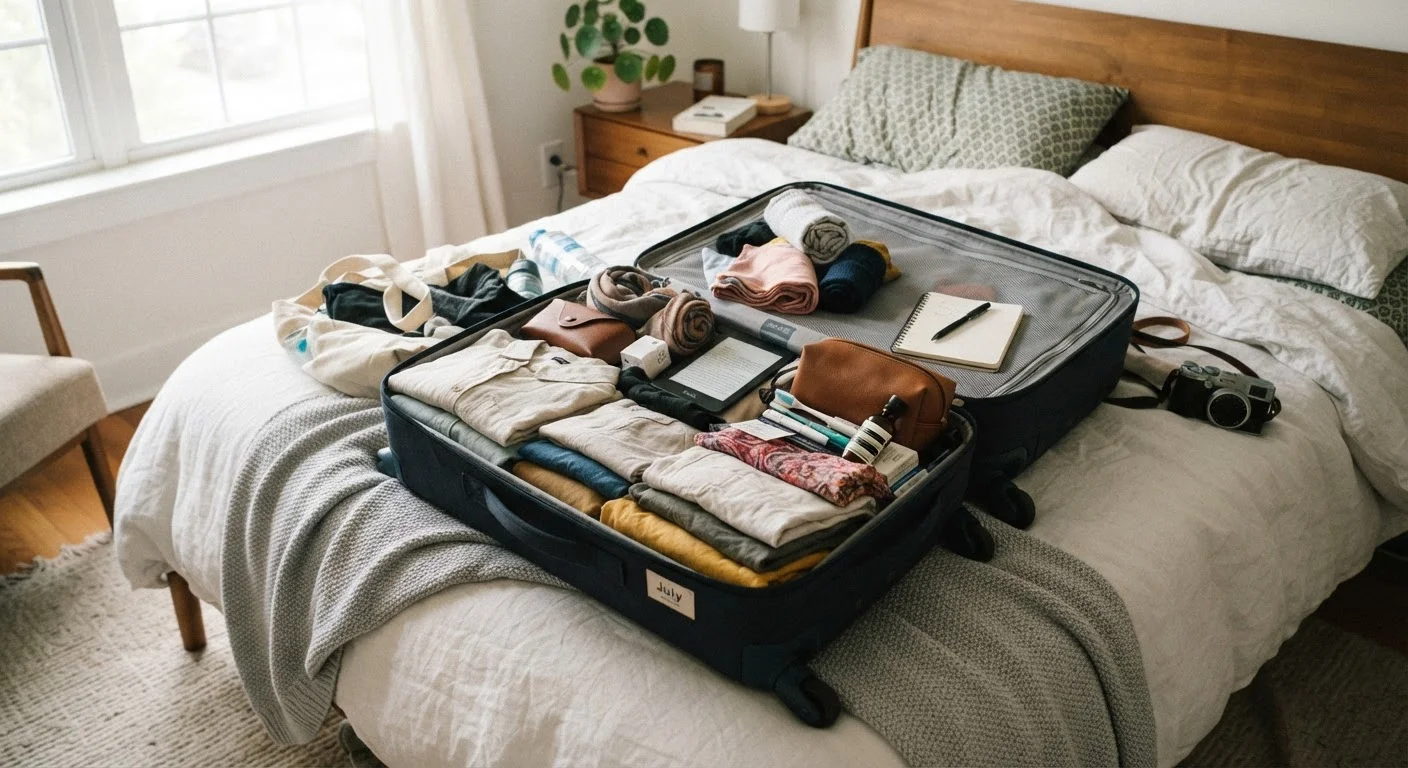
Rolling is effective for t-shirts, jeans, and casual wear — it minimizes wrinkles and fits snugly into corners. But structured garments like blazers and dress shirts often fare better flat or using bundle wrapping to reduce creasing. The shape of your bag also matters: rolling is most efficient in cylindrical or soft-sided bags with flexible interiors. The evidence behind each packing method shows that no single technique wins universally — the right approach depends on what you're packing.
Myth
A travel pillow is an essential item worth packing for any long trip.
Fact
Travel pillows are situationally useful but frequently go unused, and they consume meaningful bag space or clip awkwardly to the outside.
If you have a long overnight flight in economy, a neck pillow can provide genuine comfort. But for most mixed itineraries — including flights under six hours, car trips, or hotel-heavy journeys — they rarely get used and can't be compressed into a negligible footprint. Before automatically including one, consider: will you use this on the actual flights you've booked, or are you packing it for a version of the trip that might not happen?
Myth
You need to pack toiletries for the entire length of your trip.
Fact
Most destinations — including smaller cities and towns — have accessible pharmacies, supermarkets, or hotel amenities where basic toiletries can be purchased or replenished.
Packing full-size shampoo, conditioner, and body wash for a two-week trip adds significant weight. Travel-size containers reduce this, but even they accumulate. For most standard destinations, pharmacies and grocery stores stock familiar toiletry equivalents. The notable exceptions are very remote locations or highly specific medical or skincare products that aren't widely available — those are worth planning for specifically rather than prompting a general overpacking habit.
Myth
More shoes mean more outfit flexibility, so it's worth packing an extra pair.
Fact
Extra shoes are consistently one of the heaviest, bulkiest items in a suitcase and are among the least-used extras most travelers bring.
Shoes don't compress, they don't stack efficiently, and a single additional pair can consume the space of three rolled outfits. The flexibility argument holds only if your trip genuinely has distinct footwear demands — say, a formal event plus daily hiking. For most trips, two pairs (one worn, one packed) is sufficient, and one pair works for many urban itineraries. Versatile clothing and footwear choices can dramatically reduce how many shoes your trip actually requires.
Myth
A bigger, more flexible bag means you'll be better prepared for any trip.
Fact
Larger bags tend to get filled regardless of trip length — a pattern travelers often regret when carrying, checking, or paying for oversized luggage.
Bag capacity exerts a kind of gravitational pull on packing decisions. When space exists, most people fill it — not because they need everything they've packed, but because it feels wasteful not to. Choosing a bag appropriately sized for your trip length is one of the most effective constraints you can place on overpacking. Understanding what actually matters when choosing luggage can help you select a bag that fits the trip rather than expanding to absorb it.
For a closer look at packing organization tools that are sometimes oversold themselves, read about packing cubes versus compression bags before deciding what to add to your kit.
What Smarter Packing Actually Looks Like
Debunking myths is only useful if it leads to better habits. A few practical shifts make a measurable difference:
- Pack for the trip you're actually taking. Write down your daily itinerary roughly, then assign outfits to days. Most travelers planning a week-long trip need five or six clothing combinations, not ten.
- Check your destination's laundry options early. Hotels, laundromats, and sink-friendly fabrics can cut your clothing load significantly — particularly on trips longer than five days.
- Apply a one-week rule to toiletries. Regardless of trip length, you rarely need more than one week's worth of consumables. Many destinations allow you to restock.
- Leave genuine gaps in your bag. Empty space isn't wasted — it's room for what you'll actually acquire, and it keeps your bag manageable to carry.
If you're traveling in cold weather, strategies for cold-weather packing without the weight can help you apply these same principles to bulkier gear. And if carrying a single bag is your goal, clothing choices that make one-bag travel realistic provides a fabric-forward approach that doesn't require radical minimalism.
Good packing is a skill, not a personality trait. It improves every trip you take — and so does the confidence that comes with knowing your bag works for you, not against you.