
Why Cold-Weather Packing Goes Wrong
Cold-weather trips derail even experienced packers. The instinct is logical: cold means bulk, and bulk means a checked bag. But most overpacked cold-weather bags aren't carrying more warmth — they're carrying inefficiency. A heavy parka, duplicate sweaters, three pairs of shoes, and "just in case" extras account for the weight long before the weather actually demands it.
The good news is that modern fabrics and a structured approach to layering make it genuinely possible to handle cold-trip packing in a single carry-on. It requires some deliberate decisions before you zip the bag — not heroic minimalism or freezing through your trip. See our breakdown of common packing myths for the widely-held beliefs that make this problem worse than it needs to be.
The Core Practices for Packing Light in Cold Weather
These six practices address the specific points where cold-weather packing breaks down. They're ordered by impact — start at the top and work down.
Build your warmth through layers, not a single heavy coat.
A single bulky parka accounts for roughly 30–40% of a bag's available volume. Three thinner layers — a moisture-wicking base, a midlayer fleece or down sweater, and a packable shell — provide equivalent or better warmth, adapt to changing temps, and fold down to a fraction of the space.
Wear your bulkiest items through the airport.
Airport security, boarding, and transit time are all opportunities to transport items on your body rather than in your bag. What you wear doesn't count toward luggage weight limits, making this the most reliable way to bring warmer pieces without penalty.
Choose merino wool as your primary fabric for cold-weather travel.
Merino wool regulates body temperature in both cold and mild conditions, resists odor longer than synthetic alternatives, and doesn't wrinkle the way cotton does. This means fewer clothing changes per day and fewer total items in the bag.
Limit footwear to two pairs maximum.
Shoes are the heaviest, least compressible items most travelers pack. Two pairs — one insulated walking boot or shoe for cold days, one versatile option for evenings or lighter days — covers nearly every cold-weather scenario without the weight penalty of a third pair.
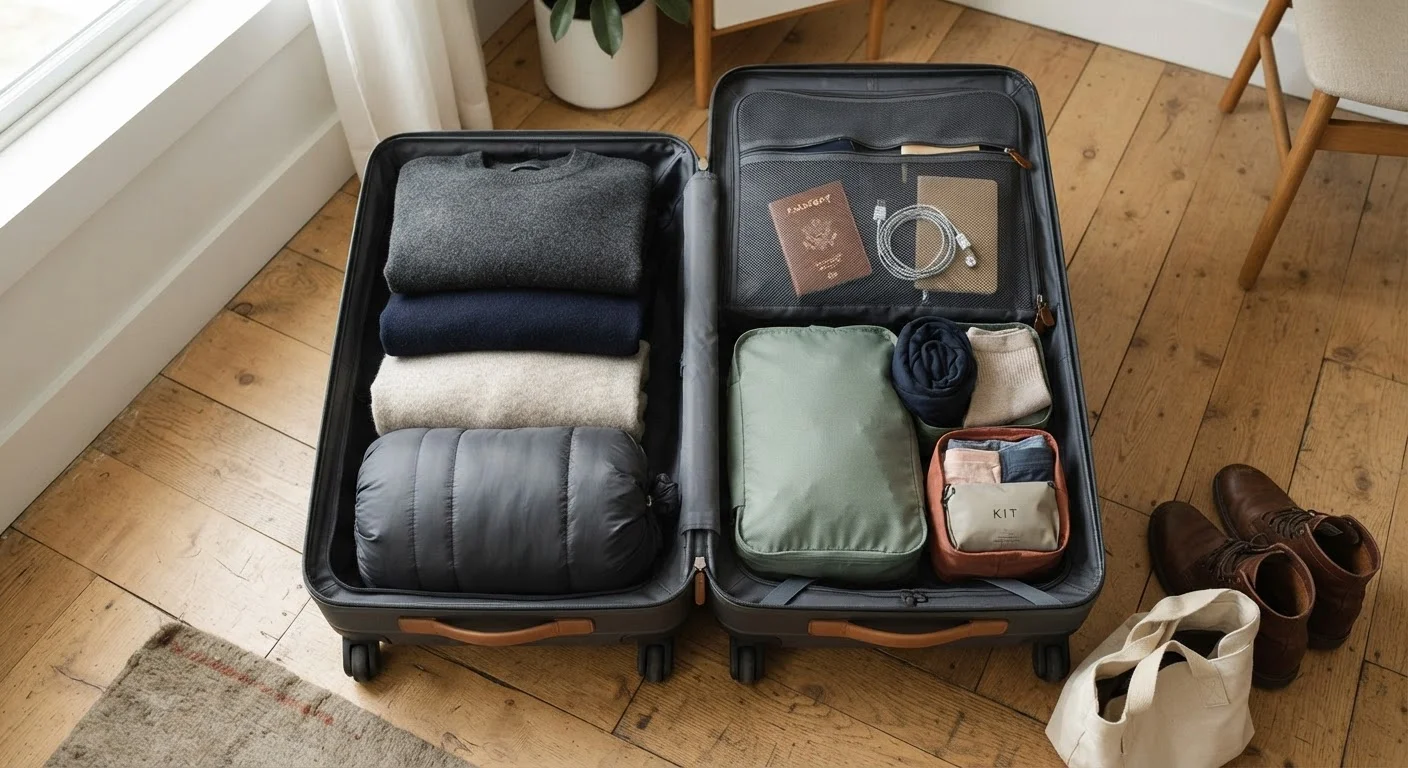
Use compression packing cubes to reclaim dead air space.
Rolled or folded clothing contains significant empty air. Compression cubes press that air out, which travel gear researchers have found can reduce clothing bundle volume by 20–35%. This technique works especially well with fleeces and midlayers that loft significantly when loose.
Plan outfits around a single consistent color palette.
Cold-weather travel tempts overpacking because people fear looking underdressed in heavy layers. A cohesive color palette means every top works with every bottom, reducing the felt need to pack 'just in case' combinations that add dead weight.
For more on how fabric and outfit planning work together, our guide on clothing choices for single carry-on travel goes deeper on strategic wardrobe building.
The Carry-On vs. Checked Bag Question
Carry-On Size Rules Vary by Airline
Most U.S. carriers allow a carry-on up to approximately 22 x 14 x 9 inches, but international and budget airlines sometimes enforce stricter limits. Always check your specific airline's current size and weight policy before you pack. Oversize carry-ons may be gate-checked — meaning your carefully packed bag goes into the hold anyway.
Carry-on only isn't always the right call for a cold-weather trip — particularly for longer stays or trips involving formal events that require specific clothing. The decision deserves honest evaluation rather than a default either way. Our guide to carry-on vs. checked luggage trade-offs lays out the factors worth weighing before you commit to either approach.
That said, for most trips of five to seven days in cold but walkable urban destinations, the practices above are sufficient to stay carry-on. The key variable is usually footwear: travelers who need specialized boots for snow or hiking should factor that into the equation honestly rather than assuming compression alone will solve it.
There are also a handful of situational cold-weather items that solve specific problems — hand warmers for long outdoor days, silk liner gloves for layering — that most people don't think to bring. Our look at situational items worth packing covers the cold-weather category specifically.
Start Here: Quick Wins Before Your Next Trip
If a full packing overhaul feels like too much to tackle right now, these four actions deliver immediate, concrete results with minimal effort. Each one addresses a specific bottleneck that adds weight without adding utility.