
Why Fabric Is the Foundation of One-Bag Travel
Most travelers who struggle to fit a week's worth of clothing into a carry-on are solving the wrong problem. They focus on how many items to bring rather than which types of items pack and perform well in the real world. The result is a bag that's technically within airline size limits but stuffed with bulky cotton that wrinkles immediately, holds odor after one wear, and leaves no flexibility for a dinner out or an unexpected cold evening.
The starting point for realistic one-bag travel is fabric selection. Lightweight, quick-dry materials — particularly merino wool and performance synthetic blends — compress more easily, dry overnight when hand-washed, and can be worn multiple times before needing a wash. This matters enormously when you're carrying everything with you. For context on when a carry-on approach genuinely makes sense versus when a checked bag is the smarter call, see the trade-offs between carry-on and checked luggage.
Best Practices for Clothing That Works Harder
Choosing the right individual pieces — and understanding why each one earns its place — is what separates a comfortable one-bag trip from a stressful one.
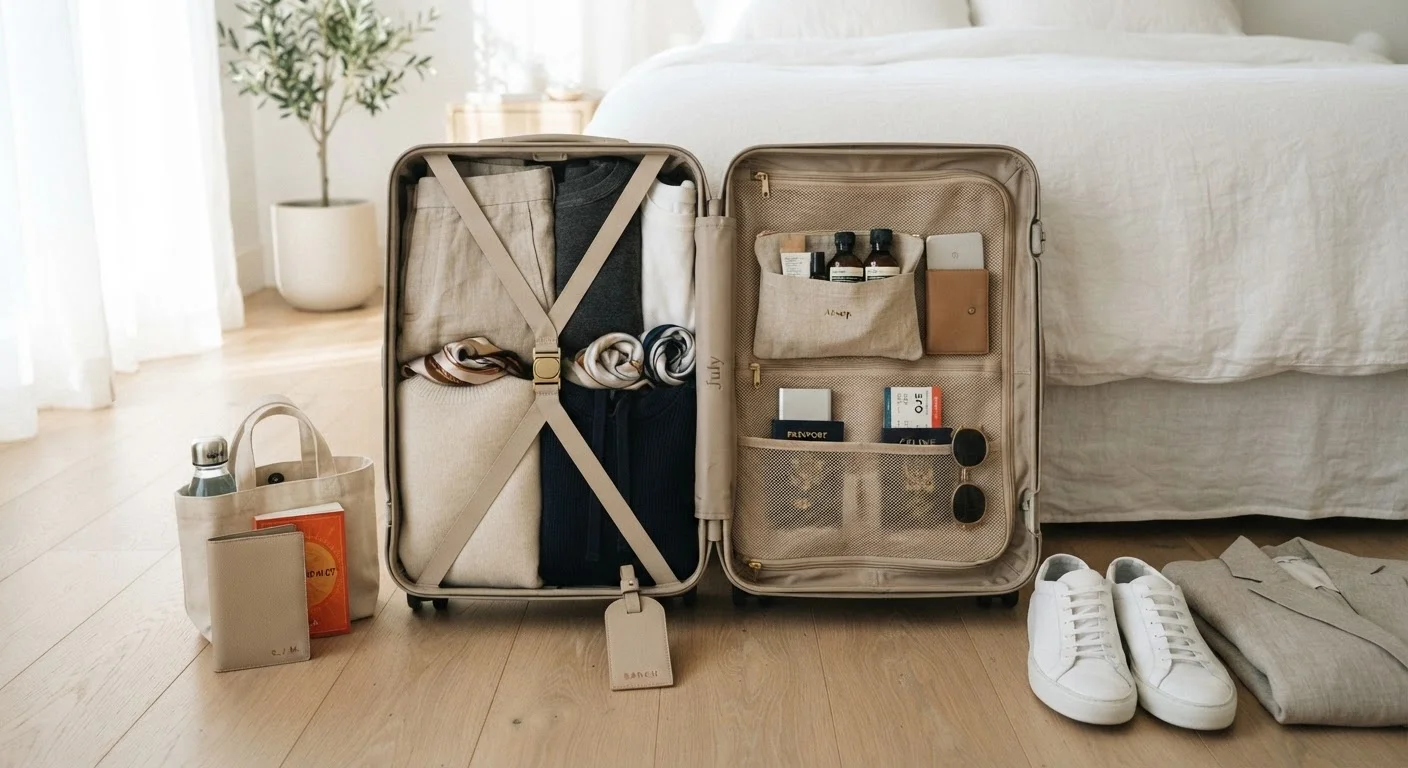
Build your travel wardrobe around a three-color palette before selecting any individual item.
When every piece you pack coordinates with every other piece, the number of viable outfit combinations increases significantly without adding any items. A single pair of chinos, for example, can work with four different tops if those tops share a consistent palette. This is the single most effective planning move for one-bag travel.
Choose merino wool or synthetic-blend tops over cotton for any trip longer than two nights.
Cotton absorbs moisture and odor and takes far longer to dry than performance fabrics, which means you'll need more of it. Merino wool in particular has natural odor-resistance that makes it genuinely rewearable across multiple days without washing — a significant advantage when bag space is finite.
Pack exactly one mid-layer that works in every context on your itinerary.
Travelers frequently over-pack outerwear and mid-layers by packing for each individual scenario rather than finding a single piece that bridges all of them. One well-chosen jacket — a lightweight down or a structured fleece — handles an air-conditioned flight, a breezy evening, and a casual dinner when paired correctly.
Limit footwear to two pairs, selecting each for maximum overlap across activities.
Shoes are the primary space and weight culprit in most carry-ons. Two pairs — one for walking and one for evenings or more formal settings — cover the full range of most travel itineraries when chosen deliberately. Wear the bulkier pair at the airport to save bag space.
Plan complete outfits on paper before placing a single item in your bag.
Packing by feel — grabbing items that seem useful — reliably produces a bag full of standalone pieces that don't actually work together. Writing out each day's outfit (including shoes and any layers) forces you to identify redundancy before it costs you bag space.
Once you have the right pieces, how you pack them matters too. Rolling, folding, and bundle wrapping each have real advantages depending on clothing type and bag shape.
Quick Actions You Can Take Before Your Next Trip
If you're heading somewhere cold and worried about bulk, the challenge is different but solvable. Cold-weather packing strategies can keep even a winter trip within carry-on limits. And for longer international travel, a full two-week packing guide walks through the complete picture from bag selection to what to leave behind.