
Why Internet Speed Myths Persist
Internet marketing leans heavily on big numbers — gigabits, milliseconds, unlimited data. These figures are real, but they're also measured under controlled conditions that rarely match a busy household. When buffering or lag happens, it's natural to blame the plan. More often, the culprit is a misunderstood concept sitting between your modem and your screen.
The myths below are among the most common sources of confusion for American households. Understanding what these terms actually mean — and what they don't — can save you money and frustration before you call your ISP or upgrade to a higher-tier plan.
Myth
If I'm paying for gigabit internet, every device in my home gets gigabit speeds.
Fact
Your plan's speed is the maximum capacity shared across your entire household and all its devices simultaneously.
Think of your internet connection like a water pipe feeding your house. Gigabit is the diameter of that pipe — not the pressure at every faucet running at once. When multiple devices stream video, run software updates, and scroll social media simultaneously, that total bandwidth gets divided among them. The figure your provider advertises is the ceiling under ideal conditions, typically measured at the modem. By the time that signal travels through your router and over Wi-Fi to your laptop in the next room, real-world throughput is already lower.
Myth
A strong Wi-Fi signal means fast internet.
Fact
Wi-Fi signal strength measures the quality of the wireless connection between your device and router — not the speed of data coming from the internet.
Your device can show full Wi-Fi bars and still buffer endlessly. Signal bars indicate how well your device is communicating with the router; they say nothing about the connection between your router and your internet service provider (ISP). You could have perfect local Wi-Fi but a congested or underperforming line from your ISP to your home. Conversely, a slightly weaker signal in a less-congested frequency band (5 GHz vs. 2.4 GHz) often delivers faster real-world speeds.
For a deeper look at why performance varies by time of day, see why your Wi-Fi slows at peak hours.
Myth
Faster download speeds will fix lag when gaming or video calling.
Fact
Lag is primarily caused by high latency — the round-trip time for data packets — not by insufficient download speed.
Latency is measured in milliseconds (ms) and reflects how long it takes a data packet to travel from your device to a server and back. Online gaming and video calls need low latency (ideally under 50 ms) far more than they need raw speed. A 25 Mbps connection with 20 ms latency will feel smoother in a game than a 500 Mbps connection with 120 ms latency. Factors such as your ISP's routing infrastructure, physical distance to servers, and network congestion all affect latency independently of your plan's speed tier.
Myth
Only download speed matters; upload speed is irrelevant for most people.
Fact
Upload speed is critical for video calls, remote work, cloud backups, and sharing large files — activities that are now everyday tasks for millions of households.
When you join a video call, your camera feed is being uploaded to the other participants. When you save files to cloud storage or share a large video, that data is traveling up from your device. Traditional cable internet plans are often asymmetric — they provide much lower upload speeds than download speeds — which can cause choppy video calls even when your download speed looks fine. If your household regularly works from home or participates in video meetings, upload speed deserves just as much scrutiny as download speed when evaluating your plan. See also how home broadband compares to mobile hotspots for upload considerations beyond the home.
Myth
Restarting the router is just a tech-support cliché that doesn't actually help.
Fact
A router restart clears temporary memory, refreshes network assignments, and resolves many real software-level glitches that accumulate over time.
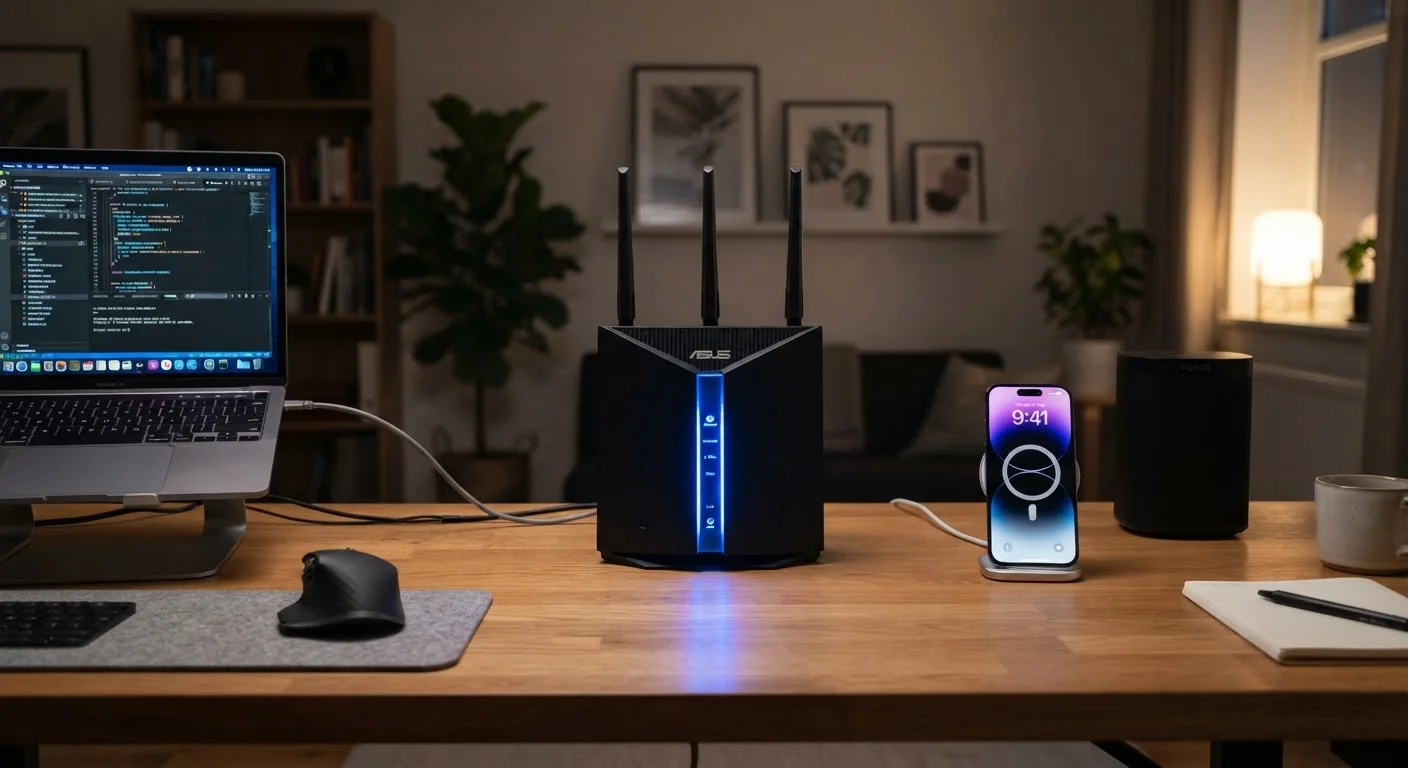
Routers run a small operating system and manage dozens of active connections simultaneously. Over days or weeks, memory can fill with stale connection data, leading to slowdowns or dropped connections. A power cycle — unplugging for 30 seconds rather than just pressing a button — forces a full reboot of that system. It's not folklore; it's routine network maintenance. That said, if restarts are needed frequently, the underlying issue may be hardware age, overheating, or a problem with your ISP's line. Run through a structured troubleshooting checklist before assuming your plan needs an upgrade.
Myth
Placing the router anywhere in the house gives the same coverage.
Fact
Router placement dramatically affects signal range, speed, and dead zones throughout the home.
Radio signals weaken as they travel through walls, floors, and dense objects. A router tucked in a basement corner or inside a cabinet must push its signal through more obstructions to reach devices elsewhere. Ideally, a router should sit in a central, elevated, open location — not inside a closet or behind a television. Walls containing metal studs, brick, or concrete are especially problematic. For larger homes, the issue isn't always your plan's speed; it's signal coverage, which can often be improved with a mesh network system rather than a more expensive internet tier.
What to Check Before Blaming Your Plan
Speed tests are a useful starting point, but they only tell part of the story. Run a test at fast.com or a similar tool while connected directly to your modem via an Ethernet cable to isolate whether the issue is your ISP's service or your home network. If wired speeds look fine but Wi-Fi feels slow, the problem is inside your home — not with your provider.
~30%
Speed lost through a typical home router
Independent testing has consistently shown that real-world Wi-Fi throughput is significantly lower than the rated maximum, particularly at longer distances or through walls.
50 ms
Latency threshold for comfortable online gaming
Network engineers and gaming platform guidelines generally treat latency below 50 milliseconds as the target for responsive, low-lag gameplay.
25 Mbps
FCC minimum broadband definition (download)
The U.S. Federal Communications Commission has historically defined broadband as at least 25 Mbps download and 3 Mbps upload, though this threshold has been debated as usage demands grow.
Common culprits include an aging router, a congested Wi-Fi channel, too many devices competing for bandwidth, or simply a router placed too far from where you need coverage. Device hardware also matters: an older laptop or phone may not support faster Wi-Fi standards even if your router does, creating a bottleneck at the device itself rather than the network.
If you're weighing whether a mobile hotspot could supplement or replace your home connection, understanding the trade-offs in speed, latency, and data limits is essential — see Fixed Home Internet vs. Mobile Hotspot for a clear breakdown.