

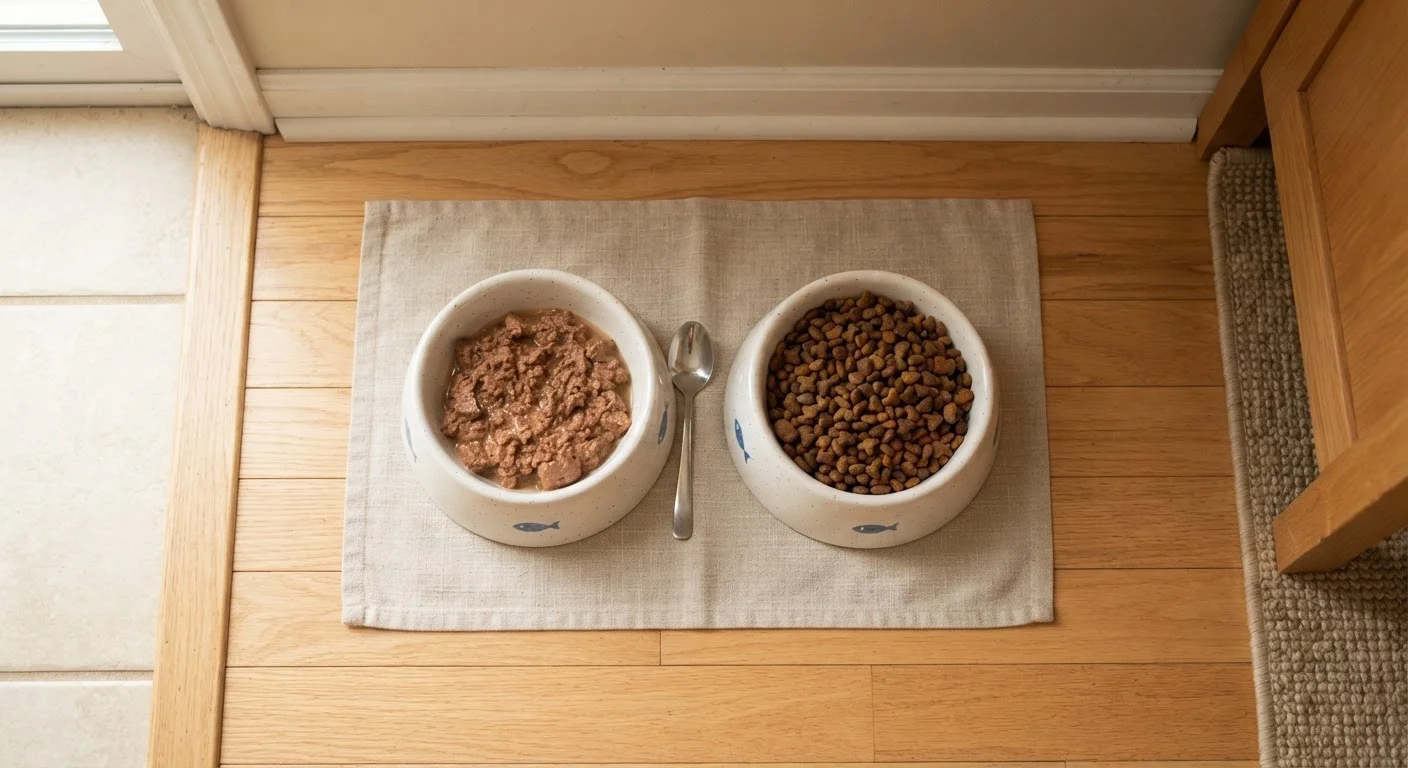
How Wet and Dry Cat Food Actually Differ
At their core, wet and dry cat food differ most dramatically in one thing: moisture content. Wet food typically contains 70–80% water, while dry kibble usually falls between 8–12%. That gap has real downstream effects on everything from kidney function to caloric intake.
Beyond hydration, both formats can deliver complete, balanced nutrition — the key is looking for foods that meet the Association of American Feed Control Officials (AAFCO) nutritional standards for your cat's life stage. AAFCO sets the baseline guidelines that define whether a food is nutritionally complete, though the specific formulas and quality of ingredients vary widely.
Cats are obligate carnivores, meaning they require nutrients found only in animal tissue — including taurine, arachidonic acid, and preformed vitamin A. Both food formats can provide these, but the source and concentration of protein matters. For a deeper look at what your cat truly needs nutritionally, see what cats actually need to eat.
| Criterion | Wet Cat Food | Dry Cat Food |
|---|---|---|
| Moisture content | 70–80% | 8–12% |
| Calories per gram | Lower | Higher |
| Shelf life (opened) | 24–48 hours refrigerated | Weeks, sealed properly |
| Cost per serving | Generally higher | Generally lower |
| Suitable for free-feeding | No | Yes |
| Supports urinary health | Strong advantage | Less direct benefit |
| Texture for dental health | Soft, minimal abrasion | Crunchy, limited benefit |
| Palatability for picky eaters | Often preferred | Variable |
Hydration, Urinary Health, and Why Moisture Matters
Cats evolved in arid environments and have a naturally low thirst drive — they historically obtained most of their water through prey. This is why veterinary professionals often flag dehydration as an underlying factor in feline urinary tract disease and chronic kidney disease (CKD), both of which are common health concerns in domestic cats.
Wet food's high moisture content makes it easier for cats to stay adequately hydrated without relying on the water bowl. For cats with a history of urinary crystals, bladder issues, or early-stage kidney disease, many veterinarians recommend incorporating — or switching to — wet food as part of a management plan. That said, always follow your own vet's guidance, as individual health history matters.
Dry food isn't inherently dehydrating when cats drink enough water separately, but many cats simply don't drink enough on their own. Providing a water fountain or multiple water stations can help offset this if kibble is your primary choice.
Dental Health: Does Kibble Really Clean Teeth?
A common belief is that crunching kibble scrubs tartar from cats' teeth. The reality, according to veterinary dental specialists, is more nuanced. Most cats don't chew kibble long enough or at the right angle for it to have significant cleaning effect. The Veterinary Oral Health Council (VOHC) certifies specific dental diets and treats that are clinically proven to reduce plaque — standard kibble doesn't typically earn that designation.
Wet food has often been criticized for contributing to tartar buildup, but the evidence here is also limited. The most reliable way to support feline dental health remains regular tooth brushing, veterinary dental cleanings, and VOHC-approved products. Neither food format is a substitute for actual dental care.
Practical Considerations: Cost, Storage, and Feeding Style
Dry food generally costs less per calorie and is far easier to store. An open bag of kibble stays fresh for weeks with proper sealing, while an opened can of wet food needs refrigeration and should be used within 24–48 hours. For owners who travel frequently or manage multiple cats, kibble's shelf stability is a genuine advantage.
Free-feeding — leaving food out all day — is only practical with dry food. Wet food left at room temperature for more than a couple of hours can spoil and attract bacteria. If you prefer scheduled meals rather than free access, either format works well. Scheduled feeding can also make it easier to monitor appetite changes, which are often early signs of illness.
A mixed approach — wet food at one or two meals alongside access to dry — is one many cat owners and veterinarians find practical. It offers hydration benefits without fully giving up convenience. If your cat is in its senior years, food format choices become even more significant; how care needs change after age 10 covers those considerations in detail.
If you also care for a dog, the same wet-vs-dry debate applies — though the specifics differ. You can read more in our piece on wet food vs. dry food for dogs.