

Why Indoor Cats Need More Than Food and Shelter
Cats are natural hunters, explorers, and problem-solvers. When those instincts have nowhere to go, indoor cats don't simply relax — they often become restless, anxious, or start expressing frustration through scratching, overeating, or attention-seeking behavior. The good news is that meeting a cat's mental and physical needs doesn't require a lot of space or expensive equipment. It requires understanding what cats actually need and building that into daily life with some intention.
If you're weighing lifestyle choices for your pet, our article on indoor versus outdoor living for cats explores what each environment means for feline health and enrichment in the long run. For now, here are the most effective ways to keep an indoor cat genuinely stimulated and active.
Create Vertical Space to Climb and Survey
Cats feel most secure when they can observe their environment from above. Vertical space — cat trees, wall-mounted shelves, or even sturdy bookcase tops cleared for feline use — gives indoor cats a sense of control over their territory. Height also functions as exercise: climbing engages muscles that flat-floor living simply doesn't reach. In a small apartment, wall-mounted perches arranged in a staggered "cat highway" pattern can provide a surprising amount of movement without taking up floor space.
Vertical space gives cats a sense of safety and keeps muscles active without requiring extra floor area.
Schedule Short, Focused Play Sessions Daily
Wand toys, fishing-rod toys with feathers or fabric, and laser pointers (always followed by a tangible "catch" like a small treat or toy) engage prey-drive instincts that cats still carry regardless of how domesticated they are. Aim for two sessions of 10–15 minutes each — one in the morning and one in the evening — which mirrors the crepuscular activity pattern most cats naturally follow. Consistency matters more than duration; cats benefit enormously from knowing stimulating play is coming.
Two short daily play sessions that mirror a cat's natural activity rhythm are more effective than occasional long ones.
Use Food Puzzles and Slow Feeders
In the wild, cats spend a significant portion of their waking hours hunting for food — a process that involves stalking, problem-solving, and physical effort. Feeding from a standard bowl removes all of that cognitive work in seconds. Food puzzles, foraging mats, and slow feeders reintroduce mental engagement at mealtime. Many cats quickly learn to work puzzle feeders and appear noticeably more satisfied after meals that require effort compared to bowl feeding. This approach also helps manage weight, a common concern in less-active indoor cats.
Puzzle feeders reintroduce the cognitive effort of hunting, keeping cats mentally engaged at every meal.
Offer a Window Perch With an Outdoor View
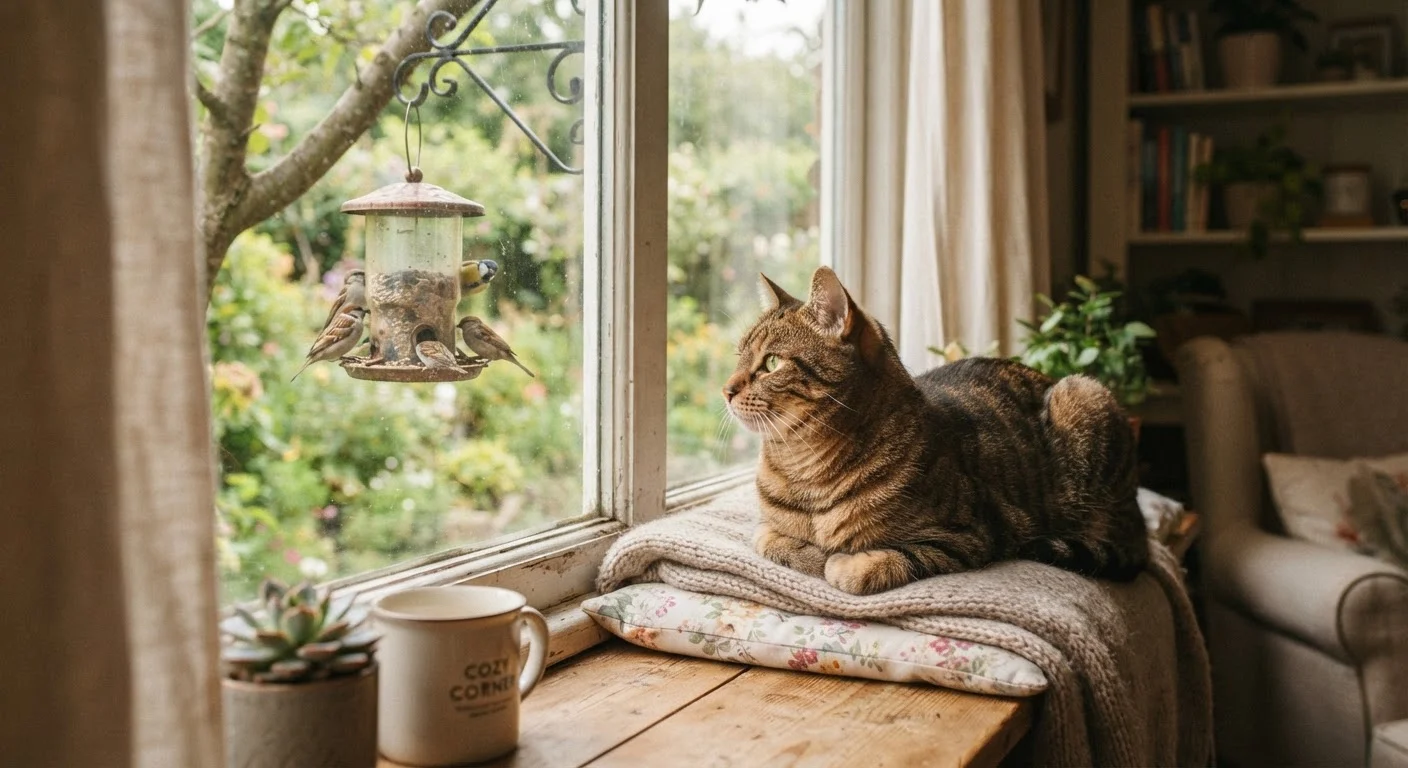
A well-positioned window perch functions as "cat television" — birds, squirrels, passing pedestrians, and shifting light all provide passive stimulation that can occupy a cat for extended periods. If possible, placing a bird feeder just outside a window amplifies this effect significantly. Even in urban apartments, upper-floor windows often offer enough sky and street activity to keep a curious cat engaged. Ensure the window is secure — screens should be sturdy and fit well, particularly on higher floors.
A window perch with an outdoor view gives indoor cats hours of passive, low-stress mental stimulation.
Rotate Toys to Maintain Novelty
Cats habituate quickly to familiar objects, which is why a toy that sparked frantic interest one week may be completely ignored the next. Rather than buying more toys, rotate a collection of existing ones — keeping most out of sight and swapping them every few days. Reintroducing a "forgotten" toy often generates genuine enthusiasm. Adding a drop of catnip or a new scent to a familiar toy before returning it to rotation can refresh interest further. This simple strategy keeps enrichment budget-friendly and sustainably engaging.
Rotating toys on a regular cycle restores novelty and keeps cats engaged without requiring constant new purchases.
Provide Appropriate Scratching Outlets
Scratching is not misbehavior — it is a deeply ingrained feline need tied to claw maintenance, muscle stretching, and territory marking. Without acceptable outlets, indoor cats will use furniture, carpet, or door frames. Offering both horizontal and vertical scratching surfaces in locations your cat already favors (near sleeping areas and prominent walls) significantly reduces unwanted scratching. If you're dealing with persistent furniture scratching, our article on why cats scratch and how to redirect it walks through the biology and practical solutions in detail.
Scratching is a biological need — providing the right surfaces protects your furniture and supports your cat's wellbeing.
Introduce Scent Enrichment
Cats experience much of their world through smell, yet scent enrichment is one of the most overlooked aspects of indoor cat care. Rotating safe herbs like catnip, silver vine, or valerian (not all cats respond to catnip — response is genetic) introduces olfactory novelty. Bringing in a pine cone, a handful of dried leaves, or a small amount of soil from outdoors lets a cat process a rich array of new information. Even rotating where you place a familiar object can reignite a cat's investigative curiosity through residual scent trails.
Scent enrichment taps into one of a cat's most powerful senses and is easy to provide with everyday materials.
Building Enrichment Into Everyday Life
The goal isn't to entertain your cat constantly — it's to design an environment and routine where your cat has regular, meaningful choices about how to spend their time. Cats do best with predictability layered with novelty: a consistent daily rhythm punctuated by new textures, scents, puzzles, and play opportunities. Even 10–15 minutes of intentional interaction each day can meaningfully reduce stress-related behaviors.
Start Simple and Build Gradually
If your cat currently has very little enrichment, don't overhaul everything at once. Introduce one new element — a puzzle feeder, a window perch, or a play session — and let your cat adjust before adding more. Cats are sensitive to sudden environmental changes, and a gradual approach tends to produce a more positive, lasting response. Small, consistent improvements compound into a meaningfully richer life for your pet.
If you have — or are considering — multiple cats, enrichment becomes even more important for managing social dynamics. Our multi-cat household prep checklist covers how to structure space and resources when more than one feline shares a home. And for a broader daily structure, see our guide on building a daily routine for your cat's mental health.
This article is for general informational purposes. Consult your veterinarian for guidance specific to your cat's age, health, and behavior.