

Why the First Days Matter So Much
Cats are creatures of habit who rely on familiar smells, sights, and routines to feel safe. When everything in their environment is brand new — including you — their nervous system goes into a heightened state of alert. That's completely normal, but how you manage those first 48 to 72 hours has a lasting effect on how quickly your cat learns to trust you and their new home.
This isn't about following a rigid formula. It's about giving your cat enough structure to feel grounded while resisting the very human impulse to smother a new pet with attention. If you're bringing home a cat for the first time, our guide for new cat owners covers the foundational knowledge you'll want in your back pocket before day one.
Slow Blinks Are a Good Sign
When a cat slowly closes and opens their eyes while looking at you, it's a signal of relaxation and trust. You can return a slow blink to communicate that you're calm and non-threatening. It's one of the simplest ways to build rapport in those early days.
What You'll Need Before Your Cat Arrives
Preparation is what separates a smooth arrival from a stressful one. Before your cat comes through the door, have everything set up in one designated room — this will serve as their safe space for the first several days.
What you will need
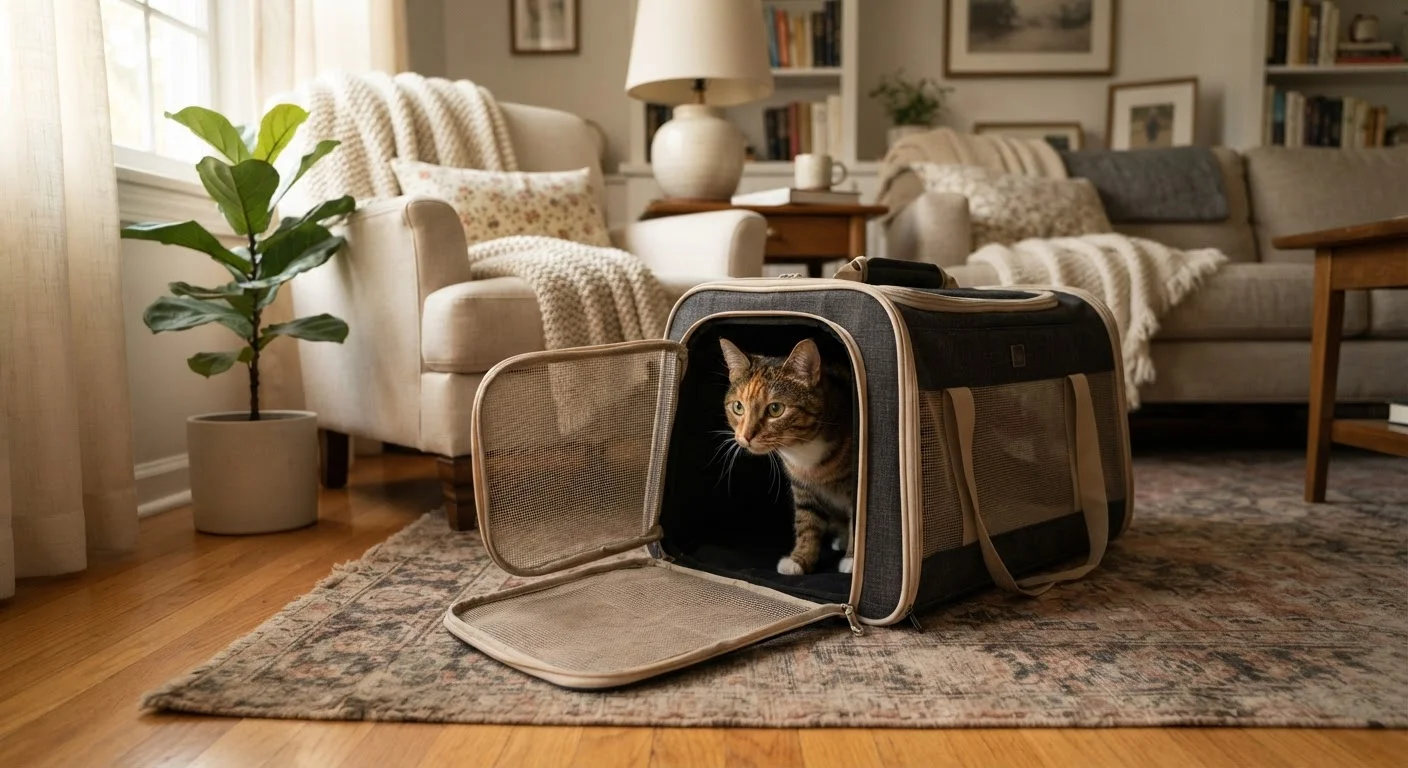
Carrier with familiar bedding
Transports your cat safely and provides a scent-anchored refuge during the initial adjustment period.
Covered litter box
Gives your cat privacy while eliminating, which reduces stress in an unfamiliar space.
Pheromone diffuser
Releases synthetic calming pheromones that can help reduce anxiety in a new environment.
Shallow food and water bowls
Whisker-friendly bowls prevent discomfort during feeding, encouraging your cat to eat and drink normally.
Hiding spot or covered bed
Gives your cat a place to retreat when overwhelmed — a critical resource in the first few days.
Step-by-Step: Bringing Your Cat Home
Follow these steps in order. Skipping ahead — especially when your cat seems curious or calm — is one of the most common mistakes new owners make. Curiosity looks a lot like comfort, but they aren't the same thing yet.
Set up the safe room before your cat arrives
Choose a quiet room and arrange the litter box, food, water, a hiding spot, and a soft resting area before your cat enters the house. Keep the room free from loud appliances and heavy foot traffic. This single room will be their entire world for the first few days — make it calm and complete.
Bring the carrier directly into the safe room
Carry your cat into the house calmly and head straight to the safe room. Set the carrier on the floor, open the door, and step back. Do not reach in to pull your cat out. Let them emerge at their own pace — this can take anywhere from a few minutes to several hours.
Keep the safe room the only access point for 48–72 hours
Resist opening the rest of your home too quickly. A large, unfamiliar space is overwhelming. Keep the safe room door closed and visit regularly but briefly — sit quietly on the floor, speak softly, and let your cat approach you rather than the other way around.
Establish a consistent feeding schedule
Feed your cat at the same times each day from the start. Predictable meals are one of the fastest ways to build trust — cats learn quickly that you're the source of something good. Monitor whether your cat is eating and drinking; appetite suppression for more than 24 hours warrants a call to your veterinarian.
Expand access to the rest of the home gradually
Once your cat is eating, using the litter box reliably, and showing relaxed body language — slow blinks, grooming, approaching you voluntarily — you can begin opening one additional room at a time. Don't rush this. Some cats are ready in three days; others need a full week or more in the safe room before expansion feels right.
Once your cat has settled into a reliable routine, you can start thinking ahead. Our article on building a daily routine for your cat offers practical ways to structure their day for long-term wellbeing. And if you're adding a second cat to the household, the multi-cat household prep checklist will help you navigate introductions between animals safely.