
Reading the Color: What Each Shade of Yellow Signals
Not all yellow grass looks the same up close, and those visual differences matter. Learning to read the shade and pattern is the fastest way to narrow down the cause.
- Bright lime-yellow or chartreuse: Often points to nitrogen deficiency, especially when the whole lawn looks uniformly pale. Nitrogen is the nutrient most responsible for lush green color.
- Yellow with green veins (interveinal chlorosis): A classic sign of iron or manganese deficiency, usually triggered by soil pH that's too high (alkaline). The veins stay green while the tissue between them fades.
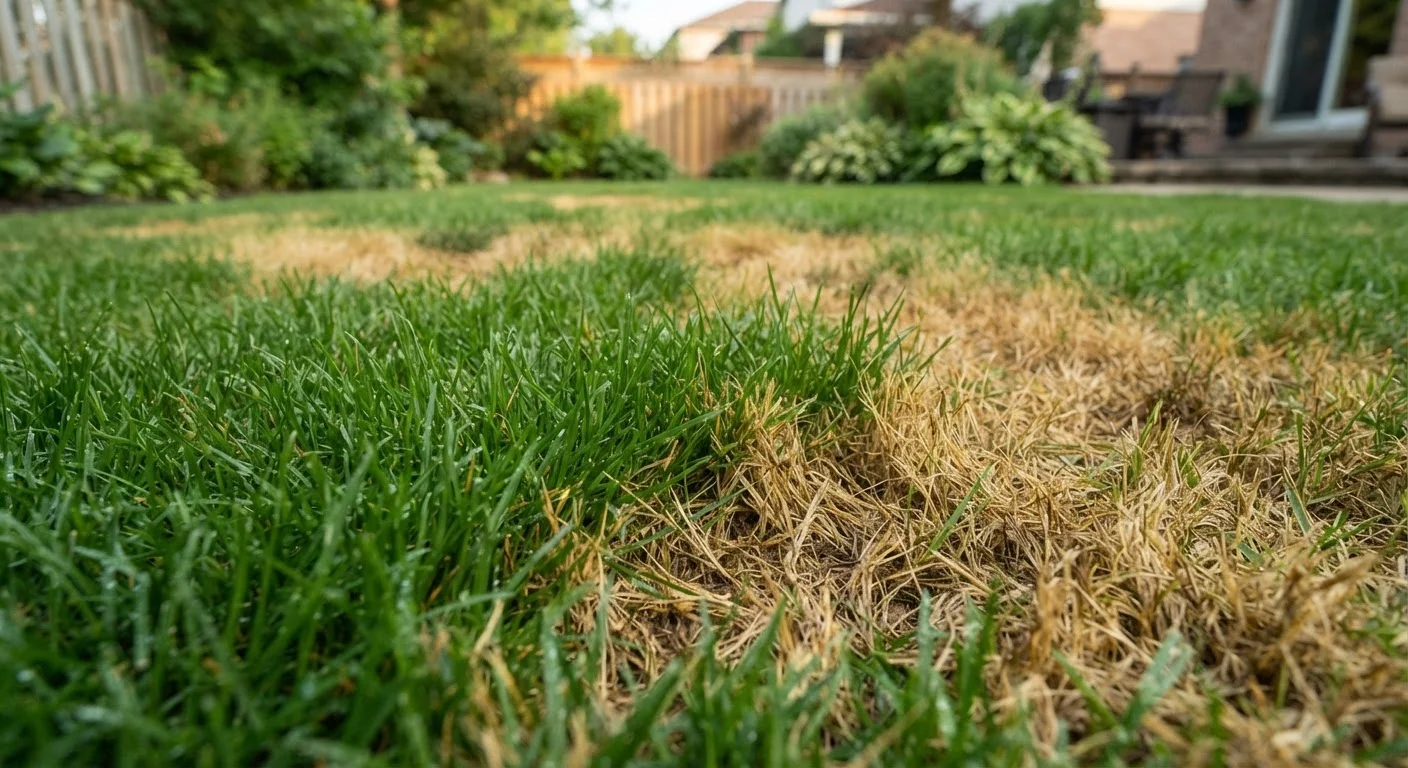
- Straw-colored or bleached patches: Grass that turns tan or nearly white may be dealing with a fungal disease like dollar spot or powdery mildew, or severe drought stress.
- Yellow rings or arcs: Circular patterns in a lawn are frequently linked to fungal activity, including fairy ring, where fungal threads alter soil structure in a ring shape.
- Irregular blotchy patches: Scattered yellow areas with no clear pattern often suggest grub damage below the surface, compaction, or chemical spills such as concentrated fertilizer or pet urine.
The pattern — uniform vs. patchy, spreading vs. stationary — is just as informative as the color itself.
The Most Common Causes of Yellow Grass
Once you've noted the color and pattern, these are the causes to investigate first.
Nutrient Deficiencies
Nitrogen deficiency is the most frequent culprit for whole-lawn yellowing. Grass is a heavy nitrogen feeder, and without regular replenishment — particularly in spring and fall — the lawn gradually fades. A soil test from your local cooperative extension office is the most reliable way to confirm deficiency before applying fertilizer.
Iron deficiency looks different: yellowing appears between leaf veins on newer growth while the veins themselves remain green. This is common on lawns with a soil pH above 7.0–7.5, because high pH makes iron chemically unavailable to roots even when it's physically present in the soil.
Soil Testing Is Cheaper Than Guessing
A basic soil test through your local cooperative extension service typically costs very little and gives you precise data on pH, nitrogen, phosphorus, and potassium. Many homeowners spend far more on treatments that don't address the actual deficiency. Testing annually — or at least every two to three years — takes the guesswork out of fertilizer decisions entirely.
Watering Imbalance
Underwatering causes grass to go dormant and yellow as a survival strategy — you'll often see drought stress start at the tips and spread inward along the blade. Overwatering is equally damaging but works differently: waterlogged roots can't absorb oxygen, causing the same yellowing symptom through a completely different mechanism. See our lawn watering schedules guide to find the right frequency for your grass type and region.
Disease and Fungal Pressure
Fungal diseases thrive when lawns stay wet for extended periods or have poor air circulation. Dollar spot, rust, and Pythium blight all produce yellow or tan patches that look superficially similar but require different management. Look for lesions on individual blades, powdery coatings, or a cottony mycelium in morning light.
Pest Damage
White grubs feeding on grass roots create yellow patches that peel back from the soil like loose carpet. If you tug on yellow grass and it lifts easily, grub damage is the likely cause. Sod webworm and chinch bug damage produces similar surface symptoms but is visible above ground with a close look at the thatch layer.
How to Diagnose Before You Treat
Jumping straight to fertilizer or pesticide without diagnosing the actual problem is one of the most common — and costly — lawn mistakes. Here's a practical sequence to follow.
- Check soil moisture: Push a screwdriver six inches into the soil. If it goes in easily and the soil feels damp, overwatering is more likely than drought. If it's bone dry and cracked, increase watering first.
- Do a soil test: A basic soil test — available through most county cooperative extension offices — tells you pH, nitrogen, phosphorus, and potassium levels. This eliminates guesswork from fertilizer decisions.
- Inspect individual blades: Pull several yellowing blades and examine them closely. Rust-colored powder, lesions with tan centers, or white coatings all suggest fungal disease rather than nutrient shortage.
- Check the root zone: Cut a small plug of turf and look at the roots. Healthy roots are white and firm. Brown, mushy, or absent roots indicate rot, overwatering, or grub feeding.
- Consider recent events: Did you fertilize recently? Spilled gas? Let a pet use the lawn? Concentrated sources of nitrogen or chemicals create distinct burn patterns — typically bright yellow with a sharp edge.
For yards where shade may be a contributing factor, see our shade gardening strategies guide — turfgrass thinned by low light is far more vulnerable to disease and discoloration. And if yellowing has spread to a point where renovation may be necessary, our article on lawn renovation mistakes to avoid can help you plan next steps. A seasonal maintenance schedule also goes a long way toward catching discoloration early before it spreads.