

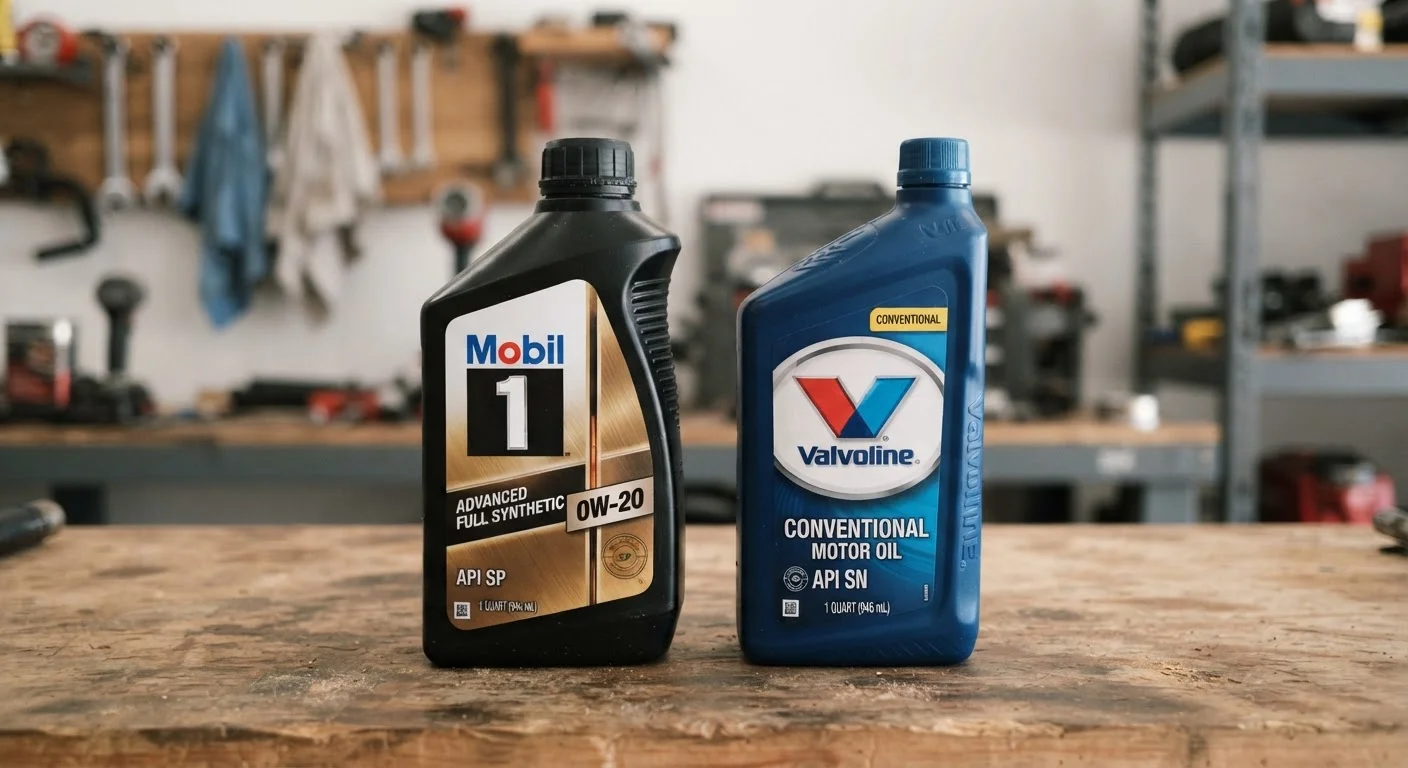
What Actually Makes Them Different
Both synthetic and conventional motor oil do the same job: they lubricate your engine's moving parts, reduce friction, help manage heat, and carry away contaminants. The difference lies in how each is made — and how consistently it performs under stress.
Conventional oil is refined from crude petroleum. It contains a natural mix of molecules, which means some variability in how it responds to heat, cold, and sustained use. It's been the industry standard for decades and works reliably when used correctly.
Synthetic oil is chemically engineered in a lab. Manufacturers build it from uniform molecules specifically designed to withstand higher temperatures, flow better in the cold, and break down more slowly over time. The result is a more consistent product with a longer service life.
A third option — synthetic blend — mixes both types, offering some of synthetic's benefits at a price point between the two. It's a reasonable middle ground for many everyday drivers.
| Criterion | Synthetic Oil | Conventional Oil |
|---|---|---|
| Origin | Chemically engineered | Refined from crude petroleum |
| Typical change interval | 7,500–15,000 miles | 3,000–5,000 miles |
| Cost per quart | Higher (roughly 2–4x) | Lower |
| Cold-weather performance | Flows better at low temps | Can thicken in extreme cold |
| High-temperature stability | Breaks down more slowly | Degrades faster under heat |
| Best vehicle fit | Newer and performance engines | Older vehicles with simple needs |
The Real-World Cost Question
Synthetic oil typically costs two to four times more per quart than conventional. That sounds like a big gap — but the math gets more complicated when you factor in change intervals.
Conventional oil is usually changed every 3,000 to 5,000 miles, though that 3,000-mile rule is more myth than mandate for most modern vehicles. Our guide on common oil change myths covers that in detail. Synthetic oil, by contrast, can often go 7,500 to 15,000 miles between changes, depending on the vehicle and the product used. Over the course of a year, the total cost difference may be smaller than the price per quart suggests.
The most reliable number isn't on the oil bottle — it's in your owner's manual. Manufacturers specify the viscosity grade (like 5W-30) and oil type that your engine is designed for. That's the number that matters.
When Switching Types Makes Sense — and When to Be Cautious
If you drive a newer car, it almost certainly left the factory requiring synthetic or synthetic-blend oil. Using conventional in an engine designed for synthetic won't lubricate it as effectively, especially during cold starts or high-load driving.
Going the other direction — switching from conventional to synthetic in an older, high-mileage engine — is generally safe, but worth a conversation with a trusted mechanic first. Older engines with worn gaskets or seals can sometimes develop minor leaks after switching, because synthetic oil flows more freely and can find paths that thicker conventional oil would not. It's not a common problem, but it's worth knowing about.
For most drivers, the practical guidance is simple: check your owner's manual, follow the manufacturer's specification, and don't let the oil aisle overwhelm you. If you're curious about which maintenance tasks are worth doing yourself versus leaving to a professional, our overview of DIY car maintenance is a useful starting point.
Always Check Your Owner's Manual First
No article, mechanic, or oil-aisle label overrides your vehicle manufacturer's specification. The owner's manual lists the exact viscosity grade and oil type your engine was designed for. Using the wrong type — even a "better" one — can reduce protection or affect warranty coverage. When in doubt, call your dealership's service department; they can confirm the right spec in under a minute.