
How a VIN Is Structured
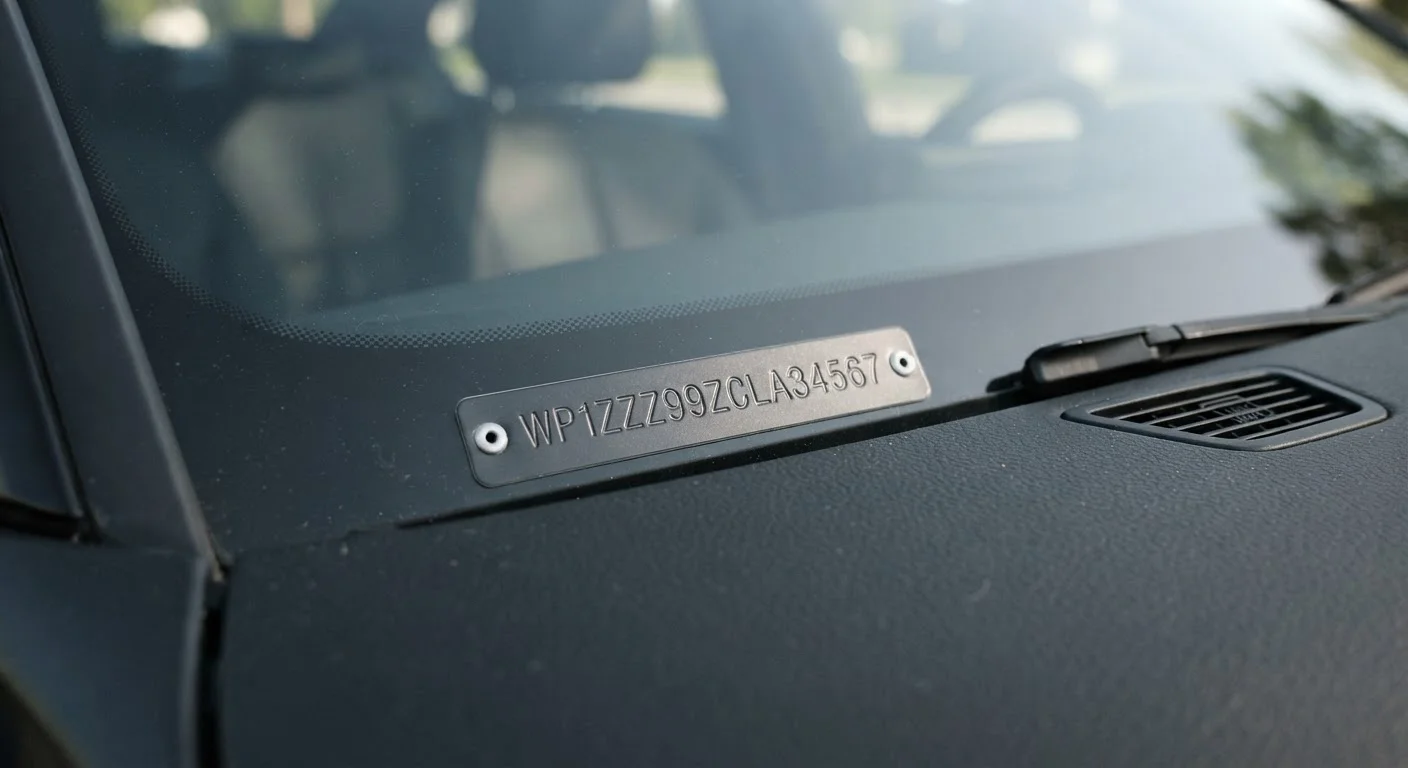
A VIN is divided into three logical sections, each serving a distinct purpose.
- Characters 1–3 (World Manufacturer Identifier): Identify the country of manufacture and the automaker. For example, a VIN starting with "1", "4", or "5" indicates U.S. assembly; "J" means Japan; "W" means Germany.
- Characters 4–9 (Vehicle Descriptor Section): Encode the model, body style, engine type, restraint systems, and a check digit (position 9) used to verify the VIN is mathematically valid.
- Characters 10–17 (Vehicle Identifier Section): Position 10 is the model year code. Position 11 identifies the manufacturing plant. Positions 12–17 form the sequential production number — essentially the car's place on the assembly line.
You don't need to memorize all 17 positions. For most practical purposes, knowing the model year (position 10) and running the full number through a free decoder tells you what you need.
The Check Digit Explained
Position 9 in every U.S. VIN is a check digit — a calculated value derived from the other 16 characters using a federal formula. Its purpose is to catch VIN forgeries and transcription errors. If someone has altered a VIN, the check digit will often no longer match, which is one reason law enforcement and dealers verify it. You don't need to calculate it yourself, but it's why VINs aren't just arbitrary strings.
What the VIN Tells You
Decoded correctly, a VIN gives you a reliable account of what the car was when it left the factory. That includes:
- Make, model, and trim level
- Model year and country of assembly
- Engine displacement and configuration
- Body style (sedan, SUV, truck, etc.)
- Any open safety recalls linked to that vehicle
That last point is genuinely useful. NHTSA's free VIN lookup will flag active recalls the seller may not have disclosed — or may not even know about. If a recall shows up, the repair is typically done at no cost at a franchised dealership.
VIN-based history reports from third-party data services go further, pulling in insurance claims, state DMV title records, odometer readings at emissions checks, and reported accident damage. These reports are a worthwhile part of any used-car evaluation.
If you're also trying to understand what's printed on the car's window sticker, see our guide to reading a Monroney label — it covers every line of that federally required document.
What the VIN Doesn't Tell You
This is the part most buyers underestimate. A VIN is only as useful as the data attached to it — and a lot of important information never gets reported anywhere.
- Unreported accidents: If a previous owner paid for bodywork out of pocket and never filed an insurance claim, there's no record for the VIN report to find.
- Deferred maintenance: Worn brakes, a neglected transmission, or an engine running on borrowed time won't appear in any database.
- Private-sale history: Ownership transfers that happened without title registration updates may leave gaps.
- Regional or state-specific events: Not all states share data equally. A flood-damaged vehicle titled in one state and resold in another may not carry the flood brand forward in every jurisdiction.
VIN history reports are a meaningful filter, not a guarantee. Treat them as one input among several — not as a clean bill of health.
Using the VIN Practically Before You Buy
Here's a straightforward sequence that makes the VIN work for you during a used-car purchase:
- Get the VIN before you visit the car in person. A seller who won't share it in advance is worth being cautious about.
- Run it through NHTSA's free tool to confirm the vehicle description matches what's advertised and check for open recalls.
- Pull a third-party history report to look for title brands, reported accidents, and odometer discrepancies.
- Have a qualified, independent mechanic inspect the car in person. This step catches what no database can.
The VIN is the starting point for due diligence — not the finish line. A car with a clean history report can still have significant mechanical problems, and only a hands-on inspection will reveal them.