
The Core Trade-Off: Money vs. Convenience
When it's time to move on from your current vehicle, you essentially have two routes: hand it over to a dealership as a trade-in, or sell it yourself to a private buyer. The decision sounds simple, but it carries real financial and practical consequences worth thinking through carefully.
Trade-ins are straightforward. You bring the car to a dealer, get an offer, and if you accept, the value is typically applied toward your next purchase — reducing the amount you finance or pay out of pocket. The whole process can happen in an afternoon.
Private sales, on the other hand, tend to yield a noticeably higher sale price. Dealers resell used cars at retail, so they need to build in a margin when they buy yours — meaning their offer often runs below what a private buyer would pay. The gap varies by vehicle condition, market demand, and region, but it's rarely trivial. Before either conversation happens, check your vehicle's estimated value using independent pricing tools so you have a realistic benchmark going in. See our guide to dealership negotiations for context on how trade-in offers fit into the broader deal structure.
Trade-In: Pros and Cons
The trade-in process removes a lot of friction from selling a vehicle. You don't need to photograph the car, write a listing, field inquiries, arrange test drives, or worry about how payment is handled. For people in the middle of a busy car-buying process, that simplicity has genuine value.
Fast and simple with minimal paperwork
A dealer handles the transaction in a single visit, applying the trade-in value directly to your new purchase without requiring a separate sale process.
Sales tax credit in most U.S. states
Many states tax only the difference between the new car price and trade-in value, which can reduce your tax bill by hundreds or more depending on your vehicle's worth.
No need to deal with private buyers
You avoid scheduling test drives, vetting strangers, and managing payment logistics — all of which take time and carry some risk.
Immediate certainty on the vehicle's value
Once a dealer offer is accepted, the number is locked in — you're not waiting to see if a private buyer appears or whether the market shifts.
One often-overlooked benefit is the trade-in tax credit available in most U.S. states. When you trade in a vehicle at a dealership, many states calculate sales tax only on the difference between the new car's price and the trade-in value — not the full purchase price. Depending on the value of your vehicle and your state's tax rate, this can meaningfully reduce what you owe at signing. Verify your state's specific rules before assuming this applies; a handful of states handle it differently.
Offer is typically below private-sale market value
Dealers need to factor in reconditioning and resale margin, so their purchase price is usually lower than what a private buyer would pay for the same vehicle.
Less leverage if bundled into a new-car deal
When trade-in value is negotiated alongside the price of a new car, it can be harder to evaluate each number independently and ensure you're getting fair terms on both.
Gap is largest for well-maintained, in-demand vehicles
If your car is in excellent condition and sought after in your local market, a dealer's conservative offer may leave the most money on the table.
The main downside is the offer itself. Dealers are businesses and need room for reconditioning, lot overhead, and profit on resale. Their offer will typically be lower — sometimes substantially — than what a motivated private buyer would pay. If your vehicle is in strong condition or carries high demand, that gap may be worth closing yourself.
Private Sale: Pros and Cons
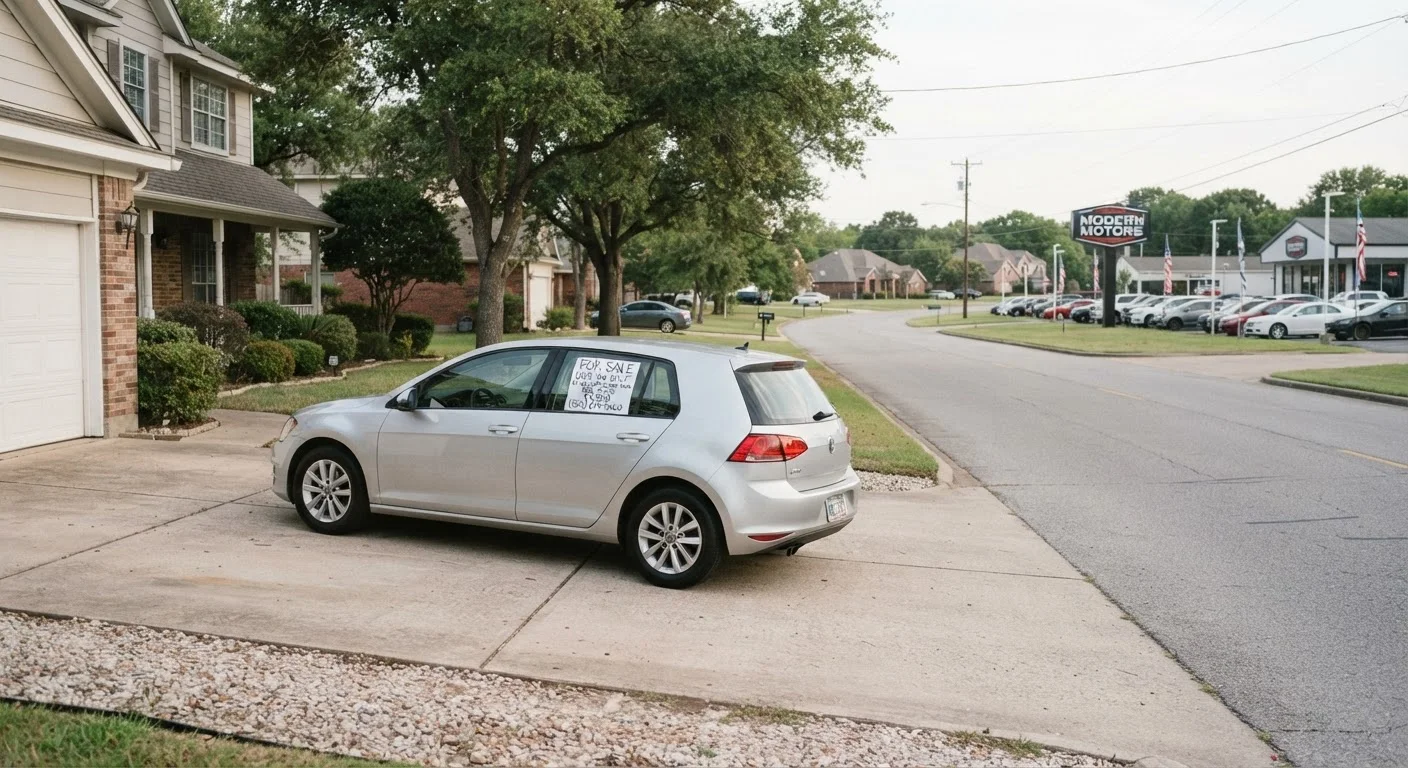
Selling privately puts you in control of the asking price and the timeline. With online listing platforms widely available, reaching local buyers has never been easier. Vehicles that are well-maintained, recently serviced, and honestly presented tend to sell reasonably quickly when priced accurately.
~$1,000–$3,000+
Typical private sale premium over trade-in
Industry observers and used-vehicle pricing guides consistently note that private sales can yield meaningfully more than dealer trade-in offers, with the gap varying by vehicle type and condition.
45+
U.S. states with a trade-in sales tax credit
The majority of U.S. states reduce the taxable base on a new-car purchase when a vehicle is traded in at the same dealership, though rules and caps vary by state.
That said, a private sale requires real preparation. You'll want to gather maintenance records, clean the vehicle thoroughly, price it accurately using multiple reference points, and be ready to communicate with prospective buyers — some of whom may not follow through. You'll also need a plan for how payment is handled safely; cashier's checks and bank transfers are common, but each carries its own verification steps. Never hand over a title until payment has fully cleared.
There's also paperwork to manage. Every state has its own requirements for transferring a title, releasing liability, and notifying the DMV of a sale. Completing these steps correctly protects you if the buyer gets a ticket or is involved in an incident after the sale. Check your state DMV's website for the exact process before you list the car.
For a fuller picture of the financial factors involved in replacing your vehicle, see our guide to total cost of ownership.
Title Transfer: Don't Skip This Step
Once a private sale is complete, most states require the seller to notify the DMV that the vehicle has changed hands. This step releases you from liability for anything that happens with the car after the sale. Requirements vary by state — visit your state's DMV website or call them directly to confirm the exact process before you hand over the keys.
How to Decide Which Path Makes Sense for You
Start by getting a realistic estimate of your vehicle's value from at least two independent sources. Then contact one or more dealers for trade-in offers. The spread between those figures tells you what you'd potentially gain from a private sale — before accounting for your time and the state tax credit you'd forgo.
If the difference is small, the trade-in's convenience may well be worth it. If it's significant and your vehicle is in solid shape, a private sale is worth the effort. Vehicles with mechanical issues, high mileage, or body damage are harder to sell privately at a strong price and may be better suited for a trade-in or direct sale to a wholesaler.
Whatever you choose, don't let the decision happen in the middle of a dealership visit without preparation. Knowing your numbers in advance — including where you stand on new vs. used pricing — puts you in a far stronger position.